


Russia is pleased that a shipment of its oil reached Cuba, the Kremlin has said, after US President Donald Trump said he was not bothered by the delivery despite Washington's de facto blockade of the island.
Russia sent the Anatoly Kolodkin, a sanctioned oil tanker carrying 730,000 barrels of crude, to Cuba earlier this month as the Communist-run island grappled with fuel shortages.
Shipping data showed it sailing off Cuba's northeast coast but it was not immediately clear whether it had docked at a port.
Russia is a close ally of Cuba and has criticised the US for blocking fuel deliveries to the island.
"Russia considers it its duty to step up and provide necessary assistance to our Cuban friends," Kremlin spokesman Dmitry Peskov told reporters.
"We are pleased that this shipment of petroleum products will arrive on the island, or rather, it has already arrived," he added.
The shipment of oil would be the first to Havana since January, when US forces captured Venezuelan president and Cuban ally Nicolas Maduro in a raid.
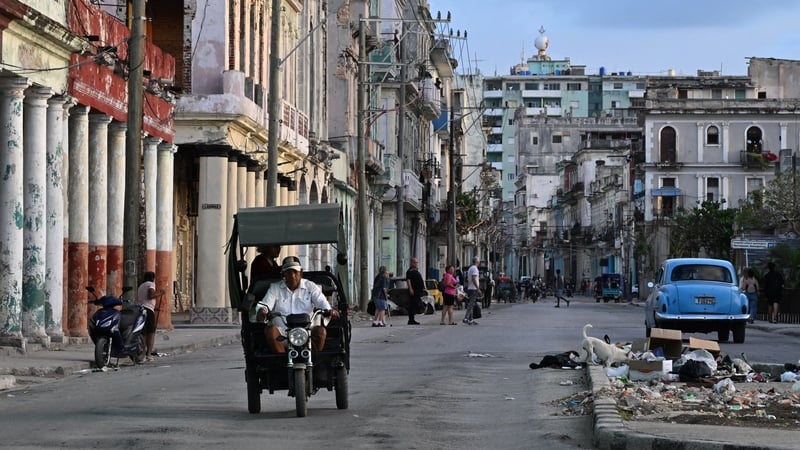
Mr Maduro's removal deprived Cuba of its main oil supplier and triggered an energy crisis on the island, sending fuel prices soaring and triggering daily blackouts.
Mr Peskov said Russia and the US had been in touch over the shipment.
"This issue was indeed raised in advance during our contacts with our American counterparts," he told reporters, without providing more details.
Earlier the Interfax news agency reported the arrival of the ship to Cuba citing the Russian Ministry of Transport.
It said the ship was expected to offload the cargo at the port of Matanzas.
LSEG ship-tracking data showed the vessel moving along Cuba's northern shore after Mr Trump signalled he was reversing course on blocking oil shipments to Cuba yesterday, saying he had "no problem" with any country sending in crude to the Caribbean country.
Cuban health officials say the crisis has increased the mortality risk for Cuban cancer patients, especially children.
After the US launched the oil blockade, Cuban President Miguel Diaz-Canel imposed emergency measures to conserve fuel, including strict rationing of gasoline.
He warned this month that "any external aggressor will encounter an unbreakable resistance."
Fuel prices have soared, public transport has dwindled and some airlines have suspended flights to Cuba, hitting the country's fragile economy.
Cubans have endured regular outages as its aging power plants struggle to meet demand, with seven nationwide blackouts since 2024, including two this month, sparking rare protests.
A humanitarian aid convoy brought more than 50 tonnes of medicine, food, solar panels and other goods to Cuba by air and sea in recent days.
The Anatoly Kolodkin, which is under US sanctions, left the Russian port of Primorsk on 8 March.
It was escorted by a Russian navy ship across the English Channel, but the two vessels parted ways when the tanker entered the Atlantic Ocean, according to the British Royal Navy.
The New York Times, citing an unnamed US official briefed on the matter, said the US Coast Guard was allowing the tanker to reach Cuba.
Another ship that was reportedly carrying Russian diesel to Cuba, the Hong Kong-flagged Sea Horse, rerouted to Venezuela this week.
Diesel an 'urgent need'
Once the Anatoly Kolodkin's crude arrives in Cuba, it would take about 15-20 days to process the oil and another five to ten days to deliver its refined products, according to Jorge Pinon, an expert on Cuba's energy sector at the University of Texas at Austin.
"The urgent need today in Cuba is diesel," the former oil executive said.
The Russian shipment could be converted into 250,000 barrels of diesel, enough to cover the country's demand for around 12-and-a-half days, Mr Pinon said.
Mr Pinon said the government would have to decide whether to use the fuel for backup power generators or for buses, tractors and trains needed to keep the economy going for two weeks.
"If you are Diaz-Canel or somebody making the decision, you go, 'OK, where where do I go with that diesel?'" he said.
"Do I want to generate more electricity so there are less apagones (blackouts)? Or do I want to put it in the transportation sector?"
