


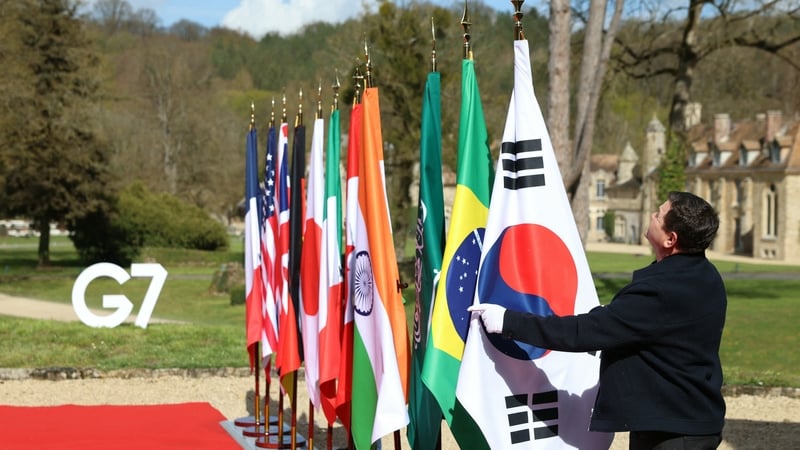
French officials have denied excluding South Africa from the list of invitees to the G7 leaders' summit in June due to pressure from Washington, saying Kenya had been invited instead ahead of President Emmanuel Macron's visit there later this year.
France announced earlier that it will host the leaders of India, South Korea, Brazil and Kenya at the summit to be held in Evian-les-Bains.
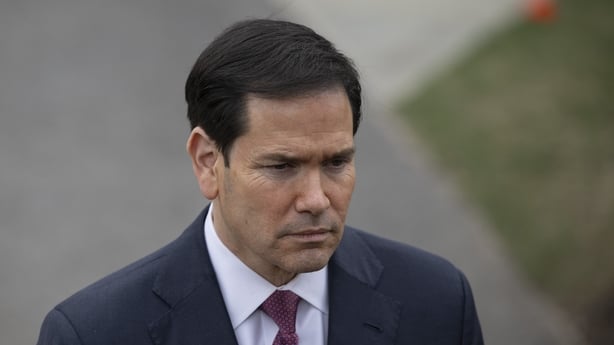
Making his first trip abroad since the Middle East war started, US Secretary of State Marco Rubio will join fellow top diplomats from Canada, Germany, Italy, France, Japan and the United Kingdom, but only on the second day.
South Africa, a regular guest at past G7 summits, said the French embassy in Pretoria had communicated the decision to the government about two weeks ago, saying the US had threatened to boycott the summit if South Africa was invited.
"We've accepted the French decision and appreciate the pressure they've been subjected to," said Vincent Magwenya, a spokesperson for South African President Cyril Ramaphosa.
Asked at a briefing whether South Africa had been excluded on the US's request, a French official said this was not the case and that France had decided to invite Kenya this time round.
Mr Macron is due to visit Kenya in May for a two-day Africa-France summit.
US President Donald Trump has criticised South Africa's foreign policy and domestic race laws during his second term, boycotted last year's G20 summit in Johannesburg and excluded South Africa from G20 meetings this year.
The White House and the US State Department did not immediately respond to requests for comment.
France had been hoping to focus the G7 on preventing a "massive financial crisis" by urging summit absentee China to boost domestic demand and reduce its destabilising exports and by calling on the US to curb its deficits and on Europe to produce more and save less.
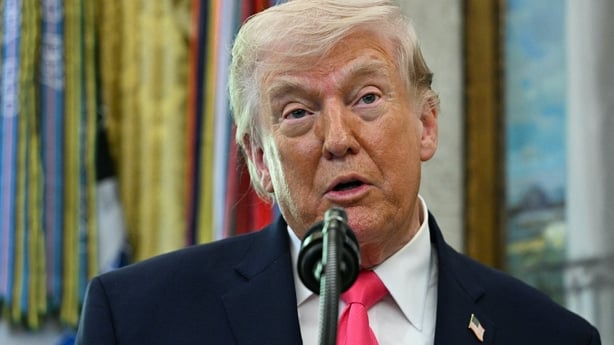
However, those long-term goals may be overshadowed by more immediate pressures, with the summit unfolding against the backdrop of an energy shock caused by the US and Israeli war on Iran, while the relevance of the G7 itself is being increasingly questioned.
"We don't know where the Iran crisis will be by June," an adviser to President Emmanuel Macron said.
"However it evolves, we will have to address its energy and economic consequences," the adviser added.
With Lebanon pulled into the war as Iran-backed Shia militant group Hezbollah fired rockets into Israel, French Foreign Minister Jean-Noel Barrot also urged Israel to "refrain" from sending in forces to take control of a zone in south Lebanon.
While all G7 nations are close US allies, none have unambiguously offered support for the assault on Iran, angering Trump.
President Trump has claimed the US is speaking to a "top person" within Iran's clerical system in talks to end the conflict.
But Iranian state TV said yesterday that Tehran had rejected a peace plan conveyed through Pakistan.
Mr Trump's threat to hit Iranian energy facilities - which he is now holding back on amid the purported talks - troubled European allies who have all called for de-escalation and not engaged militarily in the conflict.
British foreign minister Yvette Cooper has voiced unease that the war had shifted focus away from the Gaza peace plan and violence in the occupied West Bank.
Germany's foreign minister said NATO countries would seek a common position with the United States on the war against Iran, which he added would have to end as quickly as possible.
"Of course it is now important, together with our closestallies within NATO, particularly with the United States, to develop a common position," minister Johann Wadephul said ahead of the meeting.
There was unity with France and Britain on this and planned talks with the US secretary of state tomorrow are particularly important, Mr Wadephul added.
He said the Strait of Hormuz would have to be opened and Iran's leadership must not pose a threat to other nations in future.
In contrast to usual protocol, and in a sign of the divergence between the US and its allies, there is to be no final joint communique at the end of the meeting.
China will not attend the summit on 15-17 June and continues to question the legitimacy of the G7 as a "club of rich countries", French officials said.
France, which had tried to invite Beijing according to diplomatic sources, will "engage" China through separate channels, an official said, adding that it was also in China's interest to avoid a confrontation.
"The risk for China is to see global markets and European markets, closing off to it," the official said.
The countries invited instead are all democracies and market economies that play by the rules of international cooperation, he added.
