


Iran denied it had engaged in negotiations with the United States, after US President Donald Trump postponed a threat to bomb Iran's power grid because of what he described as productive talks with unidentified Iranian officials.
A European official said that while there had been no direct negotiations between the two nations, Egypt, Pakistan and Gulf states were relaying messages.
A Pakistani official and a second source said direct talks on ending the war could be held in Islamabad as soon as this week.
Mr Trump wrote on his Truth Social platform that the US and Iran had held "very good and productive" conversations about a "complete and total resolution of hostilities in the Middle East".
As a result, he said, he was postponing for five days a plan to hit Iran's energy grid.
We need your consent to load this rte-player contentWe use rte-player to manage extra content that can set cookies on your device and collect data about your activity. Please review their details and accept them to load the content.Manage Preferences
His announcement sent share prices higher and oil prices sharply lower to below $100 a barrel, a sudden reversal to a market swoon caused by his weekend threats and Iran's vows to respond.
Mr Trump later told reporters his special envoy Steve Witkoff and son-in-law Jared Kushner, who had been negotiating with Iran before the war, had held discussions with a top Iranian official into the evening yesterday and would continue tomorrow
"We have had very, very strong talks. We'll see where they lead. We have major points of agreement, I would say, almost all points of agreement," he said.
In Memphis, he said Washington had been negotiating with Iran "for a long time, and this time they mean business," adding: "I think it could very well end up being a good deal for everybody."
He did not identify the Iranian official in touch with Mr Witkoff and Mr Kushner, but said: "We're dealing with the man who I believe is the most respected and the leader."
"We're dealing with some people that I find to be very reasonable, very solid. The people within know who they are. They're very respected, and maybe one of them will be exactly what we're looking for," he said.
An Israeli official and two other sources familiar with the matter said the interlocutor on the Iranian side was Iran's powerful parliament speaker Mohammad Baqer Qalibaf.
'Fake news', says Iranian parliament speaker
However, Mr Qalibaf said on X that there had been no such talks with the United States, and ridiculed the suggestion as an attempt to rig financial markets.
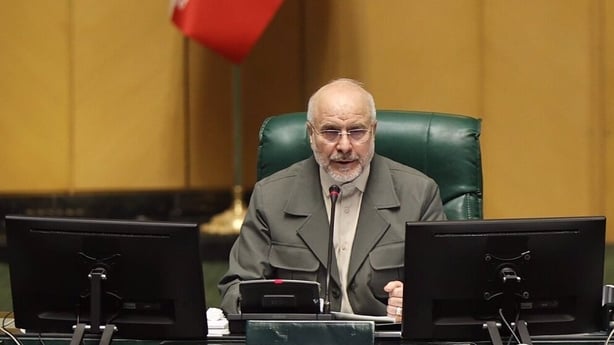
"No negotiations have been held with the US, and fakenews is used to manipulate the financial and oil markets and escape the quagmire in which the US and Israel are trapped," he wrote.
He said: "Iranian people demand complete and remorseful punishment of the aggressors. All Iranian officials stand firmly behind their supreme leader and people until this goal is achieved."
Iran's elite Revolutionary Guards said they were launching fresh attacks on US targets, and described Mr Trump's words as "psychological operations" that were "worn out" and having no impact on Tehran's fight.
Israeli Prime Minister Benjamin Netanyahu said in a video statement that he spoke with Mr Trump and that Israel would press on with attacks in Lebanon and Iran.
But Mr Netanyahu said Mr Trump believed there was US military, in order to realize the goals of the war in "a deal - a deal that will preserve our vital interests"
Although there was no immediate confirmation that talks had taken place as described by Mr Trump, Iran's foreign ministry described initiatives to reduce tensions.
It said Iran's Foreign Minister Abbas Araqchi reviewed developments related to the Strait of Hormuz with his Omani counterpart and agreed to continue consultations between the two countries.
Iran has effectively closed the key Strait of Hormuz, through which about a fifth of global oil and liquefied natural gas flows. Mr Trump has demanded Iran open the strait, but Tehran says it will not do so until the United States and Israel call off their attacks.
The Pakistani official said US Vice President JD Vance, as well as Mr Witkoff and Mr Kushner, were expected to meet Iranian officials in Islamabad this week, following a call between Mr Trump and Pakistan's army chief.
More than 2,000 people have been killed in the war the US and Israel launched on 28 February.
Israeli minister calls for annexation of southern Lebanon
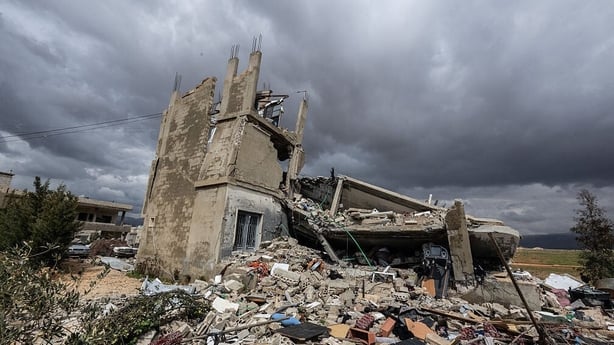
Israel should extend its border with Lebanon up to the Litani River deep inside the country's south, Israel's finance minister said, as Israeli troops bombed bridges and destroyed homes in an escalating military assault.
The comments by Finance Minister Bezalel Smotrich were the most explicit yet by a senior Israeli official on seizing Lebanese territory in a fight Israel says targets Iran-backed Hezbollah militants.
Lebanon was pulled into the regional war on 2 March when Hezbollah fired missiles into Israel.
Since then, Israel has ordered all residents to evacuate south of the Litani River as it pummels the area with air strikes, viewing it as a stronghold of Hezbollah, which has kept up rocket attacks on Israel.
Lebanese authorities say the Israeli air and ground assault has killed more than 1,000 people, and more than a million have been driven from their homes.
Read our latest Middle East stories here
