


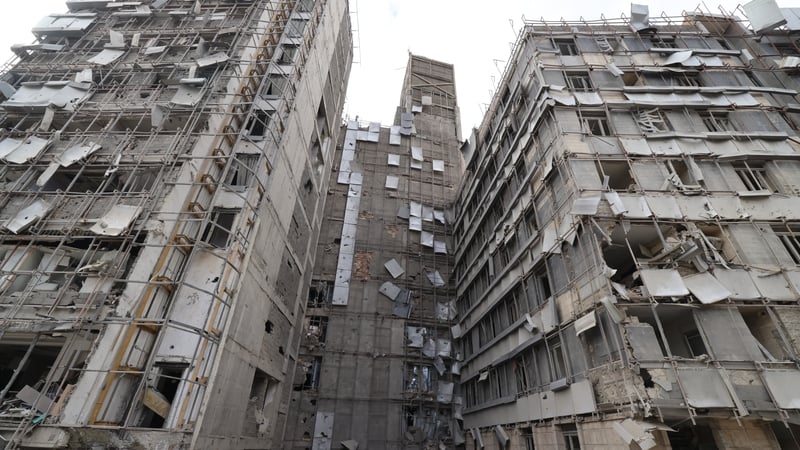
The president of the European Commission has called for an urgent de-escalation to prevent the US-Israeli conflict with Iran from "spreading" across the Middle East.
Ursula von der Leyen criticised the "reckless and indiscriminate attacks by Iran and its proxies against sovereign territories across the region," after strikes hit a British air base in Cyprus and a Saudi oil facility.
"We must work hard to de-escalate and stop the conflict spreading," Ms von der Leyen told reporters in Brussels, warning "the stability of the region is of the utmost importance."
She said that the EU will stand collectively, firmly and unequivocally with its member states in the face of any threat, referring to Cyprus.
Israel and the United States have been conducting strikes on Iran and Lebanon, with the conflict extending to regional neighbours.
Iran's Supreme Leader Ayatollah Ali Khamenei, who had been in power since 1989, was killed at the weekend.
Iran's Revolutionary Guards vowed to launch the "most ferocious" operation in history against Israel and US bases, which are located in Gulf countries that were already counting the cost of an unprecedented series of deadly Iranian strikes.
"The situation remains volatile," said Ms von der Leyen, who consulted with nine Middle Eastern leaders over the weekend and was to chair a crisis meeting of the EU's college of commissioners.
She reiterated that the killing of Iran's supreme leader spelled "renewed hope for the oppressed people of Iran".
"We strongly support their right to determine their own future," she said, calling for a "credible transition", the halt to Iran's nuclear and ballistic programmes and "an end to destabilising activities."
I talked with President @christodulides who briefed me on the single incident that occurred shortly after midnight involving an unmanned aerial vehicle targeting the British base in Akrotiri.
— Ursula von der Leyen (@vonderleyen) March 2, 2026
While the Republic of Cyprus was not the target, let me be clear: we stand…
British Prime Minister Keir Starmer said the UK would not join the US-Israeli conflict with Iran, adding that the mistakes of the Iraq war had been "learned".
It came after Mr Starmer announced late yesterday that he had agreed to a request from the United States to use British bases in the region for "specific and limited defensive purposes".
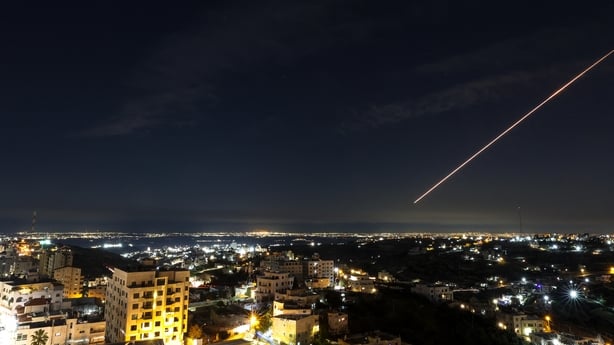
China has called for a ceasefire and diplomatic talks to end the conflict, as it stretched into a third day.
"The most urgent task is an immediate cessation of military operations and preventing a spread and spillover of conflict," foreign ministry spokeswoman Mao Ning told a news conference, urging "a resolution through dialogue and negotiation".
One Chinese citizen was killed as a result of the conflict in Tehran, she said.
"The foreign ministry has instructed the Chinese embassy in Iran to provide assistance to the individual involved and the family," she added, without giving further details.
China was not informed in advance about the US military action, she told reporters, adding that China and Russia have urged the UN Security Council to hold an emergency meeting.
Meanwhile, the UN nuclear watchdog said that there is no indication any nuclear facilities in Iran have been hit, its chief Rafael Grossi told the agency's Board of Governors, moments before Iran's envoy said one was targeted a day earlier.
Iran's nuclear programme has been among the reasons Israel and the US have given for the attacks, alleging Iran was getting too close to being able to eventually make an atom bomb.
At the same time, what remains of Iran's atomic facilities after the two militaries attacked them in June appears to have been largely spared in this campaign so far.
What Mr Grossi's assessment was based on is unclear, since he also said his agency had not been able to reach its counterparts in Iran.
Tehran has not let the IAEA return to its bombed facilities since they were attacked in June.
"Efforts to contact the Iranian nuclear regulatory authorities... continue, with no response so far. We hope this indispensable channel of communication can be re-established as soon as possible," Mr Grossi said.
Moments later, Iran's ambassador to the IAEA, Reza Najafi, told reporters outside the closed-door meeting that the sprawling nuclear complex at Natanz had been attacked.
Natanz housed two uranium-enrichment plants that were attacked in June - an above-ground one that the IAEA says was destroyed and an underground one that was at least badly damaged, among other facilities.
"Again they attacked Iran's peaceful, safeguarded nuclear facilities yesterday," Mr Najafi said.
