


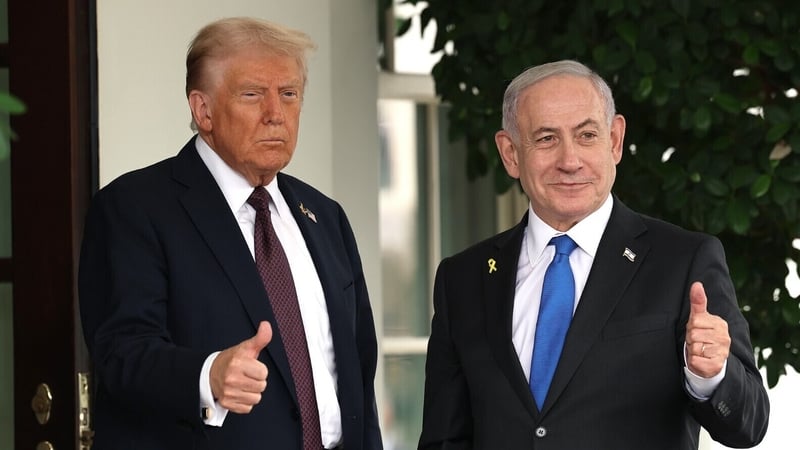
The United States and Israel launched strikes against Iran following failed negotiations and a crackdown on mass protests against the Islamic republic.
Here are the key actors in the crisis:
President Donald Trump
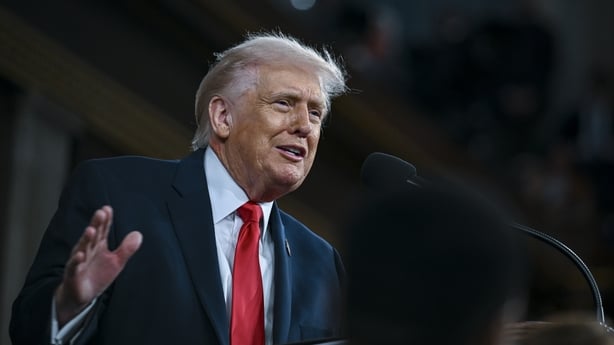
The US president has sought to position himself as a global peacemaker, but on Iran he has taken a consistently hard line.
Last year, his forces joined Israel's war with the Islamic republic by conducting strikes on nuclear sites.
During the mass protests that shook Iran in January, Mr Trump warned he would hit "very hard" if authorities "start killing people like they have in the past".
In his first term, Mr Trump was the architect of the "maximum pressure" doctrine aimed at weakening Iran economically and diplomatically.
In 2018, he pulled the United States out of the international agreement on Iran's nuclear programme, which offered Tehran sanctions relief in exchange for limiting its ambitions.
While Western countries and Israel accuse Iran of seeking a nuclear weapon, Tehran has consistently maintained its programme is for civilian purposes.
In February, Mr Trump reopened indirect negotiations with Iran, while continuing to multiply his threats.
Ayatollah Ali Khamenei
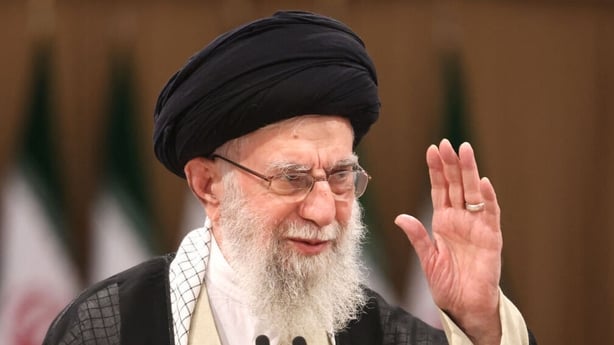
Iran's 86-year-old supreme leader has long embodied the Islamic republic's posture of defiance towards its enemies, chiefly the United States and Israel.
In power since 1989 and holding the final say on all major state matters, Mr Khamenei has overseen the steady advancement of Iran's nuclear programme, framing uranium enrichment as a sovereign right.
Expanding Iran's regional influence in Lebanon, Syria, Iraq and Yemen has been a defining feature of his foreign policy.
He has insisted Iran will "never surrender" to the United States and is sceptical about diplomacy.
During nuclear talks in 2025, he said he doubted a deal would "lead to any outcome", arguing that Iran's problems should be solved internally.
When talks resumed, he warned that Iran was capable of sinking American warships.
Mr Khamenei refuses to abandon uranium enrichment and will not entertain discussion of Iran's missile programme.
"The Americans should know that if they start a war, this time it will be a regional war," he warned.
Prime Minister Benjamin Netanyahu
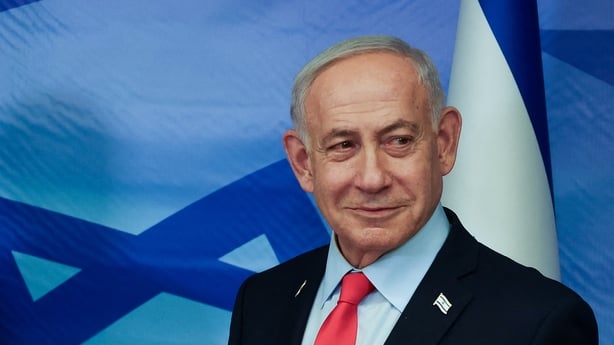
For decades, the Israeli prime minister has cast Iran's nuclear ambitions, its missile arsenal and its support for militant groups as an existential danger.
Mr Netanyahu's push for military action materialised during the 12-day war last June. He maintains that Israel will again act to prevent any resurgence of Iran's attack capabilities.
In January, addressing the Iranian public directly, Mr Netanyahu said he hoped "the Persian nation will soon be freed from the yoke of tyranny".
And this month, he warned that "if the ayatollahs make a mistake and attack us, they will experience a response they cannot even imagine".
Mr Netanyahu has repeatedly urged the Iranian people to overthrow its leaders and restore the ties the two countries had before the Islamic revolution of 1979.
Reza Pahlavi, the shah's son
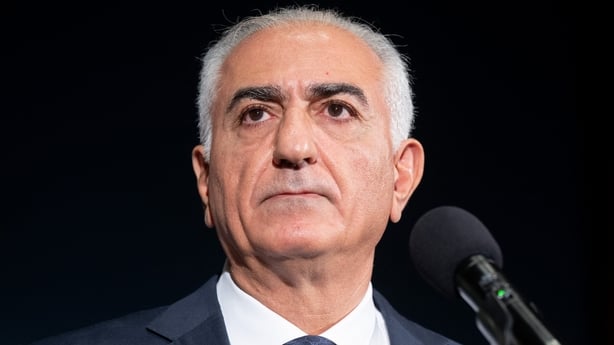
The eldest son of the last shah has positioned himself as a potential leader for a democratic transition in Iran, which he has not visited since before the revolution.
The former crown prince entered the global spotlight during the recent protests, where "Pahlavi will return" was among the anti-government slogans chanted nationwide.
The 65-year-old urged Iranians to join the protests and called for demonstrations abroad.
Based in the US, he has urged Washington to intervene directly to support Iranians seeking to oust the authorities.
"I am here to guarantee a transition to a secular democratic future," Mr Pahlavi told supporters in Munich in February.
"It is time to end the Islamic republic," he said, urging Mr Trump to "help".
He remains a polarising figure, particularly within the Iranian opposition.
Mr Pahlavi has faced criticism for his support for Israel, where he made a highly publicised visit in 2023.
Highly critical of repression under the Islamic republic, he has never distanced himself from the abuses of his father's era.
Crown Prince Mohammed Bin Salman
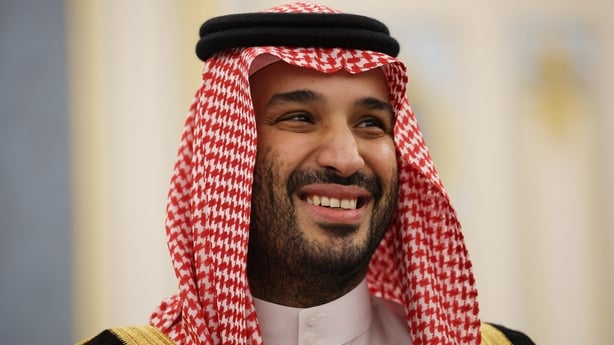
Saudi Arabia's crown prince and de facto ruler shares the view of other Gulf states: they are happy to see a weakened Iran, but fear that destabilising it could ignite chaos for the region.
Sunni-majority Saudi Arabia, the world's top oil exporter, has a traditionally fraught relationship with Iran, its heavyweight Shiite rival across the Gulf.
Months after becoming crown prince in 2017, Prince Mohammed raised hackles in Tehran when he described Khamenei as a Middle East "Hitler".
But Riyadh and Tehran buried the hatchet when they restored ties in 2023 in a rapprochement brokered by China.
Regional stability has become the goal for Saudi Arabia as it pursues an economic transformation aimed at drawing tourism and business, to reduce its reliance on oil.
When a US attack appeared likely in January, Saudi Arabia and other Gulf monarchies pressed Washington to hold off, Gulf sources told AFP at the time.
Prince Mohammed later pledged not to allow attacks on Iran from Saudi Arabia, which hosts a US base.
Read more:
Live 'Hour of your freedom is at hand,' Trump tells Iranians
Israel, US launch strikes on Iran
