


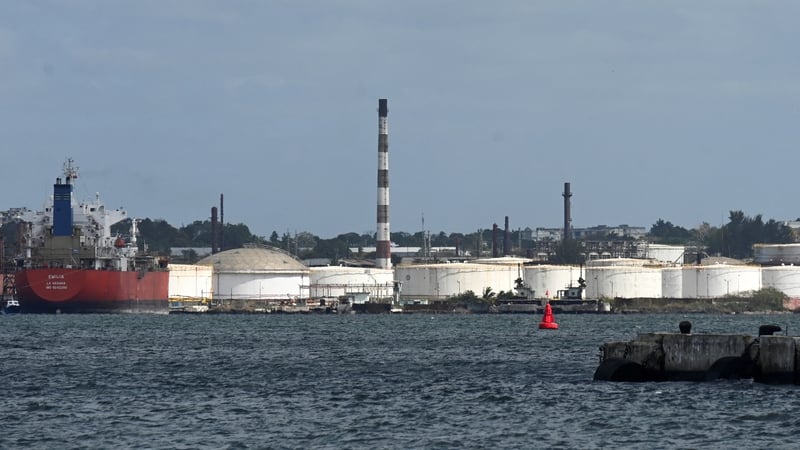
Cuba's coast guard has shot dead four people and injured six others travelling in a US-registered speedboat in an exchange of fire off the Cuban shore, the interior ministry in Havana said.
The confrontation comes amid heightened tensions between the United States and communist Cuba, which lies just 160km across the Florida Straits.
Cuba did not reveal the nationalities of the passengers aboard the US boat, and US officials made no immediate comment on the incident.
The interior ministry said the coast guard encountered the "illegal" Florida-registered vessel one nautical mile from Falcones Cay in Villa Clara province.
Read more:
Why are Irish citizens being advised against travel to Cuba?
As the coast guard vessel approached, shots were fired from the US boat, injuring the commander of the Cuban vessel, the ministry said.
"As a result of the clash, at the time of this report, on the foreign side, four aggressors were killed and six others were wounded," the ministry said, adding that the injured were evacuated and received medical assistance.
US Vice President JD Vance said the White House was "monitoring" the incident but added that he hoped it was not a serious incident.
"Certainly, you know, a situation that we're monitoring, hopefully it's not as bad as we fear it could be. But can't say more, because I just don't know more," Mr Vance told reporters.
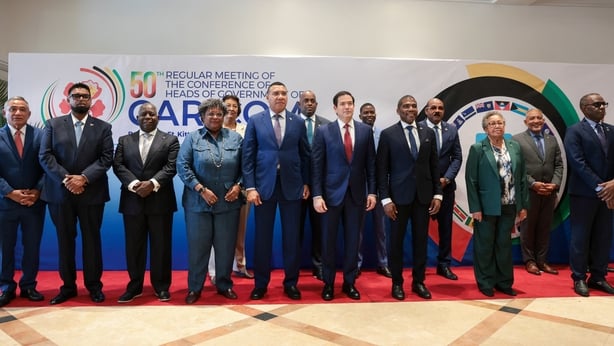
He added that Secretary of State Marco Rubio, who is attending a summit of the Caribbean Community, had briefed him earlier and added "we don't know a whole lot of details".
The attorney general of Florida said local authorities are opening an investigation into the shooting.
"I've directed the Office of Statewide Prosecution to work with our federal, state, and law enforcement partners to begin an investigation," Attorney General James Uthmeier said in a post on social media, after Cuban authorities said the boat was "illegal" and that they were fired upon.
"The Cuban government cannot be trusted, and we will do everything in our power to hold these communists accountable," said Mr Uthmeier, the first US official to comment on the incident.
The Cuban government frequently reports incursions by speedboats from the United States into its territorial waters.
The incidents are often related to human or drug trafficking and have included chases, shootouts and armed attacks on border guards.
Between January and June 2022, the year of the largest wave of Cuban emigration in six decades, the coast guard intercepted 13 speedboats coming from the United States, in what authorities described as "human trafficking operations from Cuba to that country".
The shootings came as the US softened a virtual oil siege of the island imposed by President Donald Trump in January after the US ouster of top Cuba ally, Nicolás Maduro of Venezuela.
Before Mr Maduro's capture by US forces on 3 January, Cuba had relied on Venezuela for about half its fuel needs.
Faced with an outcry from Caribbean leaders, worried that starving Cuba of oil would cause the economy to quickly collapse, the US said it would allow shipments of Venezuelan oil for "commercial and humanitarian use".
The Treasury Department said the exports would need to go through private businesses and not the Cuban government or the military apparatus which controls much of the island's economy.
The announcement during a summit of Caribbean nations attended by US Secretary of State Marco Rubio, a Cuban-American who has spent his career hoping to topple Havana's government.
Since becoming the top US diplomat, Mr Rubio has toned down his calls for regime change in Havana.
The US oil blockade in place for over a month has brought an already crumbling Cuban economy to the brink.
Yesterday, Mexico dispatched two military vessels carrying nearly 2,200 tons of aid to the island, its second aid shipment in under a month. Canada announced €4.91m in aid.
