


Iran's foreign minister has said he expected to have a draft counterproposal ready within days following nuclear talks with the United States this week, while US President Donald Trump said he was considering limited military strikes.
Two US officials told Reuters that US military planning on Iran had reached an advanced stage, with options including targeting individuals as part of an attack and even pursuing leadership change in Tehran, if ordered by Mr Trump.
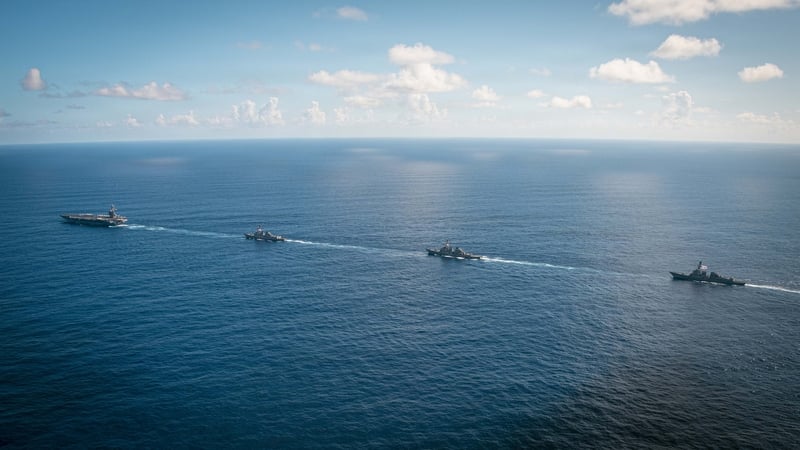
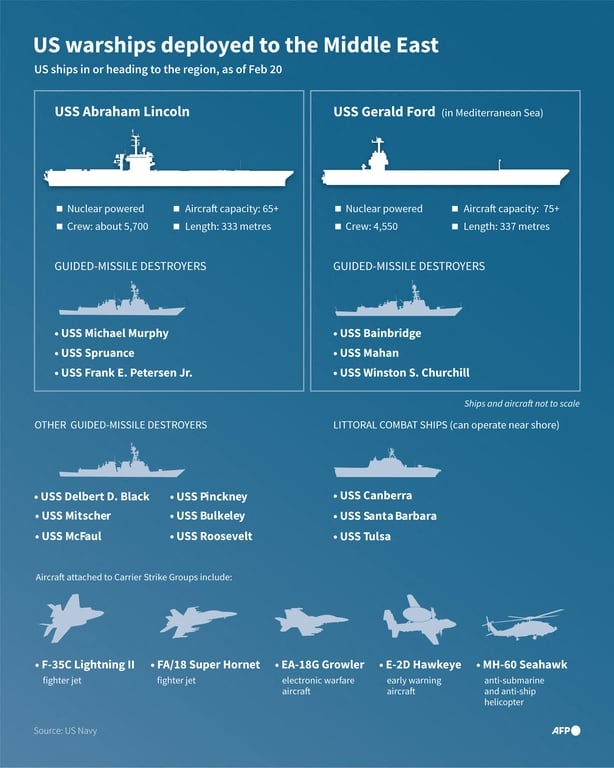
On Thursday, Mr Trump gave Tehran a deadline of tento 15 days to make a deal to resolve their longstanding nuclear dispute or face "really bad things" amid a US military build up in the Middle East that has fuelled fears of a wider war.
Asked yesterday if he was considering a limited strike to pressure Iran into a deal, Mr Trump told reporters at the White House: "I guess I can say I am considering" it. Asked later about Iran at a White House press conference, Mr Trump added: "They better negotiate a fair deal."
Iranian Foreign Minister Abbas Araqchi said after indirect discussions in Geneva this week with Mr Trump's Special Envoy Steve Witkoff and son-in-law Jared Kushner that the sides had reached an understanding on main "guiding principles," but that did not mean a deal was imminent.
Mr Araqchi, in an interview on MS NOW, said he had a draft counterproposal that could be ready in the next two or three days for top Iranian officials to review, with more US-Iran talks possible in a week or so.
Military action would complicate efforts to reach a deal, he added.
After the US and Israel bombed Iran's nuclear facilities and some military sites in June, Mr Trump again began threatening strikes in January as Iran crushed widespread protests with deadly force.
Referring to the crackdown yesterday, Mr Trump said there was a difference between the people of Iran and the country's leadership. He asserted that "32,000 people were killed over a relatively short period of time," figures that were not yet verified.
"It's a very, very, very sad situation," Mr Trump said, adding that his threats to strike Iran had led the leadership to abandon plans for mass executions two weeks ago.
"They were going to hang 837 people. And I gave them the word, if you hang one person, even one person, that you're going to be hit right then and there," he said.
The US-based group HRANA, which monitors the human rights situation in Iran, has recorded 7,114 verified deaths and says it has another 11,700 under review.
Hours after Mr Trump's statements on the death toll, Mr Araqchi said that the Iranian government has already published a "comprehensive list" of all 3,117 killed in the unrest.
"If anyone doubts the accuracy of our data, please speak with evidence," he posted on X.
Mr Araqchi gave no specific timing as to when Iranians would get their counterproposal to Mr Witkoff and Mr Kushner, but said he believed a diplomatic deal was within reach and could be achieved "in a very short period of time."
United Nations spokesperson Stephane Dujarric reiterated concerns about heightened rhetoric and increased military activities in the region. "We encourage both the United States and the Islamic Republic of Iran to continue to engage in diplomacy in order to settle the differences," Mr Dujarric told a regular news briefing at the UN.
During the Geneva talks, the United States did not seek zero uranium enrichment and Iran did not offer to suspend enrichment, Mr Araqchi told MS NOW, a US cable television news network.
"What we are now talking about is how to make sure that Iran's nuclear programme, including enrichment, is peaceful and would remain peaceful forever," he said.
He added that technical and political "confidence-building measures" would be enacted to ensure the programme would remain peaceful in exchange for action on sanctions, but he gave no further details.
"The president has been clear that Iran cannot have nuclear weapons or the capacity to build them, and that they cannot enrich uranium," the White House said when asked about Mr Araqchi's comments.
