
Next Tuesday marks four years since Russia launched its full-scale invasion of Ukraine by land, sea and air.
Moscow's invasion created a massive humanitarian crisis, forcing millions of Ukrainians, mostly women and children, to flee west for safety.
Russia's attempt at quickly removing the Ukrainian government failed, but its war aim remains the same - to create a weakened Ukrainian state, one that Moscow can control and prevent it from integrating more closely with the West.
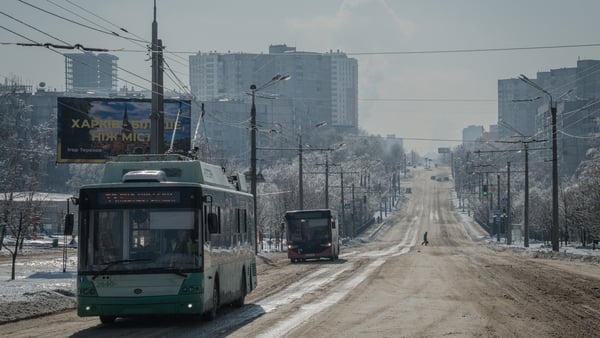
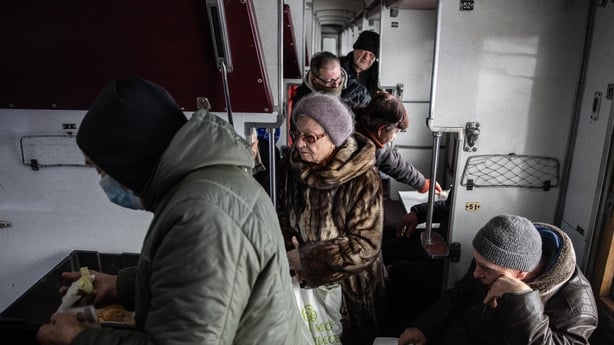
This winter has been the toughest of the war so far for Ukrainians, with the country’s energy infrastructure being pummelled by Russian drone and missile attacks.
The resulting power and heating outages have meant that millions of Ukrainians have had to endure freezing temperatures inside their homes.
A US-led peace initiative, started by President Donald Trump a year ago this month, continues to evolve, but progress remains slow.
It is also difficult to call it a two-way peace process while Russia rejects the possibility of a ceasefire and continues its nightly air attacks on Ukraine.
Talks progressed to a trilateral format in Abu Dhabi at the end of January and earlier this month, with US officials mediating between the Russians and Ukrainians in the same room for the first time.
A third round of those talks took place this week in Geneva.
However, the return of Kremlin advisor and historian Vladimir Medinsky as head of the Russian delegation suggests a hardening in Russia's negotiating position.
Mr Medinsky led the Russian delegation in three rounds of talks last year in Istanbul and reportedly spent much of those brief discussions lecturing the Ukrainian delegation on the Kremlin's version of history.
His past writings questioned the existence of the Ukrainian state.
But the trilateral format, brokered by the US (and the Swiss last week in Geneva) is leading to longer discussions than the brief exchanges last year in Istanbul and that suggests that substantive talks are taking place.
The first day of talks this week lasted six hours while the second day concluded after two hours.
A fourth round of the trilateral format is expected to take place in early March.
A territorial problem
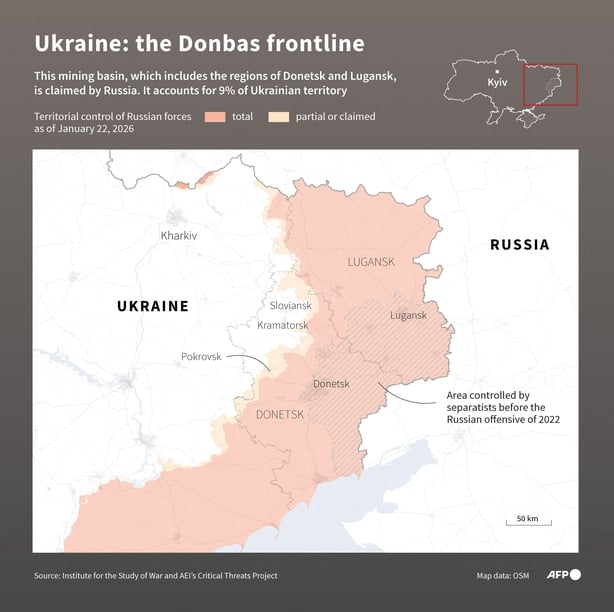
Still, both sides remain far apart on the key issue of territory - namely, Russian President Vladimir Putin's demand that Ukrainian forces withdraw entirely from the 30% of Donbas that is not occupied by Russia.
A military withdrawal from eastern Donbas is unacceptable to Ukraine's leadership and the Ukrainian population at large.
Mr Trump's administration has been tough on Ukraine, reducing US military aid to almost zero compared to the Biden administration's average spend in the first three years of the war, according to Germany's Kiel Institute.
Instead, over the past year, European countries have stepped in as Ukraine's main military aid providers.
Mr Trump has put decidedly more pressure on Ukrainian President Volodymyr Zelensky to sign a peace deal, while rarely pressing Vladimir Putin to do the same.
US security guarantees for Ukraine also appear flimsy despite assurances from US Special Envoy Steve Witkoff that they are "the best anyone has ever seen". There just doesn't seem to be any meat on the bone yet.
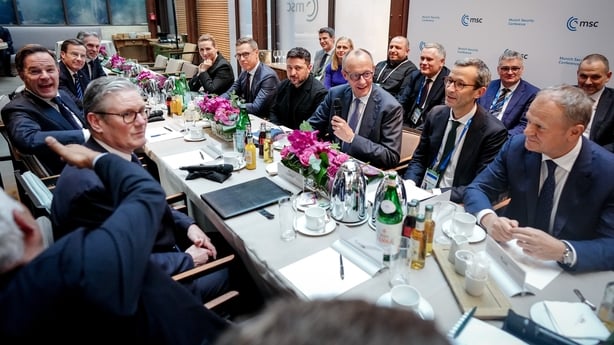
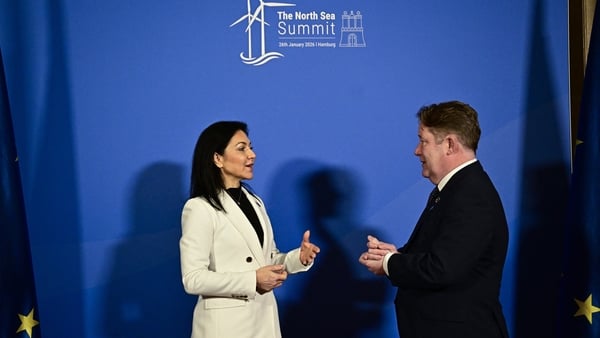
Europe was represented this week in Geneva too, though on the sidelines of talks as has been the case for most of the last year. All this despite European governments now taking a leading role in funding Ukraine's current and future defence needs. It seems a very uneven deal.
For the Kremlin, getting control of the rest of Donbas without having to fight for every 50 metres of ground would be much more desirable than spending another four years trying to capture the whole region - that is the amount of time that the British Ministry of Defence estimates it would take Russian forces to capture the rest of Donbas at their current rate of advance.
Staggering Russian personnel losses
The war has been a disaster for Russia.
After initially occupying one-fourth of Ukrainian territory in the first weeks of the war and attempting to seize Kyiv, Russian forces were pushed back in the north of the country by fierce Ukrainian resistance.
A successful Ukrainian counteroffensive in the summer of 2022 pushed Russian forces out of almost all of Kharkiv in the north-east, a large swathe of Kherson region and part of the Zaporizhian region in the south.
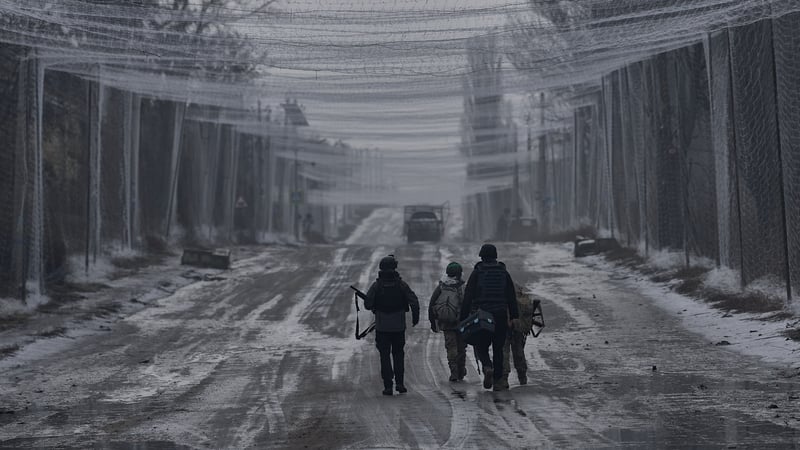
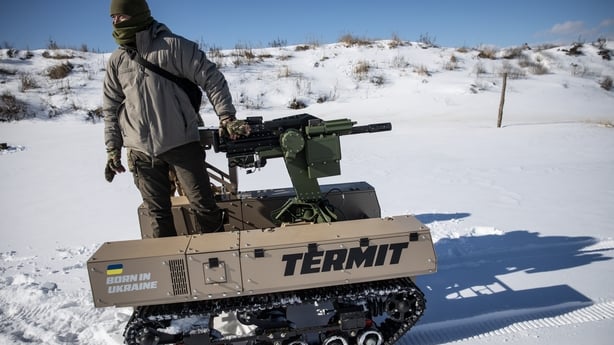
What started as a tank war in 2022 has become a drone war, supported by heavy artillery and infantry units along the frontlines.
A war of attrition set in around early 2023 and the precision of today’s drones patrolling the 1,000km frontline has made advances by large infantry formations near impossible.
Russian forces advanced incrementally in Donbas last year, taking less than one percentage of Ukrainian territory throughout 2025.
Various reports by Ukrainian and Western defence analysts put Russian personnel losses at a staggering 7,000 to 8,000 troops each week.
By comparison, the Soviet Union's combat losses amounted to 15,000 dead during its 10-year invasion of Afghanistan from 1979 to 1989.
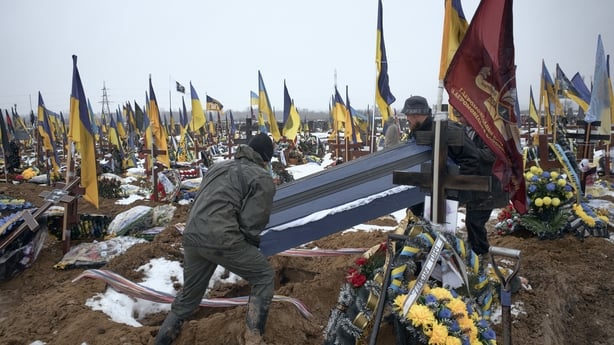
A study by Washington-based think tank Center for Strategic and International Studies, published last month, estimated that 1.2 million Russian and 600,000 Ukrainian troops had been killed, wounded or remain missing since the start of Moscow’s full-scale invasion. The frontline is a brutal kill zone from which few emerge unscathed.
In Russia, authorities have muzzled any criticism of the war so effectively that no reporting emerges of the horrendous scale of Russian dead on the battlefield.
The few silent protests by soldiers' wives that sprang up two years into the war have disappeared - a spokesperson for one group was labelled as a "foreign agent" by the government.
As the war enters its fifth year, the Kremlin appears intent on pressing ahead with the same strategy; continue the invasion while demanding that Ukraine hand over the rest of Donbas during talks.
Ask Ukrainians whether they think a ceasefire is likely to happen any time soon and very few will respond with a positive answer.
Since December, the Trump administration has been pushing the idea of creating a free economic zone in unoccupied Donbas to solve the territorial issue.
But that proposal raises questions over how such a buffer zone would be policed, and by whom.
Russia opposes the presence of European troops from NATO countries and without a credible stabilisation force, then a buffer zone would be open to another Russian invasion.
And without firm US security guarantees, spelled out in a peace agreement, handing over Donbas in return for a free economic zone will not work for Ukraine.
Ukrainians will hope that this is the year that the war finally ends but not at any cost.