


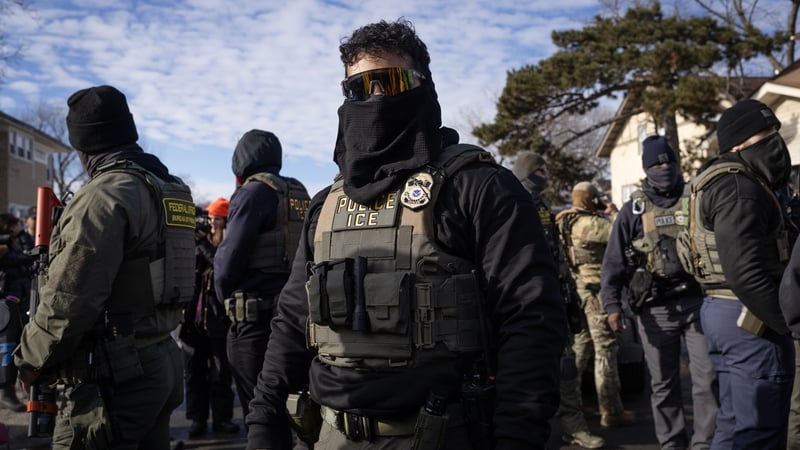
A federal judge has ordered US Immigration and Customs Enforcement (ICE) to ensure that detainees have access to their attorneys in Minnesota, after finding that the agency had blocked thousands of people from seeing their lawyers during a recent enforcement surge.
US District Judge Nancy Brasel, who was appointed by President Donald Trump in his first term, said ICE's practices during the recent Operation Metro Surge, including a policy of quickly moving detainees out of Minnesota and depriving them of phone calls, "all but extinguish a detainee’s access to counsel".
Judge Brasel made the initial ruling in a class action lawsuit that was filed on behalf of detainees on 27 January and her order will remain in place for 14 days while the proceedings play out.
The court order requires the US government to stop rapidly transferring detainees out of the state and to allow attorney-client visits and private phone calls between detainees and their lawyers.
Read more:
Trump ends immigration crackdown in Minnesota
Democracy Forward, a non-profit that filed the lawsuit on behalf of detainees, said that the right to a lawyer is not "optional" in the US.
"DHS has been detaining people in a building never meant for long-term custody, shackling them, secretly transferring them out of state and blocking access to counsel and oversight in a deliberate effort to evade accountability," Democracy Forward President Skye Perryman said in a statement.
ICE did not dispute that detainees had a constitutional right to counsel and said it does not have a policy of preventing detainees from seeing their lawyers, according to the ruling.
But in practice, it provided conditions that isolated thousands of people from their attorneys, Judge Brasel said.
The plaintiffs, who are non citizen detainees, had provided substantial and specific evidence about their detention conditions, which contradicted ICE’s "threadbare" explanations of its policies and its protestations that it did not have enough resources to provide detainees with access to their lawyers, the judge found.
"Defendants allocated substantial resources to sending thousands of agents to Minnesota, detaining thousands of people and housing them in their facilities," Judge Brasel said in her ruling.
"Defendants cannot suddenly lack resources when it comes to protecting detainees’ constitutional rights."
Most detainees are initially held at the Bishop Henry Whipple Federal Building in Minneapolis, but many are immediately transferred out of state, without notice, with no way for attorneys to contact them, according to the ruling.
Detainees are sometimes moved so quickly and frequently that ICE loses track of where they are, the judge found.
