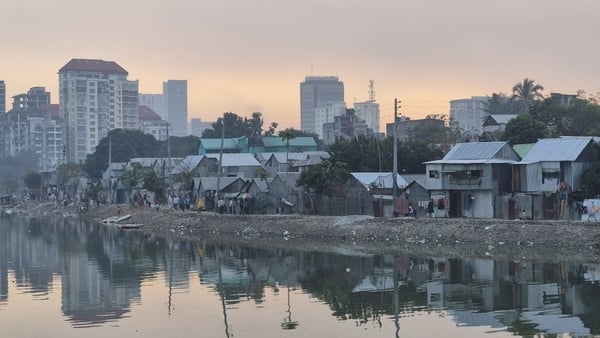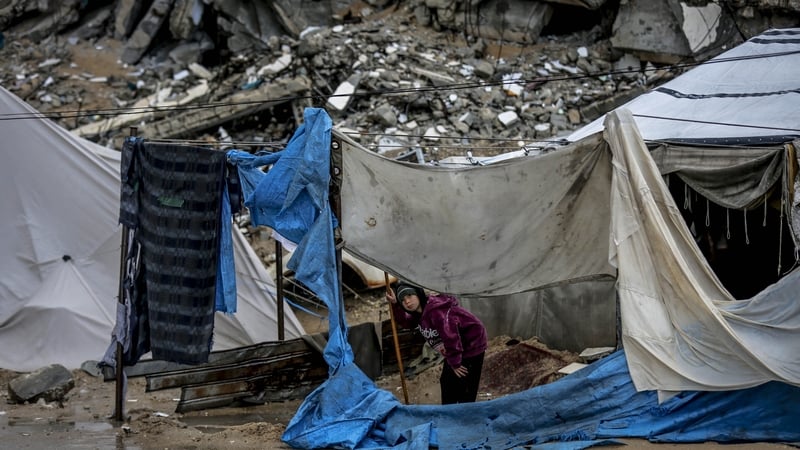

Mountains of rubble and twisted metal. Thousands of unexploded Israeli munitions. A collapsed network of water, sewage and electrical infrastructure.
The scale of the challenge involved in rebuilding Gaza is staggering.
With more than 80% of the territory's structures damaged or destroyed, experts say the destruction is at a level not seen since the Second World War.
Estimates of the overall cost vary, but according to the United Nations, reconstruction is likely to amount to more than $70 billion (€59bn) over several decades.
Yet when US President Donald Trump’s son-in-law and Middle East adviser Jared Kushner addressed delegates in Davos last month, he presented an altogether more optimistic vision.
It was a vision of sleek skyscrapers, tourist-packed seafronts and high-tech data centres, presented to a room of delegates who had gathered for the unveiling of the US President’s controversial 'Board of Peace.’
"In the Middle East, they build cities in three years," Mr Kushner said. "Stuff like this is very doable if we make it happen."
60 million tonnes of rubble
It is a roadmap deeply at odds with the reality on the ground.
Unlike Dubai and other more modern middle-eastern cities, Gaza is not emerging from vacant land or sparsely-populated settlements.
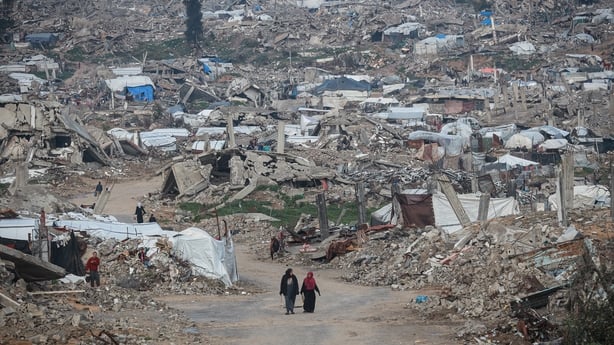
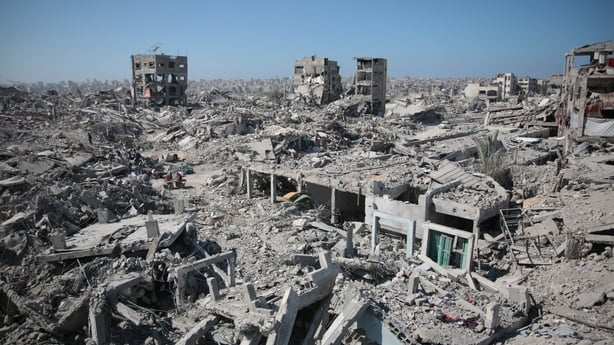
Instead, it is home to 2.1 million people and 60 million tonnes of rubble - the remains of homes, schools and businesses levelled by Israeli airstrikes and bulldozers.
Removing that rubble safely is a "massive undertaking", says Shelly Culbertson, a senior researcher focusing on disaster and post-conflict recovery at the independent think tank RAND. She has previously co-authored a detailed study on Gaza reconstruction.
"By way of comparison, the rubble in Mosul (the Iraqi city formally under the control of the Islamic State group) was about 15% of that in Gaza, and 8 years on they're still dealing with that issue," she added.
In Gaza, the debris is extensive enough to fill nearly 3,000 container ships, and is expected to take more than seven years to clear.
But the rubble can also bring opportunities. "It can be blended back into building materials," points out Ms Culbertson.
"If it's done properly, there could be big opportunities for recycling it and using that rubble to help rebuild the future of Gaza," she said.
Ali Shaath, the Palestinian former government official chosen to administer Gaza under the US plan, has said he intends to "push the war debris into the Mediterranean Sea to make new islands, new land."
Some progress has been made in clearing the material, but the pace is slow.
In its latest update, the United Nations Development Programme said it is removing rubble and crushing it at a rate of about 1,500 tonnes per day throughout five crushing sites.
At the current rate, it would take almost 110 years to crush and remove all the rubble in Gaza.
Human remains and unexploded ordnance
The pace has been slowed in part by concerns over what is buried under the debris.
According to Gaza’s health authorities, the remains of up to 10,000 people may lie in rubble.
Unexploded munitions also pose a major danger.
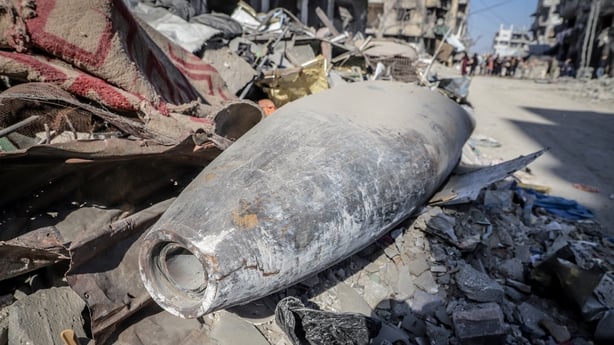
"It's everything from mortars, artillery shells and grenades, to improvised rockets and bombs and missiles," explains Mungo Birch, head of the UN Mine Action Service (UNMAS) in the Palestinian territories.
In the initial three weeks of the ceasefire, 560 unexploded ordnance items were recorded by the UN in the debris. Thousands more are believed to remain under the rubble.
According to Pehr Lodhammar, a former United Nationals Mine Action Service chief for Iraq, on average about 10% of weapons failed to detonate when they were fired and had to be removed by demining teams.
Some analysts caution that the clearance job will be even more hazardous in Gaza because it risks collapsing tunnels built by Hamas underground.
1.5 million people homeless
As the immense task of clearing rubble ramps up, attention is turning more urgently to housing.
At least 1.5 million Gazans - three-quarters of the population - are currently living in tents or makeshift shelters, many at the mercy of poor winter weather.
According to Ms Culbertson, the decisions that are taken now - even on temporary housing - will be pivotal to creating a functioning future Gaza.
"There needs to be some sort of interim housing strategy that recognises that people will be waiting multiple years for the longer term strategy," she said.
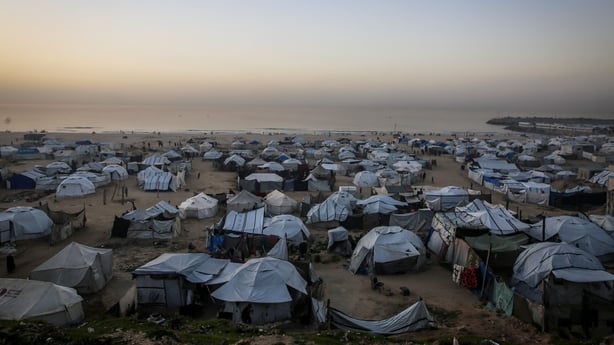
"Historically, once a camp is set up, it kind of lasts forever. The streets of the camp that were set up 50 years ago will be the streets of a neighbourhood slum. Gaza already had a number of camps that had lasted since 1948 and they had turned into very physically dangerous, poorly designed places," she added.
She proposes a number of options to avoid falling into the cycle.
"Camps are inevitable, so the focus should be on creating purpose-built, ‘future-oriented’ camps that can evolve into neighbourhoods. These would have tent and caravan housing laid out on residential blocks, where permanent homes can be built later, with transportation and utility links to nearby cities.
"In other areas, destruction is total, and everything must be razed and rebuilt entirely, often through contracts with large international construction firms," she said.
However, Ms Culbertson recognises that the question of property ownership is especially complicated.
"Even before the war, property ownership was unclear in a lot of cases. It was based on a very complex intermingling of law going back to the Ottomans, the British, the Palestinians, the Israelis etc, plus informal claims to land as well.
"So before clearing and rebuilding a neighbourhood, you'd have to figure out who lives there, how to compensate them, etc. It’s a huge challenge that needs to be addressed," she said.
Broken water pipes and a collapsed sewage system
Before any permanent structures can be built, the foundations - including water pipes and sewage systems - need to be repaired or relaid.
The problem of destroyed utilities is particularly acute in Gaza City, where "more than 150,000 metres of pipes and approximately 85% of the water wells inside Gaza City have been destroyed," according to the City Municipality.
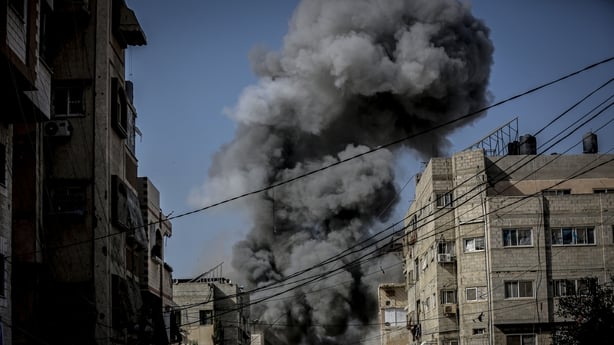
Steel piping is required for repairs, but it is not available in Gaza.
However it cannot be easily imported: the material is restricted from entry by Israel as a dual-use item, according to the UN’s deputy spokesperson Farhan Haq.
As a result, he said, approximately 70% of Gaza City’s total water production is disrupted due to difficulties repairing the Mekorot water supply line, which runs from Israel into Gaza.
Peace and security challenges
Undoubtedly, the success of any reconstruction programme depends on security, stability and safe working conditions.
Key factors which are currently in short supply.
Despite Mr Trump’s insistence that phase two of the ceasefire is now underway, multiple violations of the truce are still being recorded.
Yesterday, at least 32 Palestinians, including children, were reported to have been killed in a series of Israeli airstrikes on a police station, houses and tents.
It brings the number of Palestinians killed since the start of the ceasefire to more than 500, most of them civilians, according to Gaza’s health officials.
Israel, meanwhile, says four Israeli soldiers have been killed by Hamas and other militants during the same period.
And there are other concerns too.
Even before the war, space was a major challenge in Gaza - which had a population density of 5,700 people per square kilometre (compared to 73 people per km 2 in the Republic of Ireland).
But now Israeli forces occupy around half of the Palestinian enclave, with a ‘yellow line’ of control that is reportedly being moved further inwards by Israel, according to satellite images analysed by the news agency, Reuters.
Under the terms of Mr Trump’s ‘20-point plan’ further Israeli troop withdrawals are tied to Hamas giving up its weapons.
And despite Hamas recently agreeing to discuss disarmament with mediators and other militant groups, no formal proposals or timelines have been published.
"It's laughable"
Given all the obstacles outlined above, it was perhaps unsurprising that Mr Kushner’s plan for a ‘New Gaza’ within three years has been met with scepticism by many, including some Palestinians.
"The technical response is that it's laughable, it’s fantasy," said Raja Khalidi, a Palestinian development economist who previously worked with the UN.
"The scale (of the destruction) is unprecedented. The Americans have said the plan is the total reconstruction of Gaza, but it's being done in a way that creates new divisions, not only in Gaza, but between Gaza and the West Bank," he added.
Speaking in Davos, Mr Kushner appeared to suggest that there was "no plan B" besides his vision of a 'New Gaza,’ including glass towers, data centres and advanced manufacturing zones.
A suggestion also rejected by Mr Khalidi.
"There are multiple plans. We reviewed 12 of them in July. Six of them are Palestinian, six are global. Some of them have been working on plans for 20 years," he said.
"We see this guy come in with this idea of a ‘New Gaza’ and the Riviera, but who is this for? It's not for us. It's not really for the Palestinian people.
"The impetus and the vision for reconstruction and the planning has to come from the Palestinians," he added.