


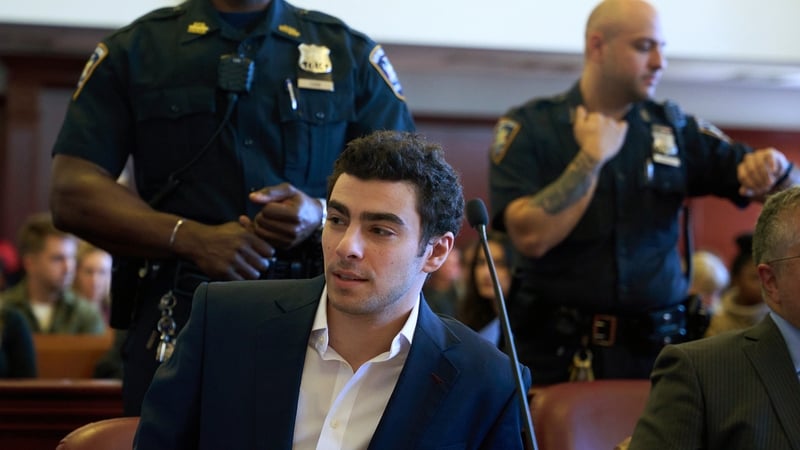
A US judge has barred prosecutors from seeking the death penalty against Luigi Mangione, the man accused of gunning down a health insurance CEO in New York in December 2024.
The judge dismissed two charges against Mr Mangione that could carry the death penalty: murder and using a gun with a silencer.
The 27-year-old suspect is still charged with two counts of stalking in his federal case, and faces state-level murder charges.
Today's decision "is solely to foreclose the death penalty as an available punishment to be considered by the jury," Judge Margaret Garnett wrote in a court filing.
Mr Mangione faces life in prison without parole if convicted of the stalking charges. The federal trial is to begin with jury selection on 8 September.
The murder of United Healthcare executive Brian Thompson, captured on surveillance video, shocked the United States and exposed public anger with the profit-driven private healthcare system.

Mr Mangione was arrested five days after the killing at a McDonald's restaurant in Altoona, Pennsylvania, some 370 kilometers from the crime scene, following a tip from a staff member.
In another significant ruling, Judge Garnett rejected Mr Mangione's lawyers' efforts to suppress as evidence the police search of a backpack recovered at the time of his arrest.
Inside, officers found a handgun, a silencer, a magazine with bullets wrapped in underwear and a red notebook described as a "manifesto".
The defence argued the search breached legal standards.
Mr Mangione has pleaded not guilty to the state and federal charges.
Read more
Luigi Mangione in court for hearing in CEO killing case
Mangione, accused of killing health insurance CEO, fights death penalty charge in court
Luigi Mangione appears for suppression of evidence hearing
