


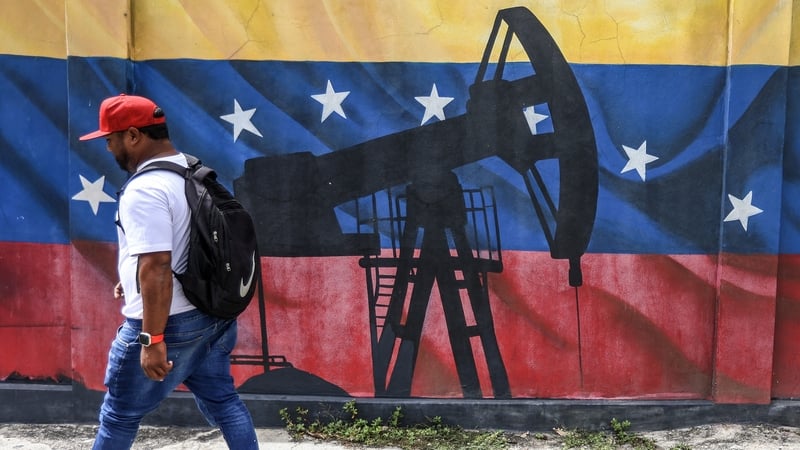
The Trump administration has lifted some sanctions on Venezuela's oil industry to make it easier for US companies to sell its crude oil, and said more restrictions on the country would be lifted soon.
The move by the Treasury’s Office of Foreign Assets Control authorises US companies to buy, sell, transport, store and refine Venezuelan crude oil, but does not lift existing US sanctions on production.
A White House official said the measure "would help flow existing product" from Venezuela and that there will soon be more announcements on the easing of sanctions.
US President Donald Trump has said the United States intends to control Venezuela’s oil sales and revenues indefinitely since US forces seized the country’s leader Nicolas Maduro in a raid on the capital Caracas on 3 January.
He said he also wants US oil companies to eventually invest $100 billion (€83 billion) to restore the OPEC-member nation’s production to its historic peaks following years of underinvestment and mismanagement.
In the meantime, the US and Venezuala have already agreed an initial deal to sell 50 million barrels of Venezuelan crude oil, with European trading houses Vitol and Trafigura marketing the supply.
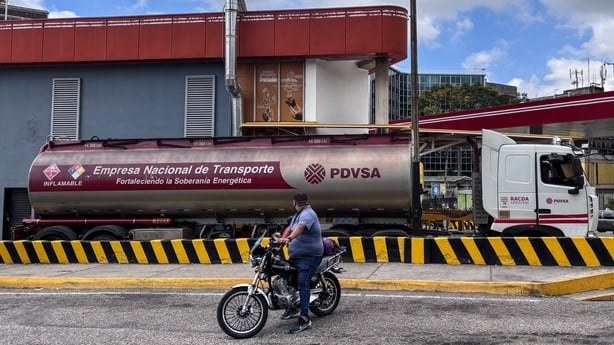
The Treasury office's new authorisation, known as a general licence, opens up Venezuela oil trade to additional companies, provided they are from the United States.
It allows transactions involving the government of Venezuela and state oil company PDVSA related to "the lifting, exportation, re-exportation, sale, resale, supply, storage, marketing, purchase, delivery, or transportation of Venezuelan-origin oil, including the refining of such oil, by an established US entity".
It specifically excludes firms and individuals from rivals like China, Iran, North Korea, Cuba and Russia.
During Mr Trump's first administration, the treasury designated Venezuela's entire energy industry as subject to US sanctions in 2019 after Mr Maduro's first re-election, which Washington did not recognise.
The new licence does not authorise any payment terms that are not commercially reasonable, involve debt swaps or payments in gold, or are denominated in digital currency.
Oil producers Chevron, Repsol and ENI, refiner Reliance Industries, and some US oil service providers had sought licences in recent weeks to expand output or exports from the OPEC member.
Expanding production in the country would require additional US authorisations.
Jeremy Paner, a former Office of Foreign Assets Control (OFAC) sanctions investigator, said the authorisation is broad in the sense that it opens up many operations including refining, transportation and "lifting" of Venezuelan oil.
But Mr Paner, who is a lawyer at Hughes Hubbard and Reed, said the scope is narrow in that it only applies to US companies.
Kevin Book, an analyst at Clear View Energy Partners, said the authorisation could provide clarity for US companies while maintaining the previous standard of case-by-case review for non-US entities.
"In short, it appears to offer 'America First’, others ask sanctions relief," he said.
The large number of individual requests to the US government had delayed progress on plans to expand exports and get investment moving quickly into Venezuela, two sources said this week.
Meanwhile the new OFAC licence came as politicians in Venezuela approved a reform of the country's main oil law that is expected to grant autonomy to private producers in joint ventures or under new contracts to operate their projects and commercialise the output.
It also formalises an oil production-sharing model first introduced by Mr Maduro and negotiated with little-known energy firms in recent years.
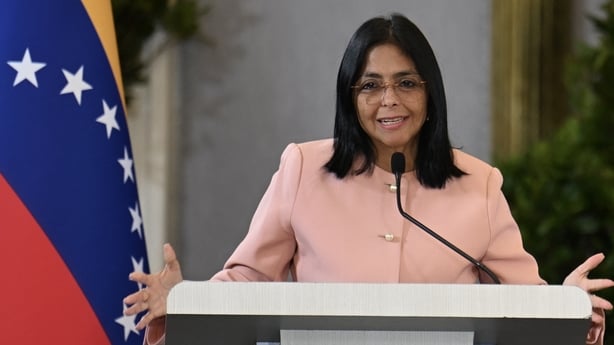
Venezuela's acting president Delcy Rodríguez hailed the adoption by parliament of the bill as a "historical leap".
"We are taking important steps," Ms Rodríguez said after a call with Mr Trump.
Francisco Monaldi, director of the Latin American Energy Program at Rice University's Baker Institute in Houston, said he wondered if the exclusion of Russian and Chinese entities would make it hard for PDVSA to operate or market oil from those ventures.
Ventures with those countries produce about 22% of the oil, he said.
"If they cannot export the oil coming from these ventures, that's a big problem," he added.
Read more: Yes, the US wants Venezuela's oil but that's not all
