


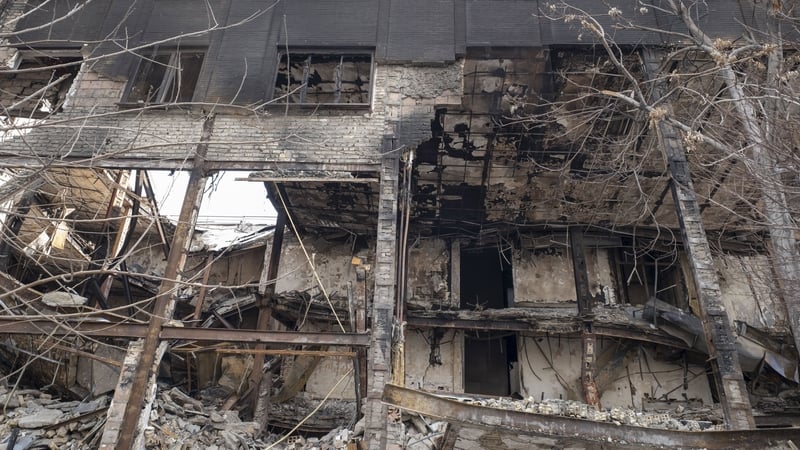
The UN rights chief has urged Iran to end its "brutal repression" of protests during an emergency session of the Human Rights Council, where a group of states is calling for UN investigators to document alleged abuses for future trials.
Rights groups say thousands of people, including bystanders, were killed during the unrest, which they describe as the biggest crackdown since Shi'ite Muslim clerics took power in the 1979 revolution.
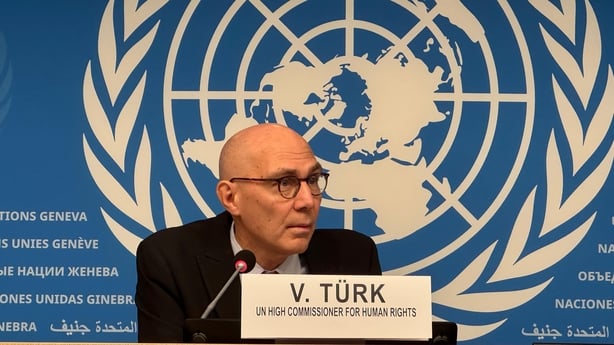
"I call on the Iranian authorities to reconsider, to pull back, and to end their brutal repression," High Commissioner Volker Turk told the meeting of the UN Human Rights Council in Geneva, voicing concerns for those detained in mass arrests.
Iranian authorities have blamed the unrest and deaths on "terrorists and rioters" backed by exiled opponents and foreign adversaries, the United States and Israel.
At least 50 countries backed the call for today's special session of the Geneva body initiated by states including Iceland, Germany and Britain. Ghana and France were among the many countries to voice concern about Iran's crackdown.
"This is the worst mass murder in the contemporary history of Iran," Payam Akhavan, a former UN prosecutor of Iranian-Canadian nationality told the meeting.
He called for a "Nuremberg moment", referring to th einternational criminal trials of Nazi leaders following World War II.
Iran rejects emergency session
Iran's ambassador to the United Nations in Geneva, Ali Bahreini, told the council its emergency session was invalid.
"The Islamic Republic of Iran does not recognise the legitimacy or validity of this special session and its subsequent resolution," Mr Bahreini said, as he reiterated Iran's tally that some 3,000 people had been killed in the unrest.
China, Pakistan, Cuba and Ethiopia also questioned the utility of the session, with Beijing's ambassador Jia Guide calling the unrest in Iran "a matter of internal affairs".
Read more
Iran's supreme leader Khamenei accuses Trump of inciting deadly protests
Iran warns protesters who joined 'riots' to surrender
Iran warns of retaliation if Trump strikes, US withdraws some personnel from bases
Iranian lecturer at UCC says 'massacre' happening in Iran
However, Western diplomats expect the session to easily approve a proposal to extend by two years the mandate of a UN investigation set up in 2022 after a previous wave of protests.
The proposal also calls for an urgent investigation into crimes linked to the latest unrest that began on 28 December "for potential future legal proceedings".
However, it was not clear who would cover the costs of the extension amid a UN funding crisis that has stalled other probes.
US targets Iran's 'shadow fleet' over crackdown on protesters
The United States has imposed sanctions on nine vessels of what is known as the shadow fleet and eight related firms, the US Treasury Department said in a statement, as Washington sought to escalate pressure on Iran over the recent killing of protesters.
The Treasury said the vessels and their respective owners or management firms, which include entities based in India, Oman and the United Arab Emirates, have collectively transported hundreds of millions of dollars' worth of Iranian oil and petroleum products to foreign markets.
"Today's sanctions target a critical component of how Iran generates the funds used to repress its own people. As previously outlined, Treasury will continue to track the tens of millions of dollars that the regime has stolen and is desperately attempting to wire to banks outside of Iran," Treasury Secretary Scott Bessent said in the statement.
Rights groups say thousands of people, including bystanders, were killed during the unrest in Iran, which they describe as the biggest crackdown since Shi'ite Muslim clerics took power in the 1979 revolution.
US President Donald Trump had repeatedly threatened to intervene against Iran over the recent killings of protesters there, but protests dwindled last week and Mr Trump's rhetoricre garding Iran has eased.
The shadow fleet refers to ships that carry oil that is under sanctions. They are typically old, their ownership opaque and they sail without the top-tier insurance cover needed to meet international standards for oil majors and many ports.
