


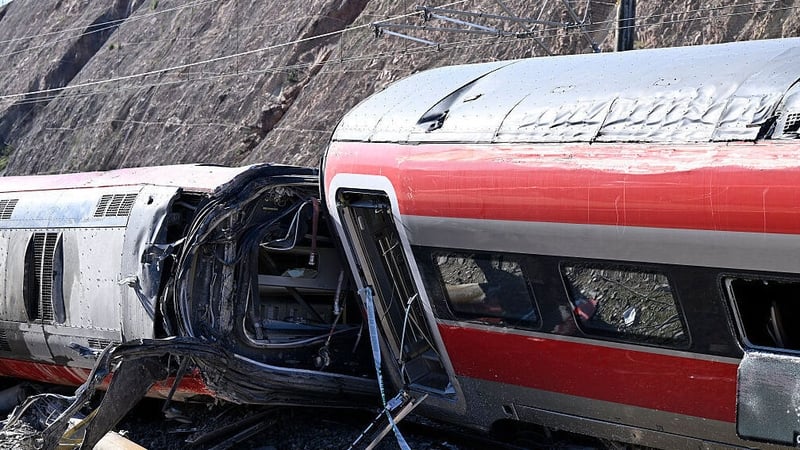
Spanish investigators found two more bodies in the wreckage of a high-speed train involved in a devastating collision last weekend, taking the death toll to 45.
The CID, the official body handling data following Sunday's crash, confirmed the final toll in a statement this evening.
It comes as two deadly back-to-back rail accidents occurred just days apart, which have raised doubts about the safety of train travel in the European Union's fourth-largest economy, a top tourist destination which boasts the world's second-largest high-speed network.
While earlier today, a commuter train collided with a crane arm that swung into its path in southeastern Spain, the transport minister said, in the country's fourth rail accident in less than a week.
Six people suffered minor injuries after the arm hit the passing train's windows, close to the port city of Cartagena in Murcia region, authorities added.
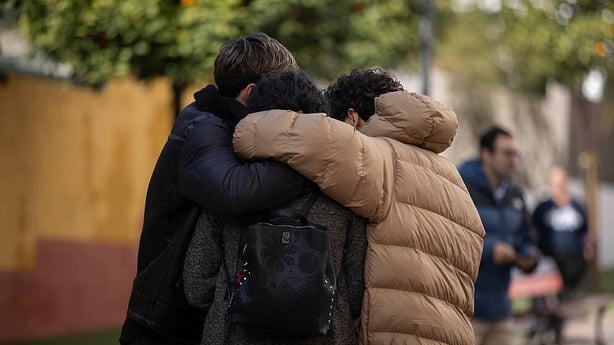
Spain observed three days of national mourning after Sunday's collision involving two high-speed trains in the southern region of Andalusia - the country's deadliest rail accident in more than a decade.
An Andalusia emergency services spokesman said two bodies had been recovered today from the train operated by state company Renfe, which smashed into another service by private firm Iryo that had derailed and crossed onto its track.
"In theory, they are the two people" yet to be recovered from a total of 45 reported as missing following the disaster, which also injured more than 120, the spokesman said.
Of those 45 people, all are Spanish apart from three women from Morocco, Russia and Germany, according to the latest update from a body set up to coordinate the identification work.
Spain is searching for answers to what the transport minister has called an "extremely strange" disaster, which happened on a recently renovated stretch of straight, flat track and involved a modern Iryo train.
Train driver strike called
On Tuesday, a train driver died and 37 people were injured when a commuter service hit a retaining wall that fell onto the tracks near Barcelona in the northeastern region of Catalonia.
The second accident, believed to have been a consequence of recent heavy rainfall, prompted the suspension yesterday of all of the wealthy region's main Rodalies commuter network, used by hundreds of thousands of people, while safety checks were carried out.
Rodalies services were expected to resume today but remained suspended as drivers did not show up.
The secretary general of the Semaf train driver union, Diego Martin Fernandez, told RAC 1 radio that a thorough review of infrastructure had been agreed but that "the procedure had not been respected".
"To restore confidence that the infrastructure meets safety conditions, we need guarantees," he said, denouncing fresh landslips on the lines.
Semaf has called a national strike for 9-11 February, denouncing repeated safety failings.
Transport Minister Oscar Puente vowed to negotiate to have the strike called off and said the two tragedies were unrelated, defending the public transport system.
