


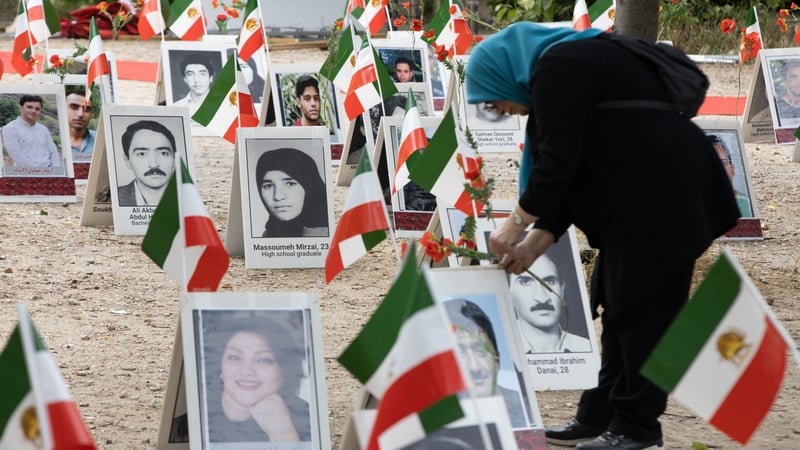
Iran's top police officer has issued an ultimatum to protesters who joined what authorities have deemed "riots", saying they must hand themselves in within three days or face the full force of the law.
But the government also pledged to tackle economic hardships that sparked the demonstrations, which were met with a crackdown that rights groups say has left thousands dead.
The protests constituted the biggest challenge to the Iranian leadership in years, with the full scale of the violence yet to emerge amid an internet blackout.
National police chief Ahmad-Reza Radan urged young people "deceived" into joining the "riots" to turn themselves in and receive lighter punishment.
Those "who became unwittingly involved in the riots are considered to be deceived individuals, not enemy soldiers", and "will be treated with leniency", he told state television.
Officials have said the demonstrations were peaceful before descending into chaos fuelled by Iran's arch-foes the United States and Israel in an effort to destabilise the nation.
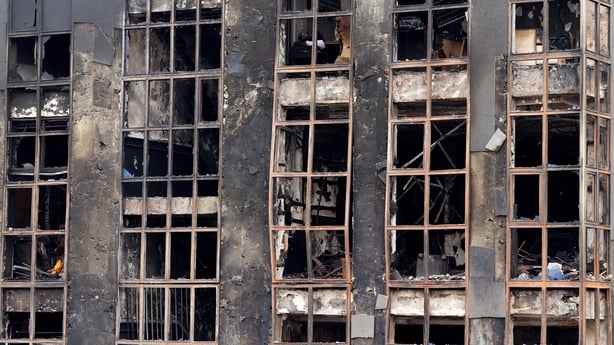
The heads of the country's executive, legislative and judicial branches have all pledged to work "around the clock" in "resolving livelihood and economic problems", according to a joint statement published by state television.
But they would also "decisively punish" the instigators of "terrorist incidents", said the statement from President Masoud Pezeshkian, parliament speaker Mohammad Bagher Ghalibaf and judiciary chief Gholamhossein Mohseni Ejei.
Alarm has grown over the possibility that authorities will use capital punishment against protesters.
Iran using executions for 'state intimidation' - UN
Iran appears to be using executions "as a tool of state intimidation", the United Nations has said, as it denounced a jump in capital punishment globally in 2025.
The Islamic republic reportedly executed 1,500 people last year, UN High Commissioner for Human Rights Volker Turk said in a statement.
"The scale and pace of executions suggest a systematic use of capital punishment as a tool of state intimidation, with disproportionate impact on ethnic minorities and migrants," he warned.
The spike in executions in Iran - which according to rights groups is the world's most prolific executioner after China - had contributed to "an alarming increase" in the use of capital punishment worldwide last year, Mr Turk said.
While the overall global trend continues to move towards universal abolition of the death penalty, Iran and a handful of other states such as Saudi Arabia and the United States saw executions surge.
Many of those executions were "for offences not meeting the 'most serious crimes' threshold required under international law", Mr Turk said, also criticising "the continued execution of people convicted of crimes committed as children, as well as persistent secrecy around executions".
Public executions
The sharp hike had especially been driven by a growing number of executions for drug-related offences not involving intentional killing.
"This is not only incompatible with international law, but also ineffective in deterring crime," Mr Turk insisted.
In the case of Iran, at least 47% of executions in 2025 had been related to drug offences, the rights office said.
The percentage was even higher in Saudi Arabia, where 78% of the 356 people reportedly executed there last year were sentenced for drug-related crimes.
"At least two among those executed in Saudi Arabia were convicted of crimes committed as children," Mr Turk pointed out.
In the United States, meanwhile, 47 executions were carried out in 2025 which was the highest number in 16 years, the rights office said, stressing that the broadened use of gas asphyxiation for executions there raised "serious concerns of torture or cruel punishment".
It also highlighted the ongoing public executions in Afghanistan, "in breach of international law".
At least 24 people were meanwhile executed in Somalia last year and 17 in Singapore, it said, adding that secrecy around the death penalty in China and North Korea made it "difficult to obtain accurate numbers".
And in Israel, the rights office pointed to a series of legislative proposals seeking to expand the use of the death penalty with mandatory capital punishment provisions applying exclusively to Palestinians.
"This raises serious concerns about violation of their due process rights, as well as other breaches of international human rights law and international humanitarian law," it said, also slamming executions carried out by Hamas in Gaza as "blatant human rights violations".
"The death penalty is not an effective crime-control tool, and it can lead to the execution of innocent people," Mr Turk said, reiterating his call for all states to "move towards full abolition".
