


The EU executive says it wants to engage with the US after President Donald Trump threatened tariffs on European countries in the standoff over Greenland, but was ready to act if needed.
"Our priority is to engage, not escalate," European Union trade spokesman Olof Gill said, but he added: "Should the threatened tariffs be imposed, the European Union has tools at its disposal and is prepared to respond."
EU leaders will meet on Thursday evening for an emergency summit.
The crisis talks in Brussels come as the 27-nation bloc weighs potential countermeasures against the United States if Mr Trump follows through on punishing some of Washington's closest allies.
Mr Trump said he was 100% committed to hitting European allies and the UK with tariffs in protest at opposition to his plan to annex Greenland.
He refused to rule out using the military to seize the Danish territory just hours after UK Prime Minister Keir Starmer called for calm and played down the prospect of a US invasion of the Arctic island.
Mr Starmer said the dispute over the mineral rich territory, which Mr Trump wants to take over because of its strategic Arctic location, should be resolved through "calm discussion between allies" rather than military action or a trade war.
But in an interview with NBC News, Mr Trump declined to rule out the use of force and insisted he would press ahead with the threatened tariffs on goods from the UK arriving in the US.
Asked if he would use force to seize Greenland, the president said: "No comment."
The US president said he would charge Britain a 10% tariff "on any and all goods" sent to the US from 1 February, increasing to 25% from 1 June, until a deal is reached for Washington to purchase Greenland from Denmark.
Mr Trump said the same would apply to Denmark, Norway, Sweden, France, Germany, the Netherlands and Finland - all of whom are members of NATO.
Asked if he will follow through the tariff threat, Mr Trump said: "I will, 100%."
He added: "Europe ought to focus on the war with Russia and Ukraine because, frankly, you see what that's gotten them ... That's what Europe should focus on - not Greenland."
"The destabilising effect could potentially be enormous" - Tánaiste Simon Harris
Tánaiste and Minister for Finance Simon Harris has said that while the EU should try to use the "brief window" open to resolve the US tariffs crisis, member states must be ready for "all eventualities".
Speaking in Brussels, where he is attending the Eurogroup and Ecofin meetings today and tomorrow, the Tánaiste said acknowledged the seriousness of the evolving situation.
However, despite saying there is a need for "cool heads" over the coming days and weeks, Mr Harris said the "potentially enormous" impact of what is happening means the EU and Ireland must "prepare for all eventualities".
"It's president Trump who has decided in recent days to threaten Europe with additional tariffs, ones that have very significant destabilising effect," he said.
"The destabilising effect could potentially be enormous, the cascading effect could be very, very significant.
"So now is a time for cool heads, we have worked in good faith with the US administration to put a trade agreement in place, we want to see that agreement implemented in full, we don't wish to see any deviation from that agreement.
"And it's very important now that we use the brief window available between now and 1 February to seek dialogue and a way forward. And a way forward that will always see Europe stand with Greenland and stand with the Kingdom of Denmark, but also prepare for all eventualities."
Britain, Denmark, Finland, France, Germany, the Netherlands, Norway and Sweden hit back at the threat of tariffs in a joint statement at the weekend.
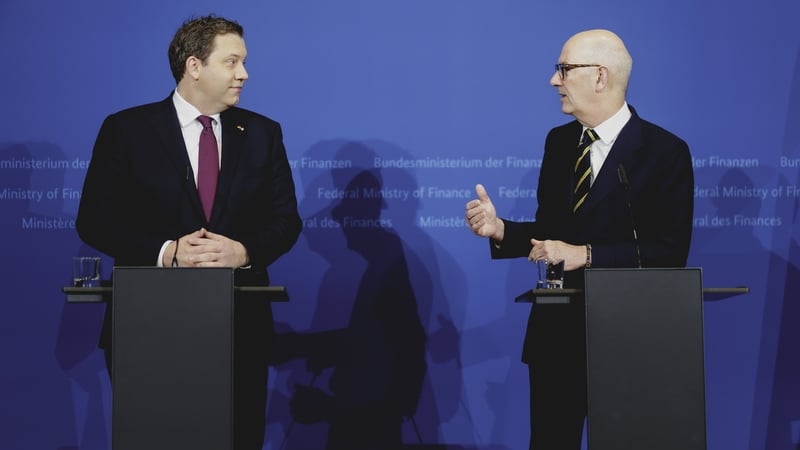
Germany's vice-chancellor Lars Klingbeil, at a Berlin press conference alongside the French economy and finance minister, Roland Lescure, said Europe's response could have three main strands.
First, the current tariff deal with the United States would be put on hold, he said.
Second, European tariffs on imports from the United States, currently suspended until early February, could come into force, said Mr Klingbeil, who is also Germany's finance minister.
And thirdly the EU should consider using its toolbox of instruments that can be deployed to respond to "economic blackmail" against Washington, he added.
Mr Lescure agreed with Mr Klingbeil that Mr Trump's threat amounted to "blackmail".
"Blackmail between allies of 250 years, blackmail between friends, is obviously unacceptable," said the French minister.
"We Europeans must remain united and coordinated in our response and, above all, be prepared to make full use of the instruments" of the European Union, he said.
"We are determined to defend our sovereignty."
Mr Klingbeil stressed that the "limit has been reached" when it came to the US leader making threats.
"We are constantly experiencing a new confrontation that President Trump is seeking," he said.
Mr Trump last night said that Denmark has not been able to do anything to get the "Russian threat" away from Greenland, and said: "Now it is time, and it will be done!"
"NATO has been telling Denmark, for 20 years, that "you have to get Russian threat away from Greenland," Mr Trump said.
"Unfortunately, Denmark has been unable to do anything about it," he wrote in a post on his social media platform Truth Social.
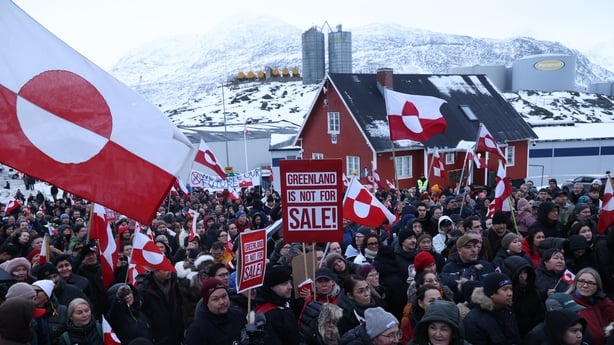
Leaders of both Denmark and Greenland have insisted the island is not for sale and does not want to be part of the United States.
Danish and other European officials have pointed out that Greenland is already covered by NATO's collective security pact.
EU member states yesterday hinted at deploying their most punitive trade measures against the Trump administration in light of the imposition of tariffs on countries which are opposed to Mr Trump's determination to acquire Greenland.
Denmark 'will not give up' on constructive Greenland dialogue, Danish Foreign Minister says
Following an emergency meeting of EU ambassadors yesterday, diplomats said member states would decide after 1 February whether or not to revive €93bn in retaliatory tariffs against the US.
The measure had been suspended since a framework EU-US trade deal was signed last summer.
Last night European Commission President Ursula von der Leyen spoke to the NATO secretary general, as well as the leaders of France, Germany, Italy and the UK, as transatlantic relations continue to sink to their lowest post-war level.
Diplomats said there was no question yet of Europe reaching for its most punitive trade measure, known as the Anti Coercion Instrument, in response to Mr Trump’s stunning imposition of tariffs on eight countries over his desire to own Greenland.
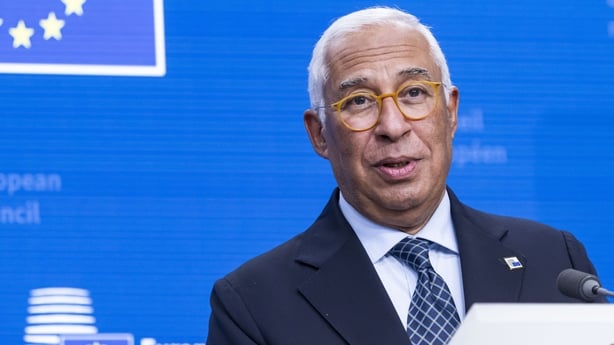
However, calling an extraordinary meeting of EU leaders for Thursday, the president of the European Council António Costa said the EU was ready to defend itself against any form of coercion.
Member states appear anxious to keep the diplomatic track open, while still proclaiming the sovereignty and territorial integrity of Greenland and the Kingdom of Denmark are not up for negotiation.
The emphasis will now shift to the World Economic Forum which opens later today in the Swiss ski resort of Davos.
Eight EU leaders, including Taoiseach Micheál Martin, will be there, as well as Ms von der Leyen and NATO secretary general Mark Rutte.
There will be a concerted effort to attempt to steer Mr Trump away from a trade war - or even a military attempt on Greenland - ahead of his address to the forum on Wednesday afternoon.
But Mr Trump now has a long track record of soaking up European flattery and ingratiation, only to unleash further hostility and vilification on his supposed allies some time later.
Read more:
Tariff threat risks most serious crisis yet in transatlantic relations
Why Europe has drawn a line in the snow in Greenland
The Minister for Foreign Affairs and Trade said it is important there are no knee jerk reactions to the tariff threats.
Speaking on RTE's Morning Ireland, Helen McEntee said she believes that the EU is united in its response to Mr Trump and trade wars do not benefit anyone.
"From Ireland's perspective, our view is that the first step needs to be dialogue and engagement, and that even in itself, within the anti-coercion instrument, that is the first step there. How do we engage? What are the options here for us?"
Ireland is clear and unequivocal in its support for Greenland, Minister McEntee said, and despite Ireland's excellent relationship and ties with the US, "we will not fail" to call out wrongdoing when we see it.
Peace prize snub influences Trump's attitude to Greenland
The US president meanwhile suggested the decision not to award him the Nobel Peace prize - given each year in Norway's capital Oslo - had influenced his attitude to Greenland.
In a letter to Norwegian prime minister Jonas Gahr Store, Mr Trump also said he no longer feels "an obligation to think purely of peace".
UK Foreign Secretary Yvette Cooper met her Danish counterpart Lars Lokke Rasmussen in London amid the crisis.
Ms Cooper reiterated Mr Starmer's messaging that "tariffs and threats against allies in this way is completely wrong and counterproductive".
Mr Rasmussen said he and Ms Cooper had been "in almost daily contact for the last week or so", adding: "I'm not here in order to ask for your support, I'm here to thank you for your support."
He also urged allies to "combine forces" in support of international principles and against the common "enemy" - Russia.
Additional reporting AFP, Reuters
