


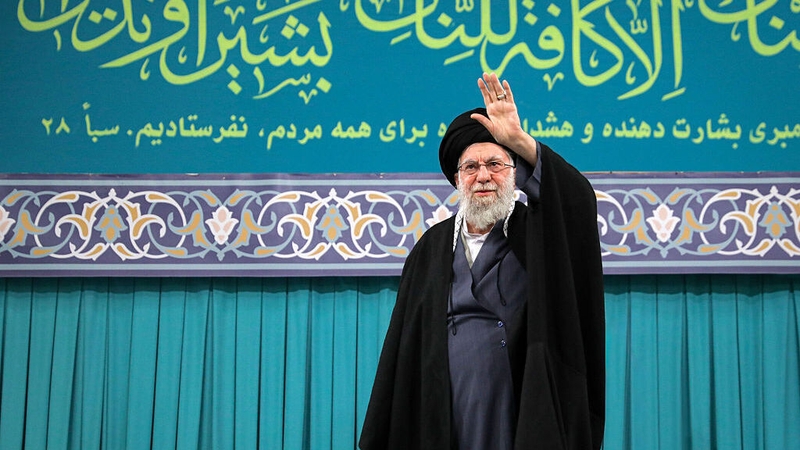
Iran's Supreme Leader Ayatollah Ali Khamenei has blamed US President Donald Trump for weeks of demonstrations that rights groups said have led to more than 3,000 deaths.
"We consider the US president criminal for the casualties, damages and slander he inflicted on the Iranian nation," Mr Khamenei said, according to Iranian state media.
The protests erupted on 28 December over economic hardship and swelled into widespread demonstrations calling for the end of clerical rule in the Islamic Republic.
Mr Trump has repeatedly threatened to intervene, including by threatening "very strong action" if Iran executed protesters.
However, yesterday, in a social media post, he thanked Tehran's leaders, saying they had called off mass hangings. Iran said there was "no plan to hang people".
In comments that appeared to respond to Mr Trump, Mr Khamenei said: "We will not drag the country into war, but we will not let domestic or international criminals go unpunished," state media reported.
Iran schools to reopen after week of closure
Iranian schools are set to reopen tomorrow, media reported, following a one-week closure brought on by the country's protests.
"Schools in Tehran and other cities which were announced closed since January 10 will be resumed from tomorrow (Sunday)," the ISNA news agency said, adding that university exams that had been postponed would be held on 24 January.
Iran's worst unrest in years
Iran's ultimate authority Mr Khamenei said "several thousand deaths" had happened during the nationwide protests, which are Iran's worst unrest in years.
He accused Iran's longtime enemies the US and Israel of organising the violence.
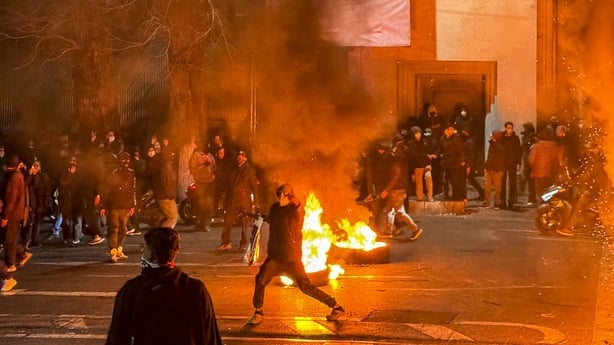
"Those linked to Israel and the US caused massive damage and killed several thousand," he said, adding that they started fires, destroyed public property and incited chaos.
They "committed crimes and a grave slander," he said.
The US-based Human Rights Activists News Agency, or HRANA, said it had verified 3,090 deaths, including 2,885 protesters, and over 22,000 arrests.
Last week, Iran's prosecutor general said detainees would face severe punishment.
Those held included people who "aided rioters and terrorists attacking security forces and public property" and "mercenaries who took up arms and spread fear among citizens," he said.
"All perpetrators are mohareb," state media quoted Mohammad Movahedi Azad as saying, adding that investigations would be conducted "without leniency, mercy or tolerance".
Mohareb, an Islamic legal term meaning to wage war against God, is punishable by death under Iranian law.
Internet services restored in part
Reuters has not been able to independently verify the numbers of casualties or details of disturbances reported by Iranian media and rights groups.
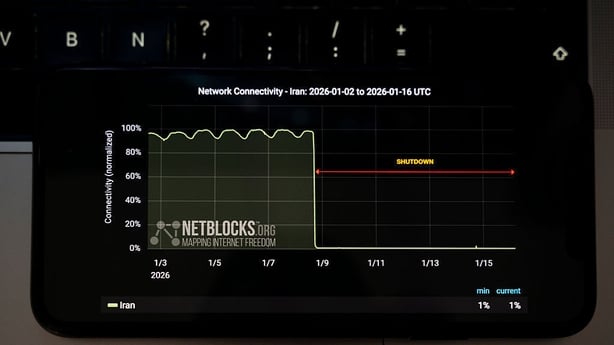
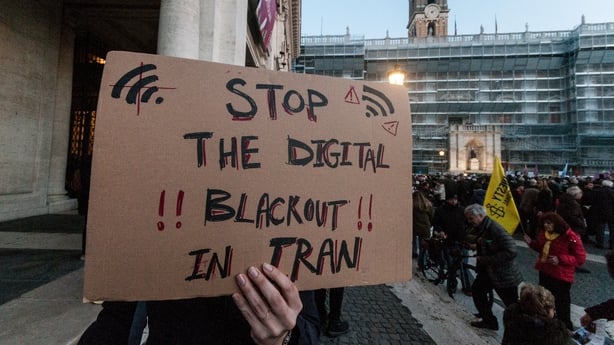
Getting information has been complicated by internet blackouts, which were in part lifted today.
Iran's crackdown appears to have broadly quelled protests, according to residents and state media, and the semi-official Mehr News Agency reported that internet service had been restored for some users.
The ISNA news website said SMS service had also been reactivated.
"Metrics show a very slight rise in internet connectivity in #Iran this morning" after 200 hours of shutdown, the internet monitoring group NetBlocks posted on X.
Connectivity remained around 2% of ordinary levels, it said.
A resident of Karaj, west of Tehran, reached by phone via WhatsApp, said he noticed the internet was back at 4am (midnight GMT) last night.
Karaj experienced some of the most severe violence during the protests. The resident, who asked not to be identified, said Thursday was the peak of the unrest there.
A few Iranians overseas said on social media that they had also been able to message users in Iran early today.
Arrests have followed intelligence operations, media say
State media has reported the arrest of thousands of "rioters and terrorists" across the country, including people linked to opposition groups abroad that advocate the overthrow of the Islamic Republic.
The arrests included several people Iranian state media described as "ringleaders", including a woman named as Nazanin Baradaran, who was taken into custody following "complex intelligence operations".
The reports said that Ms Baradaran operated under the pseudonym Raha Parham on behalf of Reza Pahlavi - the exiled son of Iran's last shah - and had played a leading role in organising the unrest.
Reuters could not verify the report or her identity.
Mr Pahlavi, a longtime opposition figure, has positioned himself as a potential leader in the event of regime collapse and has said he would seek to re-establish diplomatic ties between Iran and Israel if he were to assume a leadership role in the country.
Israeli officials have expressed support for Mr Pahlavi.
In a rare public disclosure this month, Israeli Heritage Minister Amichai Eliyahu said in an interview with Israel's Army Radio that Israel had operatives "on the ground" in Iran.
He said they aimed to weaken Iran's capabilities, though he denied they were directly working to topple the leadership.
