

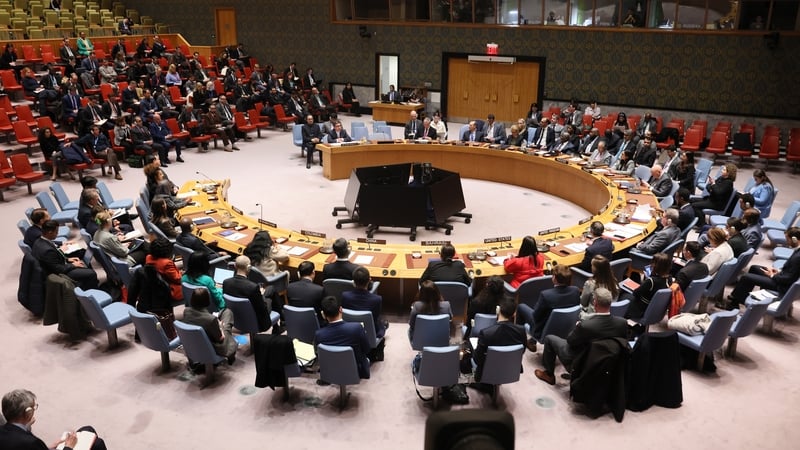
A senior UN official warned that threats of military action against Iran, like those made by US President Donald Trump, increased "volatility" in the protest-torn country.
Iran was shaken over the last week by some of the biggest anti-government protests in the history of the Islamic republic, although the demonstrations appear to have diminished in the face of repression and a week-long internet blackout.
Until Wednesday, the United States was threatening military action against Iran should it carry out the death penalty against people arrested over the protests - and the US envoy to the UN said all options were still "on the table."
"We note with alarm various public statements suggesting possible military strikes on Iran. This external dimension adds volatility to an already combustible situation," UN Assistant Secretary-General Martha Pobee told the UN Security Council.
"All efforts must be undertaken to prevent any further deterioration," she added.
Iranian-American journalist Masih Alinejad, invited to address the Council by the US, said "all Iranians are united" against the clerical system in Iran.
"Millions of Iranians flooded into the streets demanding that their money stop being stolen and sending to Hamas, to Hezbollah, to Houthi" fighters, she said referring to Iran-backed armed groups.
Iranians "welcomed when President Trump offered to rescue unarmed people being shot in their heart, in their chest by the security forces inside Iran," said Ms Alinejad who became a prominent face of criticism of the Iranian government in the United States.
US ambassador to the UN Mike Waltz said the United States "stands by the brave people of Iran period."
"The level of repression that the Iranian regime has unleashed on its own citizens, its own people, has repercussions for international peace and security," he added.
