Australian authorities have declared a state of disaster after bushfires destroyed houses and razed vast belts of forest in the country's southeast.
Temperatures soared past 40C as a heatwave blanketed the state of Victoria this week, with hot winds fanning some of the most dangerous fire weather since the "Black Summer" bushfires of 2019-2020.
One of the most destructive bushfires ripped through almost 150,000 hectares near Longwood, a region cloaked in native forests.
State premier Jacinta Allan declared a state of disaster, giving fire crews emergency powers to force evacuations.
"It's all about one thing: protecting Victorian lives," she said.
Three people missing inside one of the state's most dangerous fire grounds had been found, Ms Allan said.
Emergency Management Commissioner Tim Wiebusch said at least 130 structures had been destroyed across the state, a figure that includes houses, sheds and other buildings.
"We've seen significant livestock, cropping land and vineyards that have also been impacted or destroyed," he told reporters.
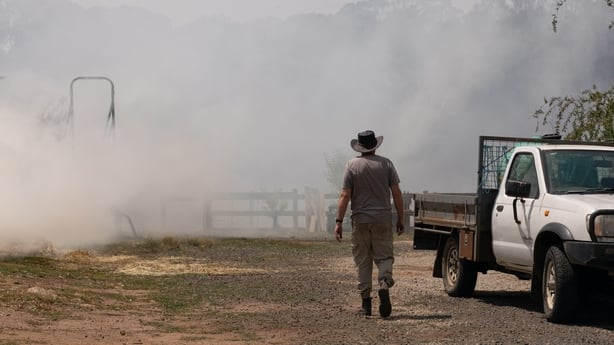
Mr Wiebusch said ten major fires were still burning despite conditions easing.
The worst blazes have largely been confined to sparsely populated rural areas where towns might number a few hundred people.
'Terrifying'
"There were embers falling everywhere. It was terrifying," cattle farmer Scott Purcell told national broadcaster ABC.
Another bushfire near the small town of Walwa crackled with lightning as it radiated enough heat to form a localised thunderstorm, fire authorities said.
Hundreds of firefighters from across Australia have been called in to help with millions sweltering through the week's intense heatwave.
Hundreds of baby bats died earlier this week as stifling temperatures settled over the state of South Australia, a local wildlife group said.
The Black Summer bushfires raged across Australia's eastern seaboard from late 2019 to early 2020, razing millions of hectares, destroying thousands of homes and blanketing cities in noxious smoke.
Australia's climate has warmed by an average of 1.51C since 1910, researchers have found, fuelling increasingly frequent extreme weather patterns over both land and sea.