


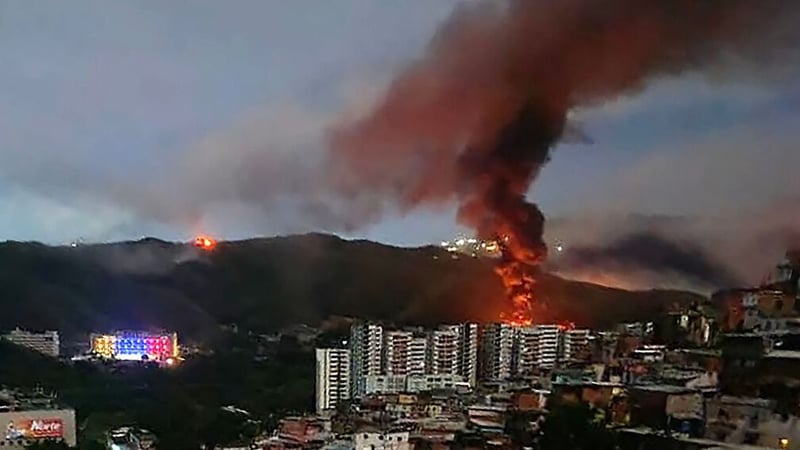
US air strikes on Venezuela and the seizing of the country's leader last weekend clearly "undermined a fundamental principle of international law," the United Nations has said.
"States must not threaten or use force against the territorial integrity or political independence of any state," Ravina Shamdasani, spokeswoman for the UN rights office, told reporters in Geneva.
"And this is what we are seeing," she said, calling on the international community to "come together with one voice ... to make clear that this is an action that is in contravention of the international law that was set up by member states".
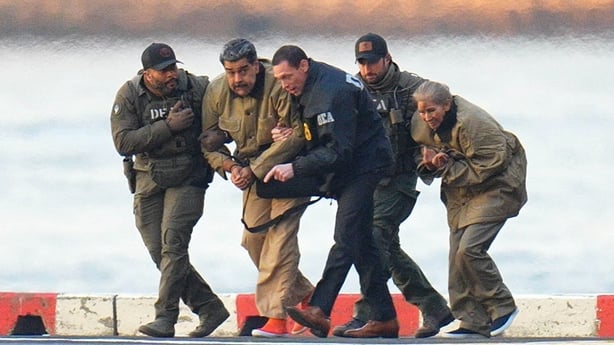
US commandos backed by warplanes, the navy and air strikes, forcibly seized Venezuelan president Nicolas Maduro and his wife Cilia Flores in the early hours of Saturday.
55 military personnel killed
Venezuela and Cuba have said that 55 military personnel were killed during the US raid.
Cuba published the names of 32 members of its military who died in the assault in Caracas, which included three senior officers from the Cuban interior ministry.
The Venezuelan military published online a list of 23 of its personnel who were also killed, including five admirals.
Mr Maduro appeared in court in New York yesterday to deny drug trafficking and other charges brought by Washington, insisting he had been kidnapped and remained Venezuela's president.
He became president in 2013 after taking over from Hugo Chavez.
The US and European Union say Mr Maduro stayed in power by rigging elections - most recently in 2024 - and imprisoning opponents, while overseeing rampant corruption.
Ms Shamdasani said the UN rights office had spent years reporting on the "continued deterioration" in Venezuela.
'Unacceptable'
However she dismissed US justifications for its actions, saying accountability for rights violations "cannot be achieved by unilateral military intervention in violation of international law".
"Using human rights arguments as a justification for this kind of military intervention is unacceptable," she said, adding that she feared the US intervention "will only make the situation worse".
Ms Shamdasani pointed out that a state of emergency declared by Venezuelan authorities on Saturday allows property seizures, restricts free movement and suspends the right to protest among other measures.
"Far from being a victory for human rights, this military intervention ... damages the architecture of international security, making every country less safe," she said.
The rights office has been monitoring from Panama since its international staff were expelled from Venezuela in early 2024.
The UN humanitarian agency OCHA said nearly eight million people in Venezuela - a quarter of the population - needed humanitarian assistance even before the US operation.
The UN refugee agency UNHCR said they had yet to see signs of mass displacement since Saturday.
UNHCR spokeswoman Eujin Byun said the agency was closely monitoring the situation, adding that UN agencies were ready to "support emergency relief efforts and to protect displaced people in need as required".
The UN Special Rapporteur on the Promotion and Protection of Human Rights and Fundamental Freedoms while Countering Terrorism, Professor Ben Saul, said that the proper route for dealing with drug trafficking or allegations of other serious crimes is through the process of international legal cooperation, seeking extradition, intelligence sharing and sharing of evidence.
Speaking on RTÉ's Today with David McCullagh, Prof Saul added that there is no basis to intervene in another country to change a regime for reasons of restoring democracy or human rights, and he said the UN Security Council is the appropriate mechanism.
Meanwhile, Venezuela's main opposition leader Maria Corina Machado has vowed to return home quickly, declaring her movement ready to win a free election.
Read More - Factbox: Venezuela's oil and mining sectors
