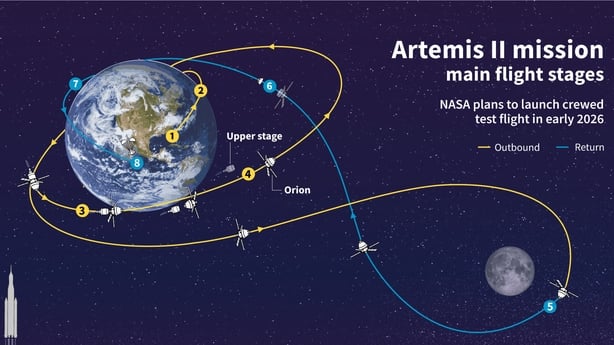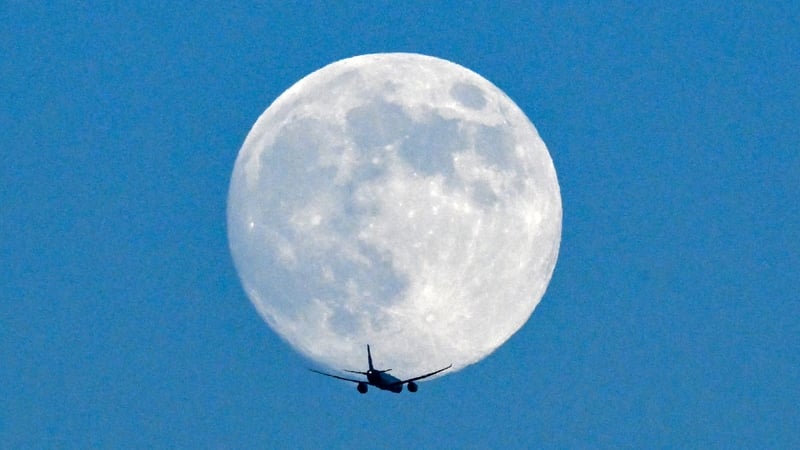
There will be 13 full moons in 2026 and it will also be the year that humans make it back to the Moon.
The Moon has been part of human culture from the dawn of time and now it may be the springboard for the exploration of space.
Astronomy Expert Danielle Murphy joined Una Kelly on Drivetime to discuss our connections with the moon.
The first full moon of any year is called a 'Wolf Moon’. Ms Murphy explained that the traditional association with wolves came from the mid-winter howls when wolves were hungry, hunting and marking out territory.
"Every full moon throughout the year has its own name and a lot of them are linked up to animals like the ‘Sturgeon Moon’," she said. "One of my favourites is the ‘Strawberry moon’ for that time of the year when the strawberries are ripe."
Each of the full moons have their own names: January - Wolf Moon; February - Snow Moon; March - Worm Moon; April - Pink Moon; May - Flower Moon; June - Strawberry Moon; July - Buck Moon; August - Sturgeon Moon; September - Corn Moon; October - Hunter's Moon; November - Beaver Moon; December - Cold Moon.
The Moon has significance across many cultures.
Where western culture sees a man on the moon, Chinese culture sees a rabbit in the rising, crescent moon. It’s connected to the jade rabbit which is the companion of the Chinese moon goddess.
As there are 13 full moons this year, May will be the month with the second ‘blue’ moon.
Back to the future
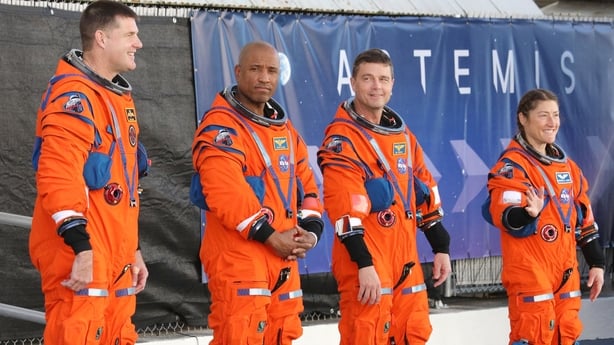
It is 50 years since the last manned moon mission and that is something that NASA hopes to change this year with its planned Artemis Missions.
There is also a mythical reference as the original missions were named after Apollo, the brother of Artemis.
This mission is different from Appollo in that it aims to have people eventually living on the moon and having a lunar village.
The intention is to use the Moon as a steppingstone to see how humans can live on the surface of another planet.
"So if that goes well, the idea is to move on to Mars, so it’s a longer programme here, not just going back to the Moon," said Ms Murphy.
The planned lunar village will be comprised of domed buildings on the surface perhaps using materials actually found on the Moon, if this is viable.
Buildings on the Moon will have to protect humans from radiation and from space debris.
On Earth the atmosphere does both jobs and it might be necessary to build into the surface of the moon for protection.
Ms Murphy said that there were a lot of different reasons to send people to Mars.
"Exploration is one goal. But Mars is also a planet similar to Earth, it is rocky, we can stand on it and it is our neighbour," she said.
It only takes three days to get to the Moon whereas it takes a minimum of six months to get to Mars.
This year’s Artemis 2 mission won’t actually put humans on the Moon but will have a crew in orbit.
Next year’s Artemis 3 mission will involve a full Moon landing.