


EU Foreign Affairs chief Kaja Kallas has said that Europe "remains vigilant" as its critical infrastructure was "at high risk of sabotage".
Her comments come as Finnish authorities seized a cargo vessel which it suspected had damaged a telecommunications cable between Helsinki and Tallinn.
The vessel was transporting Russian steel targeted by European Union sanctions, Finnish Customs has said.
Yesterday, Finnish police detained the Fitburg, a 132-metre-long cargo ship en route from St Petersburg, Russia, to Haifa, Israel, and its 14 crew members following suspicion the ship's anchor had damaged the subsea telecoms cable in the Gulf of Finland.
"Preliminary information indicated that the cargo consisted of steel products originating in Russia, which are subject to extensive sanctions imposed on Russia," Finnish Customs said in a statement.
The agency therefore carried out an inspection of the ship's cargo late yesterday.
"According to the assessment of experts at Finnish Customs, the structural steel in question falls under the EU's sectoral sanctions," it said.
"Import of such sanctioned goods into the EU is prohibited under EU sanctions regulations."
Finnish Customs said it was still investigating "the applicability of EU sanctions legislation to this case".
The steel remained impounded pending clarification, it said, and Finnish Customs has opened a preliminary inquiry "with a view to launching a pre-trial investigation into a potential sanctions violation".
Finnish police have said that they were investigating the damaged cable incident as "aggravated criminal damage, attempted aggravated criminal damage, and aggravated interference with telecommunications".
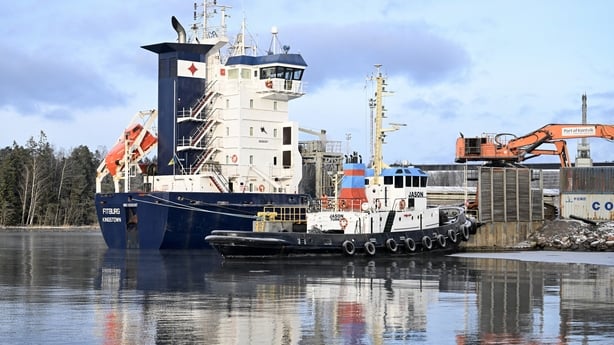
The Fitburg is flagged from St Vincent and Grenadines, and its 14 crew members - from Russia, Georgia, Azerbaijan and Kazakhstan - were detained and to be questioned by Finnish police.
Energy and communications infrastructure, including underwater cables and pipelines, have been damaged in the Baltic Sea in recent years.
Since Russia's full-scale invasion of Ukraine in February 2022, many experts and political leaders have viewed the suspected cable sabotage as part of a "hybrid war" carried out by Russia against western countries.
EU foreign affairs chief Kaja Kallas has said that Europe "remains vigilant" as its critical infrastructure was "at high risk of sabotage".
In a post on X, Ms Kallas said: "The EU will continue to fortify its critical infrastructure, including by investing in new cables, strengthening surveillance, ensuring more repair capacity, and moving against Moscow's shadow fleet, which also acts as a launchpad for hybrid attacks."
The damaged cable is owned by Finnish telecoms group Elisa and located in Estonia's exclusive economic zone.
Elisa said its services were re-routed and the damage did not impact customers.
