


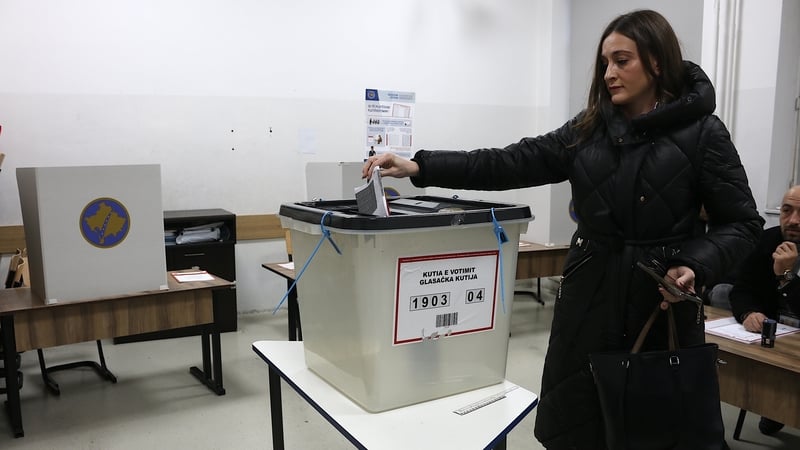
Polling is under way in Kosovo, with nationalist Prime Minister Albin Kurti's party seeking a majority to end a year-long political deadlock that has paralysed parliament and delayed international funding for Europe's youngest nation.
The vote is the second this year in Kosovo after Mr Kurti's Vetevendosje party fell short of a majority in February. Months of failed coalition talks prompted President Vjosa Osmani to dissolve parliament in November and call an early election.
Failure to form a government and reopen parliament would prolong the crisis at a critical time. MPs must elect a new president in April and ratify €1 billion in loan agreements from the European Union and World Bank that expire in the coming months.
The Balkan country's opposition parties have refused to govern with Mr Kurti, criticising his handling of ties with Western allies and his approach to Kosovo's ethnically divided north, where a Serb minority lives. Mr Kurti blames the opposition for the impasse.
To woo voters, Mr Kurti has pledged an additional month of salary per year for public sector workers, €1bn per year in capital investment and a new prosecution unit to fight organised crime. Opposition parties have also focused on improving living standards.
"We want the next government to create conditions for the youth to stay here and not leave," one voter in the capital Pristina, said.
Opinion polls are not published in Kosovo, leaving the outcome uncertain. Many voters say they are disillusioned.
"There wouldn't be great joy if Kurti wins, nor would there be if the opposition wins. This country needs drastic changes, and I don’t see that change coming," another vote said.
Polls will close at 6pm Irish time and exit polls are expected soon after voting ends.
Kosovo declared independence from Serbia in 2008 with US backing, including a 1999 NATO bombing campaign against Serbian forces trying to crush an uprising by the 90% ethnic Albanian majority.
Despite international support, the country of 1.6 million has struggled with poverty, instability and organised crime. Mr Kurti's tenure, which began in 2021, was the first time a Pristina government completed a full term.
Tensions with Serbia flared in 2023, prompting the EU to impose sanctions on Kosovo. The bloc said this month it would lift them after ethnic Serb mayors were elected in northern municipalities, but the measures likely cost Kosovo hundreds of millions of euros.
