


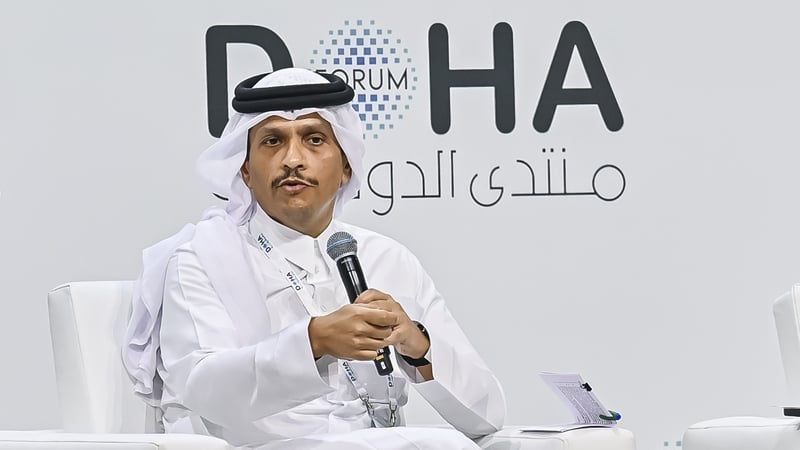
Negotiations on consolidating the US-backed truce in the war in Gaza are at a "critical" moment, Qatari Prime Minister Sheikh Mohammed bin Abdulrahman Al Thani has said.
Mediators are working to force the next phase of the ceasefire forward, Mr al-Thani, whose country has been a key mediator in the war, said during a panel discussion at the Doha Forum conference in Qatar.
Violence has subsided but has not stopped since the Gaza truce took effect on 10 October 10, and at least seven people were reported killed today.
"We are at a critical moment. It's not yet there. So what we have just done is a pause," he said.
"We cannot consider it yet a ceasefire. A ceasefire cannot be completed unless there is a full withdrawal of the Israeli forces - (until) there is stability back in Gaza, people can go in and out - which is not the case today."
Talks on the next stages of US President Donald Trump's plan to end the two-year war in the Palestinian enclave have been continuing.
The plan calls for an interim technocratic Palestinian government in Gaza, overseen by an international "board of peace" and backed by an international security force.
Agreeing on the makeup and mandate of that force has been particularly challenging.
On Thursday, an Israeli delegation held talks in Cairo with mediators on the return of the last hostage held in Gaza, which would complete an initial part of Mr Trump's plan.
Since the truce started, Hamas has returned all 20 living hostages and 27 bodies in exchange for around 2,000 Palestinian detainees and convicted prisoners.
Although fighting has diminished, Israel has continued to attack Gaza and demolish what it says is Hamas infrastructure.
Hamas and Israel have traded blame for violations.
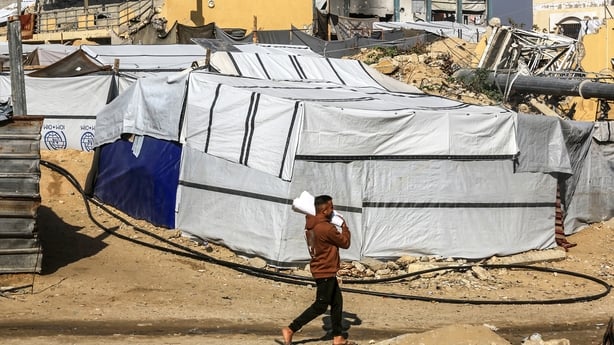
Hamas-run local health authorities said that Israeli fire had killed seven people in Beit Lahiya, Jabalia and Zeitoun in northern Gaza, including a 70-year-old woman who died due to a drone strike.
The Israeli military was unaware of any drone strike, a spokesperson said.
The military said that in two separate incidents, forces deployed in northern Gaza behind the so-called yellow line of withdrawal agreed in the ceasefire had fired on Palestinian militants who crossed the line, killing three.
Israel said this week it would open the Rafah Crossing for exit through Egypt soon, and that it would allow entry through Rafah into Gaza once the last remaining deceased hostage was returned.
Mr Trump's plan calls for an interim technocratic Palestinian government in Gaza, overseen by an international "board of peace" and backed by an international security force.
Agreeing on the makeup and mandate of that force has been particularly challenging.
The next phase
Under a second phase of the deal, which has yet to begin, Israel is to withdraw from its positions in the territory, an interim authority is to take over governance, and an international stabilisation force is to be deployed.
"We need to deploy this force as soon as possible on the ground because one party, which is Israel, is every day violating the ceasefire," said Egypt's Foreign Minister Badr Abdelatty, also speaking at the Doha Forum.
Egypt helped secure the long-elusive truce in Gaza.
Arab and Muslim nations, however, have been hesitant to participate in the new force, which could end up fighting Palestinian militants.
Turkey's Foreign Minister Hakan Fidan told the forum that talks on the force were ongoing and critical questions remained as to its command structure and which countries would contribute.
But its first goal, Mr Fidan said, "should be to separate Palestinians from the Israelis".
"This should be our main objective. Then we can address the other remaining issues," he added.
Read the latest stories from the Middle East
Mr Abdelatty seconded the idea, calling for the force to be deployed along "the yellow line in order to verify and to monitor" the truce.
There have been multiple deadly incidents of Israeli forces firing on Palestinians in the vicinity of the yellow line since the ceasefire went into effect.
Hamas is supposed to disarm under the 20-point plan first outlined by Mr Trump, with members who decommission their weapons allowed to leave Gaza.
The militant group has repeatedly rejected the proposition.
Turkey, which is also a guarantor of the truce, has indicated it wants to take part in the stabilisation force, but its efforts are viewed unfavourably in Israel, which considers Ankara too close to Hamas.
