


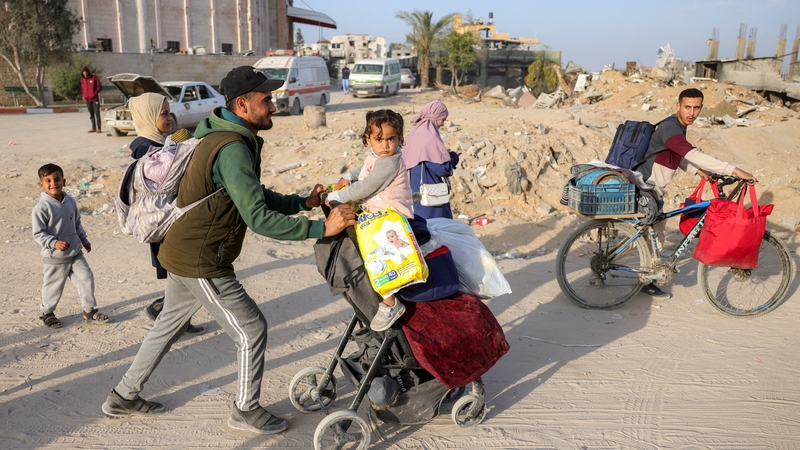
Israel bombarded Gaza and killed more than 400 people, Palestinian health authorities reported, in an onslaught that ended weeks of relative calm after talks to secure a permanent ceasefire stalled.
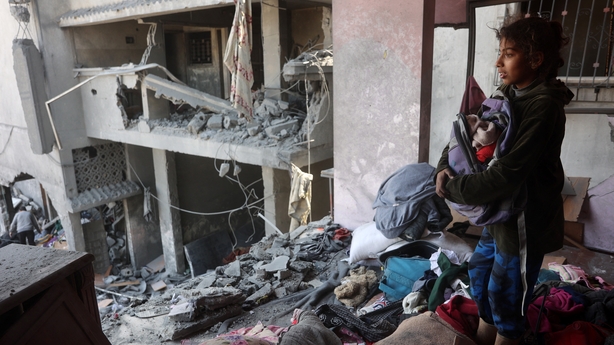
Israel and Palestinian militant group Hamas each accused the other of breaching the truce, which had broadly held since January, offering respite from war for the 2.3 million inhabitants of Gaza, where most buildings have been reduced to rubble.
Hamas accused Israel of jeopardising efforts by mediators to negotiate a permanent deal to end the fighting, but the group made no threat of retaliation.
Israeli Prime Minister Benjamin Netanyahu's office said he would deliver a statement at 8pm (6pm Irish time), while Israeli media reported the cabinet would meet at 9pm (7pm Irish time).
Mr Netanyahu claimed earlier that he ordered strikes because Hamas had rejected proposals to secure a ceasefire extension and pledged to step up military action.
The strikes hit houses and tent encampments from the north to the south of Gaza, and Israeli tanks shelled from across the border line, witnesses said.
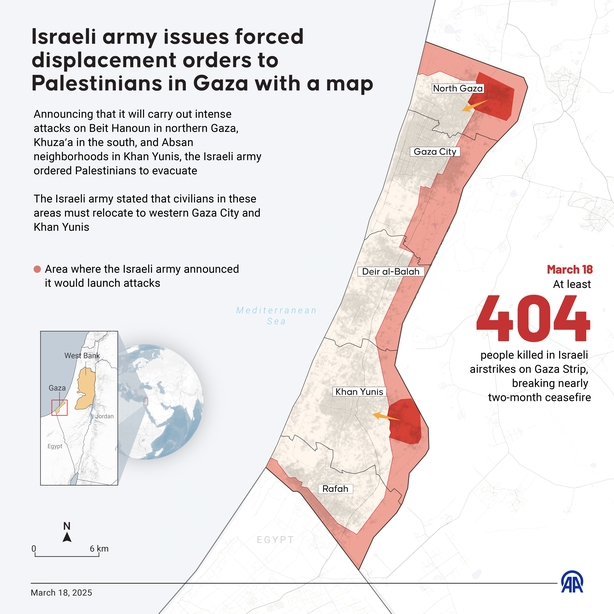
Gaza's health ministry said 404 people had been killed in one of the biggest single-day tolls since Israel's war erupted.
"It was a night of hell. It felt like the first days of the war," said Rabiha Jamal, 65, a mother-of-five from Gaza City.
Evacuation orders
Families in Beit Hanoun, in northern Gaza, and eastern areas of Khan Younis in the south fled their homes, some on foot, others in cars or rickshaws, carrying some of their belongings after the Israeli military issued evacuation orders warning the areas were "dangerous combat zones".
Egypt and Qatar, mediators in the ceasefire deal along with the US, condemned the Israeli assault, while the European Union said in a statement it deplored the breakdown of the ceasefire.
"The EU calls on Israel to end its military operations and reiterates its call on Hamas to release all the hostages immediately," the statement from EU foreign policy chief Kaja Kallas, and Commissioners Dubravka Šuica and Hadja Labib, said.
The UN emergency relief coordinator, Tom Fletcher, said the "modest gains" made during the ceasefire had been destroyed.
Israel has halted aid deliveries into Gaza for more than two weeks, exacerbating a humanitarian crisis.
However, Dorothy Shea, acting US ambassador to the United Nations, claimed the blame for the resumption of Gaza hostilities "lies solely with Hamas" and expressed support for Israel in its next steps.
Bodies stacked up
Former hostages and the families of some still held in Gaza expressed outrage over the resumption of war.
Israel claims 59 of the 250 or so hostages Hamas seized in its 7 October 2023 attack are still in Gaza.
Released hostage Yarden Bibas, whose wife and two sons died while in captivity, said on Facebook: "Israel's decision to return to fighting brings me back to Gaza, to the moments where I heard the sounds of explosions around me and where I feared for my life as I was afraid that the tunnel where I was being held would collapse ... Military pressure endangers hostages, an agreement brings them back."
In Gaza, witnesses contacted by Reuters said Israeli tanks shelled areas in Rafah in the south.
Children sat next to bagged-up belongings, ready to flee north again having returned to Rafah with the ceasefire.
Read more:
Follow live updates after this morning's attack
Latest Middle East stories
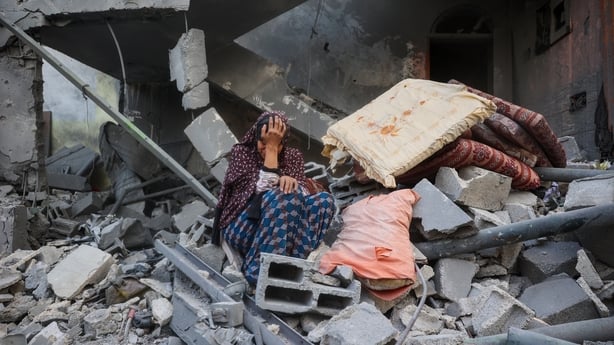
In hospitals strained by 15 months of Israeli bombardment, piles of bodies in white plastic sheets smeared with blood were stacked up as casualties were brought in.
Gaza's health ministry reported that many of those killed by Israel's airstrikes were children, and 562 people were wounded.
We need your consent to load this rte-player contentWe use rte-player to manage extra content that can set cookies on your device and collect data about your activity. Please review their details and accept them to load the content.Manage Preferences
Among the Hamas officials killed in the airstrikes were Essam Addalees, the de facto head of the government, Ahmed Al-Hetta, deputy justice minister and Mahmoud Abu Watfa, the head of the security services, Hamas said.
As Israel launched its attacks on Gaza, its forces have pressed on with an operation in the occupied West Bank and Israeli jets have struck targets in southern Lebanon and Syria in recent days.
Truce standoff
Negotiating teams from Israel and Hamas had been in Qatar as mediators sought to bridge the gap between the two sides after the end of an initial phase in the ceasefire, which saw 33 Israeli hostages and five Thais released in exchange for some 2,000 Palestinian prisoners.
Israel had been pressing for the return of the remaining hostages in exchange for a truce until after the Muslim fasting month of Ramadan and the Jewish Passover holiday in April.
However, Hamas has insisted on moving to negotiations for a permanent end to the war and a full withdrawal of Israeli forces, under the terms of the original ceasefire agreement.
Hamas spokesperson Abdel-Latif Al-Qanoua told Reuters the group was still in touch with mediators, and it was keen to complete the implementation of the original deal.
The war erupted after Hamas-led gunmen attacked Israel, killing some 1,200 people, according to Israeli tallies.
The Israeli war in Gaza has killed more than 48,000 people, say Palestinian health authorities.
