

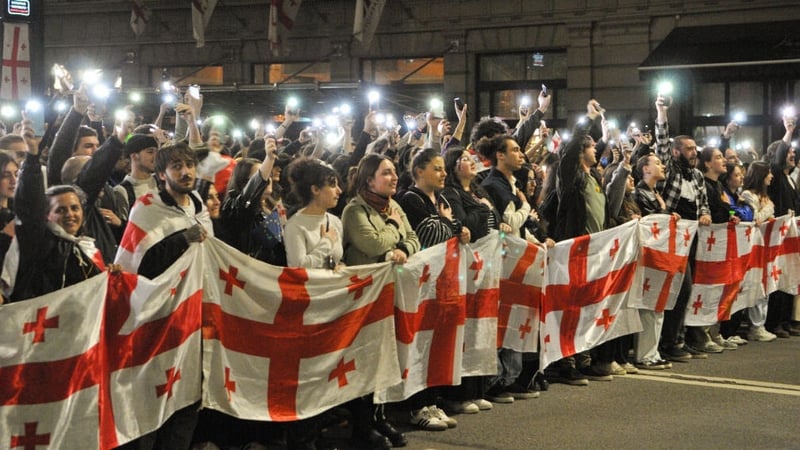
The president of Georgia has put a mostly symbolic veto on the "foreign influence" law that sparked unprecedented protests and warnings from Brussels that the measure would undermine Tbilisi's European aspirations.
Ruling Georgian Dream party politicians voted through the legislation this week in defiance of protesters, who are worried the ex-Soviet republic is shifting away from a pro-Western course back toward Russia.
The move has sparked a wave of protests unprecedented in the recent history of the Black Sea nation, where according to opinion polls more than 80% of the population wants to join the European Union and NATO, and is staunchly anti-Kremlin.
"Today I set a veto... on the law, which is Russian in its essence, and which contradicts our constitution," Salome Zurabishvili said in a televised statement, speaking about the bill that critics describe as resembling Russian legislation used to silence dissent.
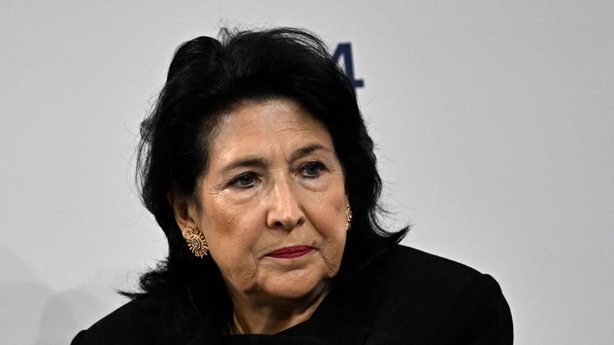
Brussels has said the measure is "incompatible" with Georgia's bid for EU membership, which is enshrined in the country's constitution.
Georgian Dream has enough politicians in parliament to override her veto.
Georgian Prime Minister Irakli Kobakhidze has signalled his party's readiness to consider Ms Zurabishvili's proposed amendments to the law, should she lay them out in her veto document.
But figurehead president Ms Zurabishvili - at loggerheads with the ruling party - has ruled out the prospect of entering "false, artificial, misleading negotiations" with Georgian Dream.
The bill requires NGOs and media outlets that receive more than 20% of their funding from abroad to register as bodies "pursuing the interests of a foreign power".
Georgian Dream insists it is committed to joining the EU, and portrays the bill as aimed at increasing the transparency of NGO funding.
Read more: What you should know about the controversial law sparking protests in Georgia
