

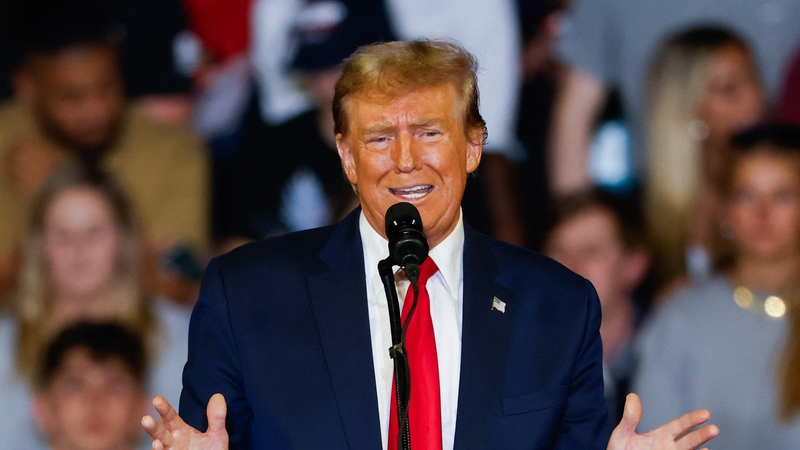
Donald Trump turned to the US Supreme Court as he presses his claim – rejected by lower courts – that he is immune from being prosecuted for trying to overturn his 2020 election loss because he was serving as president when he took those actions.
Mr Trump, the first former president to be criminally prosecuted, asked the justices to put on hold the US Court of Appeals for the District of Columbia Circuit rejecting his immunity claim.
A 4 March trial date for Mr Trump in federal court in Washington on four criminal counts pursued by Special Counsel Jack Smith was postponed, with no new date yet set.
Mr Trump is the frontrunner for the Republican nomination to challenge Democratic President Joe Biden in the 5 November US election. Mr Biden defeated Trump in 2020.
Three of the nine Supreme Court justices were appointed by Mr Trump, cementing a 6-3 conservative majority on the top US judicial body.
The charges brought by Mr Smith in August 2023 came in one of four criminal cases now pending against Mr Trump, including another one in a Georgia state court also involving his efforts to undo his 2020 loss.
US District Judge Tanya Chutkan, presiding over the case brought by Mr Smith, in December rejected Mr Trump's immunity claim, ruling that former presidents "enjoy no special conditions on their federal criminal liability."
"Whatever immunities a sitting president may enjoy, the United States has only one chief executive at a time," Ms Chutkan wrote, "and that position does not confer a lifelong 'get-out-of-jail-free' pass."
After Mr Trump appealed, the DC Circuit on 6 February also rebuffed Mr Trump's immunity claim, prompting him to seek relief at the Supreme Court.
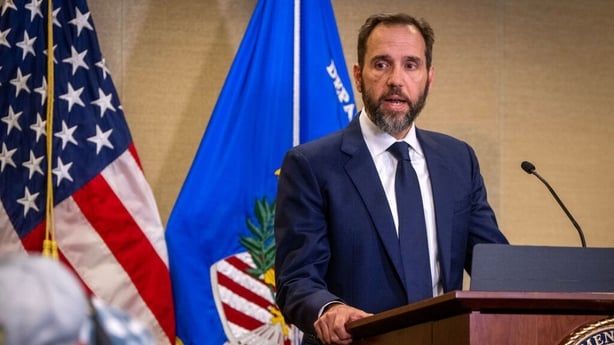
"We cannot accept that the office of the presidency places its former occupants above the law for all time thereafter," the court wrote in its decision.
During arguments before the DC Circuit in January, one of Mr Trump's lawyers told the court that even if a president sold pardons or military secrets or ordered a US Navy commando unit to assassinate a political rival, he could not be criminally charged unless he is first impeached and convicted in Congress.
Prosecutors have argued that Mr Trump was acting as a candidate, not a president, when he pressured officials to overturn the election results and encouraged his supporters to march to the Capitol on 6 January 2021, to pressure Congress not to certify Mr Biden's victory.
The indictment secured by Mr Smith accuses Mr Trump of conspiring to defraud the US, obstructing the congressional certification of Mr Biden's electoral victory and conspiring to do so, and conspiring against right of Americans to vote.
If re-elected, Mr Trump could seek to pardon himself of any federal crimes.
Mr Trump last October sought to have the charges dismissed based on his claim of immunity from criminal prosecution related to actions taken by a president while in office.
Mr Trump, president from 2017 to 2021, has regularly made sweeping claims of immunity both while in office and since leaving the White House.
The US Supreme Court in 2020 spurned Mr Trump's argument that he was immune from a subpoena issued as part of a state criminal investigations while he was president.
The Supreme Court in December declined Mr Smith's request to decide the immunity claim even before the DC Circuit ruled – a bid by the prosecutor to speed up the process of resolving the matter.
The justices opted instead to let the lower appeals court rule first, as is customary.
Trump appears in court in classified documents case
Earlier, former US president Donald Trump was in federal court in Florida today for a closed-door meeting in his classified documents case, as lawyers discuss who will have access to the top-secret evidence.
Mr Trump, 77, pleaded not guilty in June to charges of unlawfully retaining national defence information, conspiracy to obstruct justice and making false statements.
The judge in the case, Aileen Cannon, summoned lawyers from both sides for the proceedings.
The former president and his entourage arrived around 9am (2pm Irish time) at the Fort Pierce courthouse, about 200km north of Miami, where a group of supporters holding posters greeted them.
Mr Trump's lawyers want to gain access to the classified evidence, which is currently in prosecutors' hands, but the US government's attorneys oppose the move on grounds that the information is too sensitive.
Judge Cannon wrote in a court document calling the hearing that Mr Trump's lawyers should be prepared to "discuss their defence theories of the case, in detail, and how any classified information might be relevant or helpful to the defence."
She is scheduled to hear defence arguments first, and then from federal prosecutors.
The trial of Mr Trump is scheduled to begin on 20 May.
Also charged are two employees, property manager Carlos de Oliveira and Mr Trump's personal assistant Waltine Nauta.
In recent weeks, Mr Trump has appeared at hearings in several court cases against him.
The former president has been leaning into his legal woes, which have not seemed to dent his popularity as the Republican Party's presidential frontrunner for the 2024 election.
