

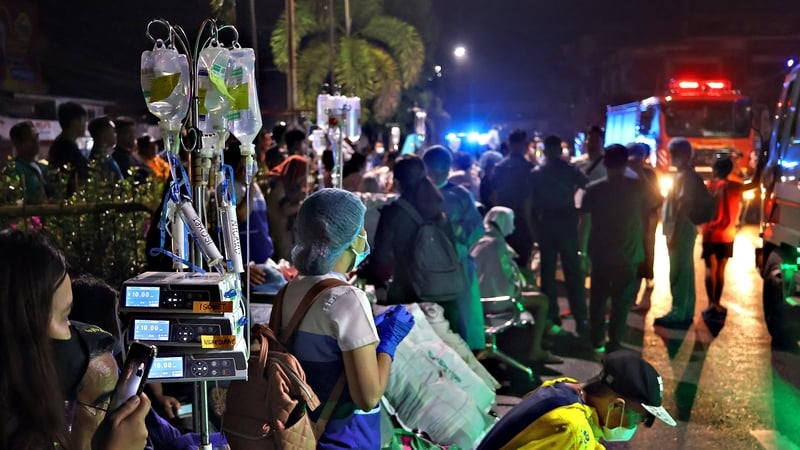
A powerful magnitude 7.6 earthquake struck the southern Philippines today, the US Geological Survey (USGS) said, triggering fears of a possible tsunami as big aftershocks rumbled in the area.
The initial quake struck at a depth of 32km at 10.37pm local time (2.37pm Irish time) about 21km northeast of Hinatuan municipality on Mindanao island, the USGS said.
Several hours later, early on Sunday, two powerful aftershocks of magnitude 6.4 and magnitude 6.2 shook the region following the first quake, USGS said.
The initial quake triggered tsunami warnings and orders for coastal residents to flee to higher ground.
"Destructive tsunami is expected with life threatening wave heights," the Philippine Institute of Volcanology and Seismology said on X, formerly Twitter.
The Pacific Tsunami Warning Center in Hawaii also issued an alert but later posted that the danger had lifted.
"There is no longer a tsunami threat from this earthquake," it said in a message.
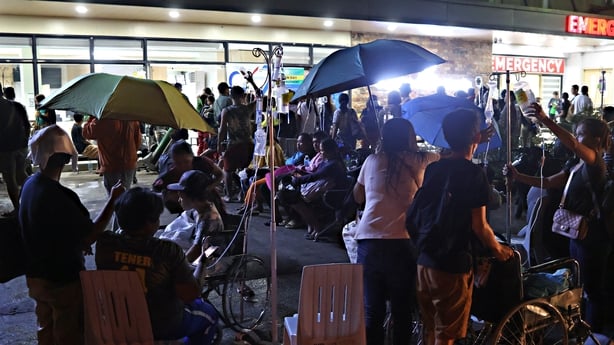
The Philippines seismology institute maintained its tsunami warning into early tomorrow.
It said waves of more than one metre above the normal tides were expected to hit the coast and advised people in Surigao del Sur and Davao Oriental provinces to "immediately evacuate" to higher ground or further inland.
Owners of boats were told to secure their vessels and move away from the shore.
There were no immediate reports of casualties or damage but Hinatuan police Sergeant Joseph Lambo said the quake was "very strong".
"Appliances fell off the shelves at the police office and two TV sets were broken. The motorcycles parked outside also tumbled down," Sgt Lambo told AFP.
"Right now we don't have reports of damage or casualties but people are evacuating because of the tsunami alert."
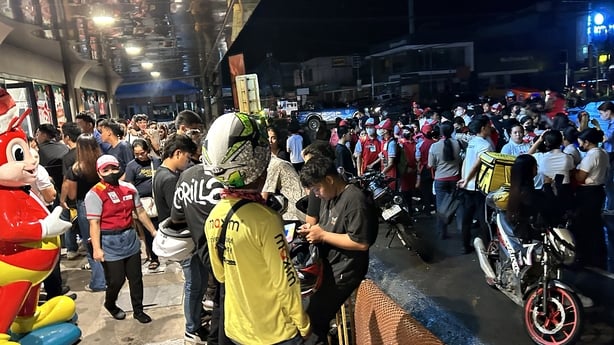
Sgt Lambo said the 45,000 residents in the municipality had been ordered to leave their homes and many were going on foot or in vehicles to higher ground.
A video posted on social media and verified by AFP showed bottles of drinks and other products falling off shelves in a convenience store as staff fled outside.
Another video, shot by Dennis Orong, showed people screaming as they ran along a street in Lianga, a coastal municipality of Surigao del Sur.
"I was shaking in fear, mainly because of exploding electric poles," the 26-year-old hairdresser told AFP. "It was very traumatic."
'We were all panicking'
Social media reports of a tsunami hitting Lingig municipality, about 35km south of Hinatuan, were "fake news", said police Master Sergeant Robert Quesada.
"We're at low tide," he said. "People evacuated away from the coast soon after. We can't say how many at this point, but pretty much the entire town is along the coast."
Many people, including 24-year-old Bethanie Valledor, were asleep when the quake struck.
"I felt like the room we're staying in would be destroyed," Ms Valledor said after fleeing the resort where she had been staying, about 20km southwest of Hinatuan.
"Our place is very near the sea. The resort owner asked us to evacuate immediately. Honestly, I was screaming. I panicked," she said.
Dyl Constantino, 25, said the quake was felt strongly on Siargao Island, northeast of Mindanao.
"We're used to earthquakes here, but this one was different because the doors were really shaking and so we were all panicking," he said.
'It is shaking again'
The Hinataun police chief, Raymark Gentallan, said power in the coastal town out since the quake struck. Hinatuan is 30km from the earthquake's epicentre with a population of around 44,000.
"We're evacuating people away from coastal areas," he told Reuters, adding disaster response teams had not yet seen any casualties or damage.
James Soria, who owns a small hotel in Hinatuan, said there had been significant damage to his home.
"It's shaking again here now," he told Reuters, before the call was disconnected as another aftershock hit the area.
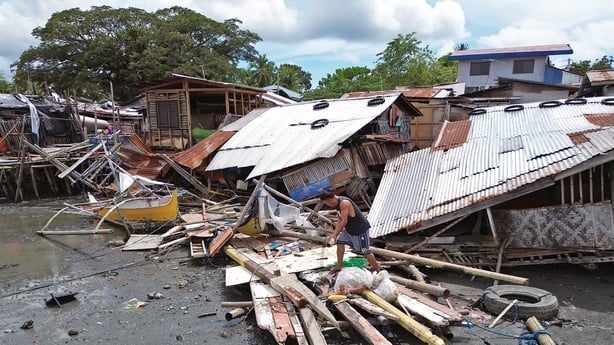
Photographs posted on social media by Hinatuan's local administration showed scores of residents and queues of vehicles moving towards higher ground, with one large shelter occupied by several dozen people.
Cosme Calejesan, 47, who lives in Surigao City, 185km from the epicentre, said there had been damage to his house but the structure was still intact.
"I was already asleep, but I was woken up by the creaking sounds of my cabinets when the tremor occurred," he said.
"It was frightening. It was sudden and abrupt and I was worried for my children."
It comes nearly two weeks after a 6.7 magnitude quake hit Mindanao, killing at least nine people, shaking buildings and causing part of the ceiling of a shopping mall to collapse.
Quakes are a daily occurrence in the Philippines, which sits along the Pacific "Ring of Fire", an arc of intense seismic as well as volcanic activity that stretches from Japan through Southeast Asia and across the Pacific basin.
Most are too weak to be felt by humans but strong and destructive quakes come at random with no technology available to predict when and where they will happen.
