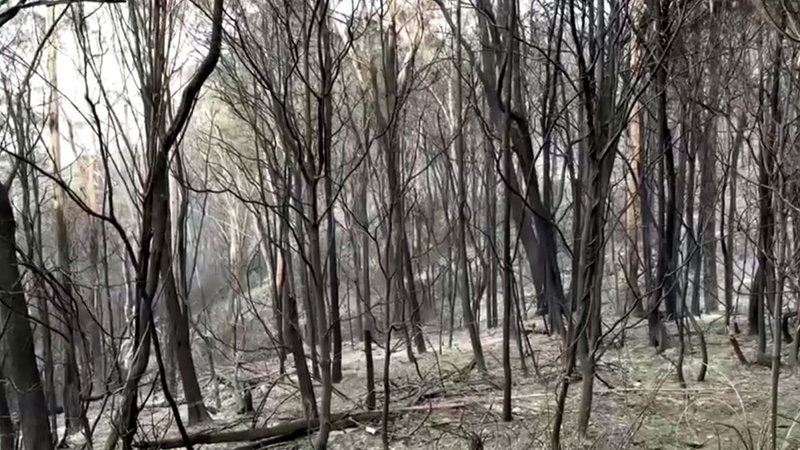
Warm winds have fanned multiple blazes in an unusually early start to Australia's annual fire season, prompting a state leader to warn of a "horror" summer of bushfires ahead.
Firefighters said they had been fighting 18 out-of-control bushfires in the morning in the eastern state of New South Wales, some in the Bega Valley region of the state's southeastern coast.
At least three homes were lost in the flames, said New South Wales firefighters.
One person was taken to hospital after a tree fell on a car, the state's police said.
"Be prepared for a horror summer," New South Wales Premier Chris Minns told a news conference in Bega.
"We are one week into October and we are experiencing mid-summer conditions," he said, citing various hot days above 30C.
"Bushfires love this environment and it is devastating for regional communities in particular."
Prime Minister Anthony Albanese echoed the sentiment that the fire season had started early, just one month into the Australian spring.
"We are standing here. We can see, we can smell the impact that these fires are having," he told the news conference.
Firefighters have been saying for some time that they are worried about dry conditions making the season more dangerous, said NSW Rural Fire Service commissioner Rob Rogers.
"The fire season is absolutely here. And we need to take this seriously," he said.
Scattered fires have swept rural neighbourhoods around the country over the past few weeks.
Yesterday, people in various rural areas of Victoria were told to evacuate or take shelter as gusty winds fanned "very challenging" bushfires.
About 650 firefighters battled fires across 17,000 hectares (42,000 acres), officials in Victoria said, although rains later in the day dampened the flames.
The wet weather led to a flood evacuation warning for parts of several rural neighbourhoods about 160km east of Melbourne.

Victoria state emergency service chief operations officer Tim Wiebusch said parts of the state had received up to 150mm of rain. That is almost eight times the state's average in September.
Mr Wiebusch said: "Over these next 24, 48 hours flash flooding, riverine flooding, is really the key risk. We can't emphasise enough, people need to be alert to their conditions."
After several wet years, experts are expecting the coming Australian summer to bring the most intense bushfire season since 2019-2020.
During that "Black Summer", bushfires raged across Australia's eastern seaboard, razing swaths of forest, killing millions of animals and blanketing cities in smoke.
Australia's weather bureau declared last month the formation of an El Nino weather pattern, bringing hot and dry conditions likely to increase the severity of bushfires and drought.
According to the World Meteorological Organisation, climate change is causing more intense and more frequent heatwaves, and this in turn is leading to a growing risk of severe wildfires.