


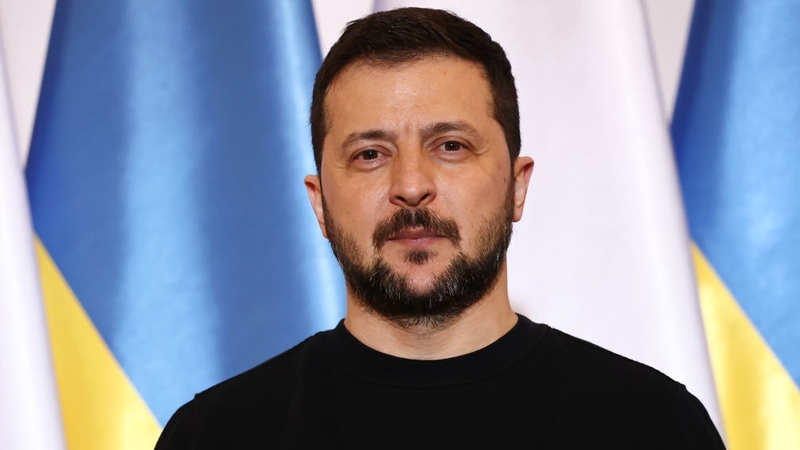
Chinese President Xi Jinping spoke to his Ukrainian counterpart Volodymyr Zelensky by phone today for the first time since Russia's invasion of Ukraine, fulfilling a longstanding goal of Kyiv which had publicly sought such talks for months.
Mr Zelensky immediately signalled the importance of the chance to open closer relations with Russia's most powerful friend, naming a former cabinet minister as Ukraine's new ambassador to Beijing.
Describing the call as "long and meaningful", President Zelensky tweeted: "I believe that this call, as well as the appointment of Ukraine's ambassador to China, will give a powerful impetus to the development of our bilateral relations."
Mr Xi told the Ukrainian leader that China would send special representatives to Ukraine and hold talks with all parties seeking peace, Chinese state media reported.
President Xi, the most powerful world leader to have refrained from denouncing Russia's invasion, made a state visit to Moscow last month.
Since February, he has promoted a 12-point peace plan for Ukraine, greeted sceptically by the West but cautiously welcomed by Kyiv as a sign of Chinese interest in ending the war.
China will focus on promoting peace talks, and make efforts for a ceasefire as soon as possible, Mr Xi told Mr Zelensky, according to Chinese state media reports.
"As a permanent member of the UN Security Council and a responsible major country, we will neither sit idly by, nor pour oil on fire, still less seek to profit from it," the Chinese President said.
The United States welcomed the call, which it said it had no advanced knowledge of, but said it was too soon to tell whether it would lead to a peace deal.
"That's a good thing," White House national security spokesperson John Kirby said.
"Now, whether that's going to lead to some sort of meaningful peace movement, or plan, or proposal, I just don't think we know that right now."
Brussels also welcomed the call between the two leaders, describing it as a "important, long overdue first step by China".
European Commission spokesman Eric Mamer said: "It is an important, long overdue first step by China in exercising its responsibilities as a member of the UN Security Council.
No peace talks in sight
The 14-month war is at a juncture, with Ukraine preparing to launch a counteroffensive in the coming weeks or months following a Russian winter offensive that made only incremental advances despite the bloodiest fighting so far.
There are no peace talks in sight, with Kyiv demanding Russia withdraw its troops and Moscow insisting Ukraine must recognise its claims to have annexed seized territory.
Ukrainian officials have long been calling on China to use its influence in Russia to help end the war.
President Xi and Russian President Vladimir Putin signed a "no limits" partnership agreement weeks before Mr Putin ordered the invasion that began on 24 February 2022.
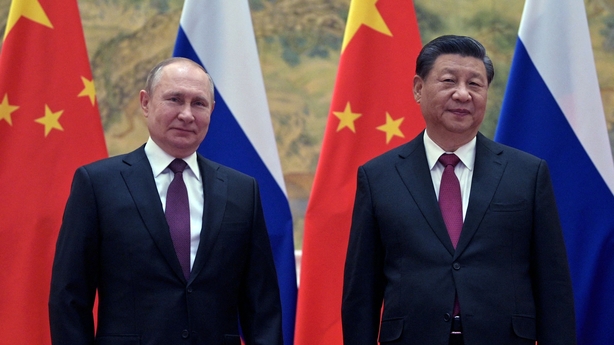
Since then, China has denounced Western sanctions against Moscow but has held back from openly supporting the invasion.
China has also become Russia's biggest economic partner, buying up oil that can no longer be sold in Europe, often at steep discounts.
Following the Xi-Zelensky talks, Russia's foreign ministry spokeswoman Maria Zakharova said: "We note the readiness of the Chinese side to make efforts to establish a negotiation process."
The US has said in recent months that it was worried about China providing weapons or ammunition to Russia, although Beijing denies any such plans.
China says it is positioned to help mediate the conflict because it has not taken sides.
Ukraine condemns Russian 'blackmail' on Chernobyl anniversary
Ukrainian President Volodymyr Zelensky has warned that Russia is using nuclear power plants to "blackmail" the world, speaking on the 37th anniversary of the Chernobyl disaster.
"Thirty-seven years ago the Chernobyl nuclear power station disaster left a giant scar on the whole world," Mr Zelensky wrote on Telegram.
"Last year, the occupying power did not just invade this power station. It again put the world in danger" of another disaster.
"We have to do everything to prevent the terrorist state from using nuclear power stations to blackmail Ukraine and the world."
A reactor at Chernobyl, located around 100km north of Kyiv, exploded on 26 April 1986 when Ukraine was part of the Soviet Union.
About 30 plant workers and firemen died in the immediate aftermath and many more people died later from radiation-related illnesses.
The incident, which is considered the world's worst nuclear disaster, contaminated vast areas of Ukraine, Belarus and Russia. Swathes of western Europe were also exposed to radiation.
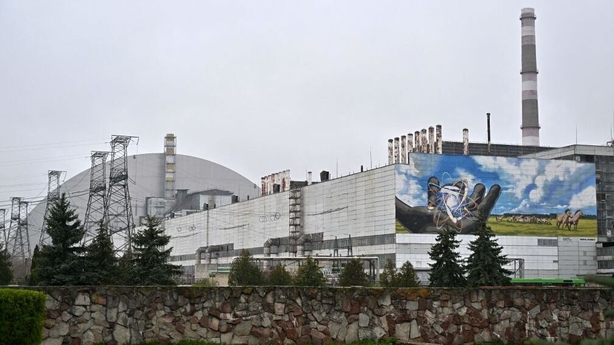
On the first day of Russia's invasion its troops took over Chernobyl after entering from Belarus.
The site has not been in activity since 2000.
Russian forces spent the next month at the power plant before withdrawing.
Ukraine accused them of looting and exposing themselves to radiation by digging trenches inside the exclusion zone.
Kyiv has strengthened defences along its northern border in case of another attack.
In southern Ukraine, Russian forces have taken control of the Zaporizhzhia nuclear power plant - Europe's largest - which previously accounted for 20% of Ukraine's electricity production.
The power station continued functioning in the first months of the invasion despite fighting around it but was stopped in September.
Both Ukraine and Russia have accused each other of shelling the site in strikes that have raised fears of a repeat of the Chernobyl disaster.

Former workers at Chernobyl held an overnight vigil in the northern town of Slavutych to remember the victims of the disaster.
Slavutych was built for people moved from near the stricken plant.
At the vigil, residents and former workers held candles and filed past photographs of victims as sombre music played.
"I know everyone here. It was my shift at the power plant," said Serhii Akulin, a former worker at Chernobyl.
"I am here to commemorate my colleagues. They are all alive, as long as I remember them."
