


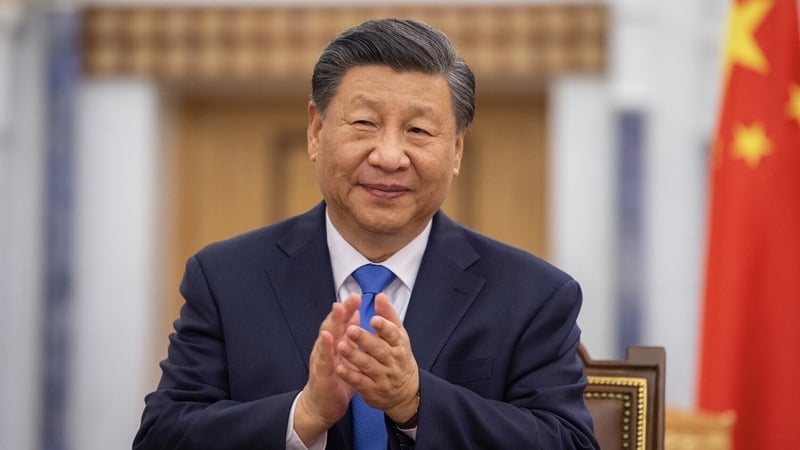
China has insisted it respects the sovereignty of all ex-Soviet countries, after comments by its ambassador to France drew ire in Europe and threw into question Beijing's efforts to position itself as a neutral mediator of the Ukraine war.
Lithuania, Estonia and Latvia, the European Union's three Baltic countries, summoned China's envoys today to account for Ambassador Lu Shaye questioning the sovereignty of former Soviet states.
In comments to French broadcaster LCI on Friday, Mr Lu said countries that emerged after the fall of the Soviet Union "don't have effective status under international law because there is not an international agreement confirming their status as sovereign nations".
The ambassador appeared to be referring not just to Ukraine, which Russia invaded in February 2022, but also to all former Soviet republics which emerged as independent nations after the fall of the Soviet Union in 1991.
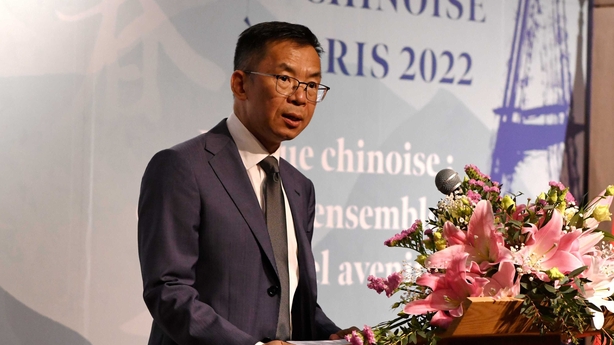
Over the weekend, Ukraine condemned what it called "absurd" comments from Mr Lu.
Today, Beijing distanced itself from Mr Lu's remarks - while also defending its claimed neutral stance on Russia's war in Ukraine.
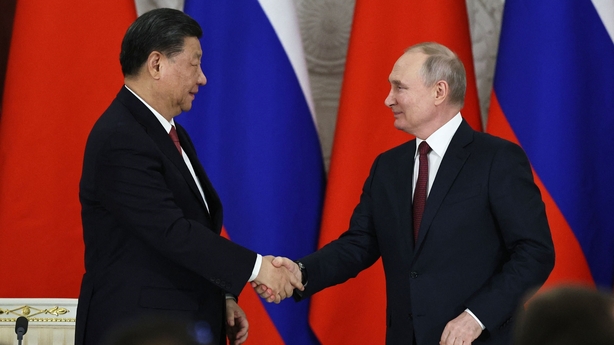
President Xi Jinping has sought to act as peacemaker in the conflict as he seeks a greater role for China on the global stage - even as Western leaders have accused Beijing of providing diplomatic cover to Russian President Vladimir Putin.
"China respects the sovereignty, independence and territorial integrity of all countries and upholds the purposes and principles of the UN Charter," foreign ministry spokeswoman Mao Ning told reporters today.
"After the collapse of the Soviet Union, China was one of the first countries to establish diplomatic relations with relevant countries."
She accused "some media" of misinterpreting China's position on Ukraine and "sowing discord in relations between China and relevant countries".
"We will be vigilant about this," she added.
Wave of outrage
Mr Lu's comments last week sparked a wave of outrage across Europe, including in the EU's three Baltic countries.
Lithuanian Foreign Minister Gabrielius Landsbergis wrote on Twitter that "if anyone is still wondering why the Baltic States don't trust China to 'broker peace in Ukraine', here's a Chinese ambassador arguing that Crimea is Russian and our countries' borders have no legal basis".
European Union foreign policy chief Josep Borrell branded the ambassador's remarks "unacceptable", adding in a tweet that the EU "can only suppose these declarations do not represent China's official policy".
Unacceptable remarks of the Chinese Ambassador to France questioning the sovereignty of the countries which became independent with the end of the Soviet Union in 1991.
— Josep Borrell Fontelles (@JosepBorrellF) April 23, 2023
The EU can only suppose these declarations do not represent China's official policy.
France's foreign ministry said a scheduled meeting with Mr Lu in Paris today would be "an opportunity for a stern rebuke".
Mr Lu has previously acknowledged being part of the so-called "Wolf Warrior" class of Chinese diplomats, a nickname given to those who respond vehemently to critics they perceive as hostile to China.
In January 2019, as ambassador to Canada, he accused the North American country of "white supremacy" for calling for the release of two Canadians detained in China, days after Meng Wanzhou, a Chinese national and Huawei executive, was arrested in Canada at the request of the United States.
And last August he sparked outrage by suggesting Taiwanese people would need to be "re-educated" following a Chinese takeover of the self-ruled island.
