

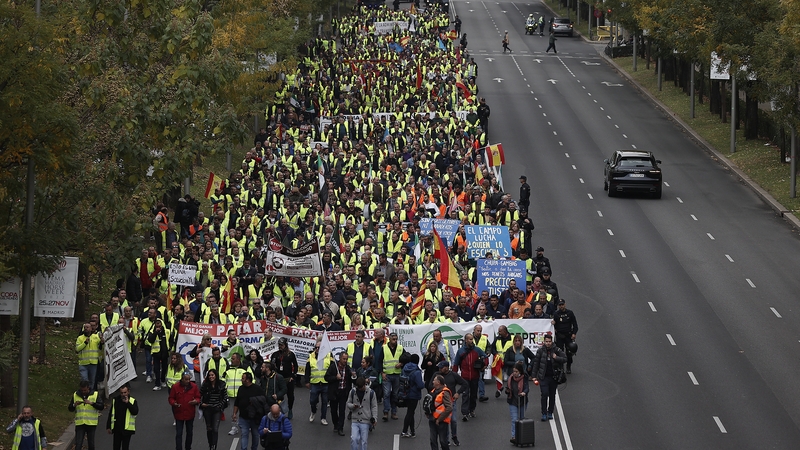
Truck drivers in Spain have begun an indefinite strike to protest the rising cost of living, just eight months after a similar protest caused shortages of food and goods.
The strike by the National Platform in Defence of Transport, which represents small truck owners and self-employed truckers, comes ahead of regional elections in May and a general election expected at the end of 2023.
It so far has not been joined by Spain's larger national trucking associations and Spain's main wholesale market for fresh products, Mercamadrid, reported no problems with deliveries.
Transport Minister Raquel Sanchez said the impact of the strike so far has been "minimal" and thanked "all truck drivers who are carrying out their work as usual".
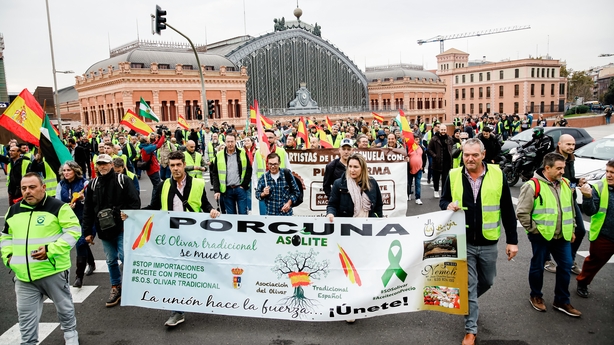
Truck drivers protested in the centre of Madrid and several other cities, although some demonstrations in some locations were called off.
The group that called the strike accuses Socialist Prime minister Pedro Sanchez's government of "inaction" in the face of soaring inflation.
The truckers obtained a €1 billion aid package which included rebates on the price of fuel after staging a 20-day strike in March and April which led to sporadic shortage of milk and fresh produce.
But the head of the platform, Manuel Hernandez, accused the government of not respecting the promises it made earlier this year to truckers during the last job action.
He told reporters at the protest in Madrid that the group did not want the strike "to last as long as it did" as the last time, and accused th government of seeking to "criminalise" their protests.
Soaring energy costs, exacerbated by Russia's invasion of Ukraine in February, have worsened general price increases and generated social disconsent in many countries across Europe.
Inflation in Spain peaked this summer at 10.8% in July, its highest level in 38 years, before moderately slowing to 7.3% in October - still well above normal levels.
Major protest over healthcare plan
Meanwhile hundreds of thousands of demonstrators rallied in Madrid yesterday in defence of the region's primary care services, warning that plans to overhaul the system would "destroy" local healthcare.
Huge crowds rallied at four points across the capital and marched on city hall in a mass protest under the slogan: "Madrid rallies in support of public healthcare and against the plan to destroy primary care services".
Primary care services in the Madrid area have been under huge pressure for years due to a lack of resources and staff, with the situation worsened by poor regional management, unions say.
A regional government spokesman said there were 200,000 people out on the streets, but organisers gave a figure three times higher, saying 650,000 demonstrators had joined the protest.
Aerial shots over the main boulevards leading to City Hall showed a vast sea of protesters surging in from all directions, among them many doctors and healthcare professionals, union members and politicians.
"Your health should never depend on your wallet," read one huge green banner, while others read: "Health care is not for sale, it must be defended" as thousands of voices demanded the resignation of the region's right-wing leader Isabel Diaz Ayuso.
The protest, called by local associations and municipalities, took aim at the health policies of Ms Ayuso's regional government, its push for public-private healthcare partnerships and its restructuring of the primary care system.
