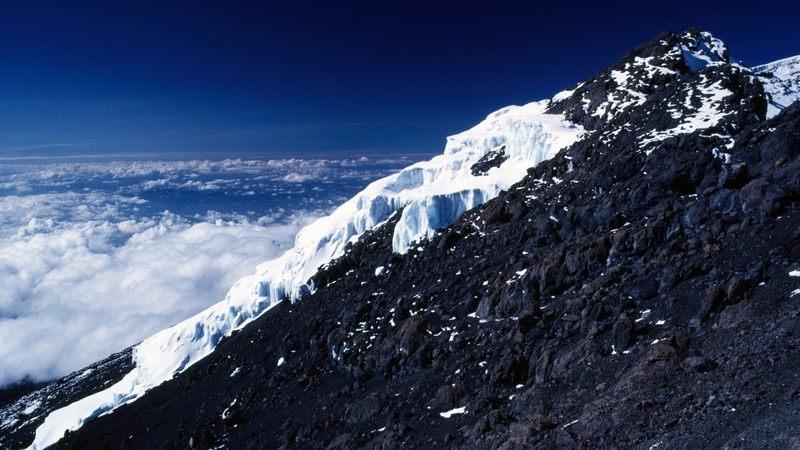
Glaciers at many UNESCO World Heritage sites including Yellowstone and Kilimanjaro National Park will likely vanish by 2050, the UN agency has warned, urging leaders to act fast to save the rest.
The warning followed a study of 18,600 glaciers at 50 World Heritage sites, covering around 66,000 sq/km, which found glaciers at a third of the sites were "condemned to disappear".
The study "shows these glaciers have been retreating at an accelerated rate since 2000 due to CO2 emissions, which are warming temperatures", UNESCO said.
The glaciers were losing 58 billion tonnes of ice every year, equivalent to the combined annual water use of France and Spain, and were responsible for nearly 5% of observed global sea-level rise, the agency explained.
"Glaciers in a third of the 50 World Heritage sites are condemned to disappear by 2050, regardless of efforts to limit temperature increases," UNESCO said.
"But it is still possible to save the glaciers in the remaining two thirds of sites if the rise in temperatures does not exceed 1.5°C compared to the pre-industrial period."
Countries have pledged to keep global warming to 1.5 degrees Celsius above pre-industrial levels -- a goal the world is set to miss on current emission trends.
"This report is a call to action," said UNESCO head Audrey Azoulay, ahead of the COP27 climate summit in Egypt starting on Monday.
"Only a rapid reduction in our CO2 emissions levels can save glaciers and the exceptional biodiversity that depends on them. COP27 will have a crucial role to help find solutions to this issue."
In Africa, glaciers in all World Heritage sites will very likely be gone by 2050, including at Kilimanjaro National Park and Mount Kenya, UNESCO warned.
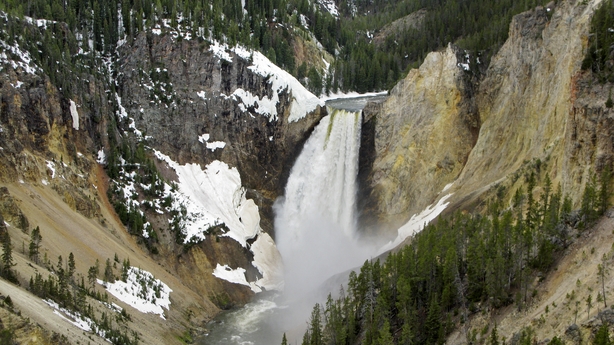
In Europe, some glaciers in the Pyrenees and in the Dolomites will also probably have vanished in three decades' time.
The same went for glaciers in the Yellowstone and Yosemite national parks in the United States.
The melting of ice and snow is one of the ten key threats from climate change, an Intergovernmental Panel on Climate Change report published in February said.
Read more: Europe temperatures rise more than twice global average - UN
Jose Silva of the World Meteorological Organisation has said global warming is occurring at different rates in different regions of the world.
"In high latitudes, like near the Arctic, temperatures are warming faster than in regions near the Equator in a phenomenon known as Arctic amplication," Mr Silva said.
Speaking on RTÉ's Morning Ireland, he said people must be optimistic about the upcoming COP27 climate conference and it is now up to countries to take action based on the World Meteorologcal Organisation's recent report.