


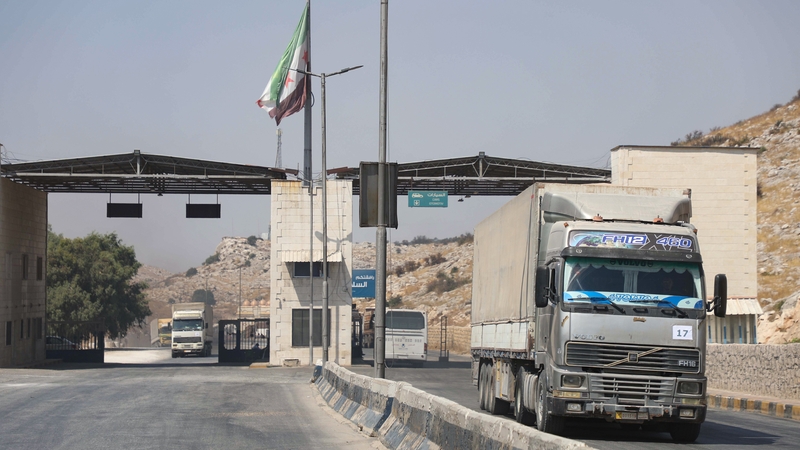
Residents of Syria's rebel-held northwest may lose access to critical aid within weeks if the UN Security Council does not extend authorisation for cross-border deliveries, which expires today, officials said.
UN aid deliveries through the Bab al-Hawa crossing on the Syrian-Turkish border could halt as of midnight after Russia on Friday vetoed a Security Council resolution that would have extended it by one year.
The council's non-permanent members, which includes Ireland, may propose a nine-month extension to try to break the impasse, but as of this morning no new agreement had been reached, threatening to upend assistance to more than two million people.
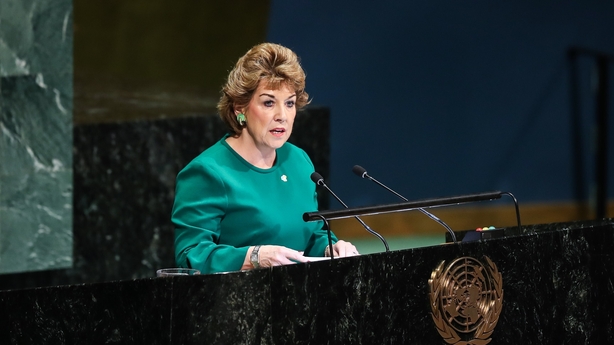
In a statement, Ireland's mission at the UN said it was "extremely disappointed" that the resolution was not adopted, saying that the cross-border operation is a "lifeline for millions of Syrians who are dependent on humanitarian aid".
"The humanitarian situation is not getting any better – on the contrary it is has only worsened over the last year. People lack food, and food prices are rising. On this, we think, every member of the council can agree," the statement read.
"We appreciate the engagement from all sides during the negotiations. We appreciate also the support which our text received from the large majority of Council Members. However, we deeply regret that this compromise was rejected through the use of a veto."
Five Irish aid agencies – Concern, Trocaire, Oxfam Ireland, GOAL and World Vision Ireland - had called on the Security Council to vote to keep the border crossing between Syria and Turkey open.
The agencies said that the vote on the border crossing is critical for the lives and well-being of 4.1 million people trapped in northwest Syria, where humanitarian needs are at their highest since the conflict started 11 years ago.
"Until today, we have no information on the mechanism that will be put in place in the coming period," said Mazen Allouch, an official at the Bab al-Hawa crossing.
"Aid groups that are partnered with the UN and that operate in liberated areas have an emergency response plan" in case the UN mandate is not extended, he said, referring to parts of Syria still under rebel control.
But their supplies are expected to last only a little "over one month," he added.
The Bab al-Hawa crossing was closed for a second consecutive day today due to the Muslim Eid al-Adha holiday.
When it reopens on Wednesday, it will continue to allow civilians and non-UN relief convoys to cross, including those sent by Turkish aid groups and other international aid organisations, Allouch said.
But senior UN officials and relief workers have repeatedly stressed that such aid deliveries cannot substitute the scope and scale of UN cross-border operations.
The cross-border mechanism at Bab al-Hawa - in place since 2014 - is the only way UN assistance can be brought into the rebel-held northwest without navigating areas controlled by Syrian government forces.
More than 4,600 aid trucks, carrying mostly food, have crossed Bab al-Hawa so far this year, helping some 2.4 million people, according to the UN's Office for the Coordination of Humanitarian Affairs (OCHA).
"If aid deliveries are diverted through regime (areas) then we will effectively be besieged," said Abu Mohammad, a displaced Syrian living in a camp in northern Idlib.
"They want to starve us and bring us down to our knees," the 45-yer-old father of four said.
Additional reporting: Jason Kennedy
