


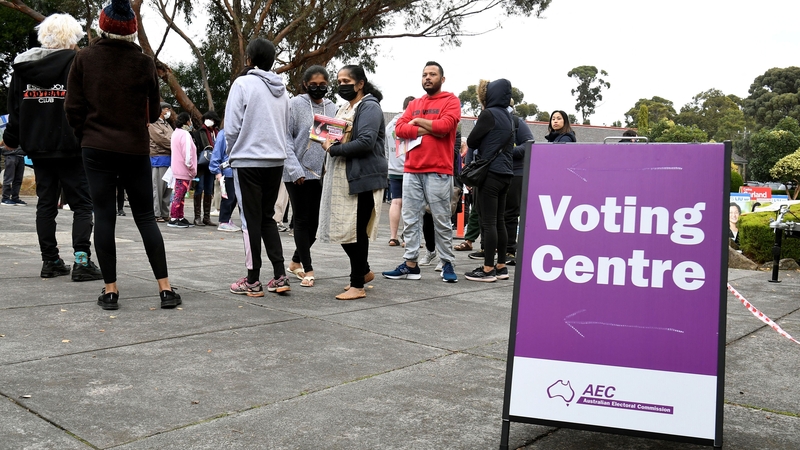
Australians vote on Saturday in a national election with the conservative Liberal-National coalition seeking a fourth straight term and the Labor Party seeking a return to power after nine years in opposition.
Opinion polls have shown Labor leading, but the gap has narrowed in the final weeks of campaigning.
A strong showing by high-profile independent candidates campaigning on climate action, anti-corruption and better treatment of women could lead to a hung parliament.
The Parliament
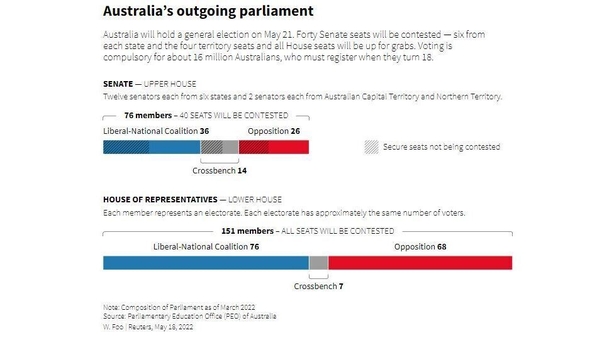
The House of Representatives has 151 seats, 76 of which are needed for a majority to form the government.
In the last parliament, the conservative coalition had 76 seats and Labor 68, with seven minor party and independent members. All seats are up for election.
There are 76 senate seats; 12 for each of the six states and two each for two territories. In the last parliament, the coalition held 36 seats and Labor 26, with a crossbench of 14.
There are 40 seats up for election: six from each state and the four territory seats.
Economy
Challenges ahead for the winner include inflation, which at two-decade highs and picking up pace, interest rates that have just started rising for the first time in more than 11 years, while pandemic spending portends massive budget deficits in the years ahead.
Climate
A cohort of climate-conscious independent candidates threatens some safe government seats, agitating for greater action after three years of fire, floods and pandemic.
It is possible they could unseat some prominent government members and even hold the balance of power.
The major parties have a tricky path.
People say they want action on climate, but are not always keen to pay for it. In an election in which cost of living has been a central issue, retail power prices are a factor.

Foreign policy
Foreign policy became an unlikely election issue after Prime Minister Scott Morrison sought to trumpet his national security credentials and claim Labor was not up to the job, only to be undercut by the Solomon Islands signing a security pact with China.
Character
Mr Morrison has promised a change in his style of governing, conceding he had been a "bit of a bulldozer", after his personality became an electoral liability.
Labor leader Anthony Albanese has offered an alternative based on his working-class roots and pragmatic style.
