


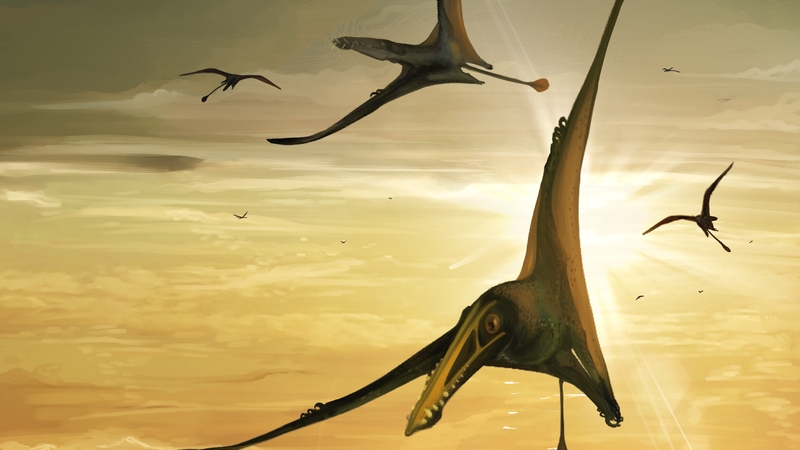
The fossil of a giant flying reptile, known as a pterosaur, that was discovered on Scotland's Isle of Skye, has been confirmed as the largest ever found from the Jurassic period.
It was discovered during a National Geographic Society-funded excavation in 2017, and is being added to National Museums Scotland’s collection for further study.
The winged creature, better known as pterodactyls, lived around 170 million years ago.
It had an estimated wingspan of more than 2.5 metres and has been given the Gaelic name Dearc sgiathanach, or 'winged reptile’.
The name also contains references to the Isle of Skye, whose Gaelic name means ‘the winged isle’.
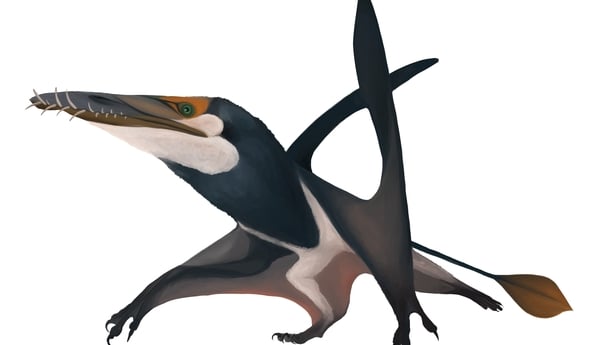
In a new paper published in Current Biology, lead author, University of Edinburgh PhD student Natalia Jagielska, said: "Pterosaurs preserved in such quality are exceedingly rare and are usually reserved to select rock formations in Brazil and China. And yet, an enormous superbly preserved pterosaur emerged from a tidal platform in Scotland."
Professor Steve Brusatte, Personal Chair of Palaeontology and Evolution, School of GeoSciences, University of Edinburgh, said: "This is a superlative Scottish fossil. The preservation is amazing, far beyond any pterosaur ever found in Scotland and probably the best British skeleton found since the days of Mary Anning in the early 1800s.
"Dearc is the biggest pterosaur we know from the Jurassic period and that tells us that pterosaurs got larger much earlier than we thought, long before the Cretaceous period when they were competing with birds, and that’s hugely significant."
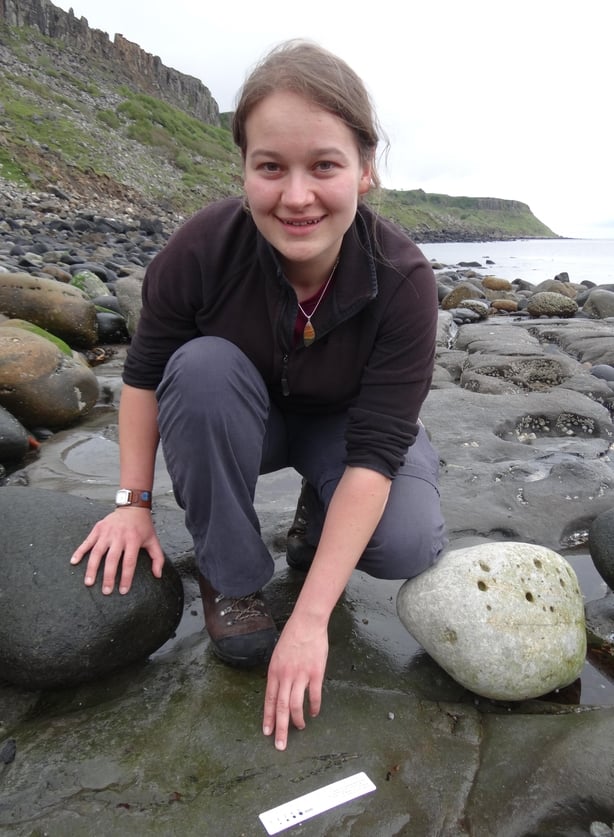
The fossil was discovered during a field trip in 2017 by PhD student at the University of Edinburgh, Amelia Penny.
She spotted its jaw in a limestone layer on a tidal platform and alerted her colleagues.
Diamond-tipped saws were used to cut the fossil from the rock and it was brought to the University of Edinburgh for analysis.
Dr Nick Fraser, Keeper of Natural Sciences at National Museums Scotland, said: " To find and describe a specimen which is both so well-preserved and so significant is really special and we’re delighted to add Dearc into our collection, a unique addition to the fossil record and a specimen which will be studied now and long into the future."
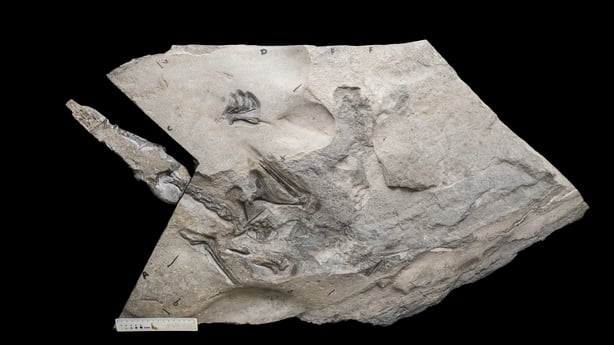
PhD student Natalia Jagielska is undertaking further study of the fossil in order to reveal more about Dearc’s behaviour, particularly how it lived and flew.
She said: "To achieve flight, pterosaurs had hollow bones with thin bone walls, making their remains incredibly fragile and unfit to preserving for millions of years. And yet our skeleton, 160 million years on since its death, remains in almost pristine condition, articulated and almost complete.
Pterosaurs were the first vertebrates to evolve powered flight and lived throughout the Mesozoic era - the so-called age of reptiles.
