


An American man with terminal heart disease was implanted with a genetically modified pig heart in a first-of-its-kind surgery, and three days later the patient is doing well, his doctors have reported.
If proven successful, scientists hope pig organs could help alleviate shortages of donor organs.
"This was a breakthrough surgery and brings us one step closer to solving the organ shortage crisis. There are simply not enough donor human hearts available to meet the long list of potential recipients," Dr Bartley Griffith, who surgically transplanted the pig heart into the patient, said in a statement.
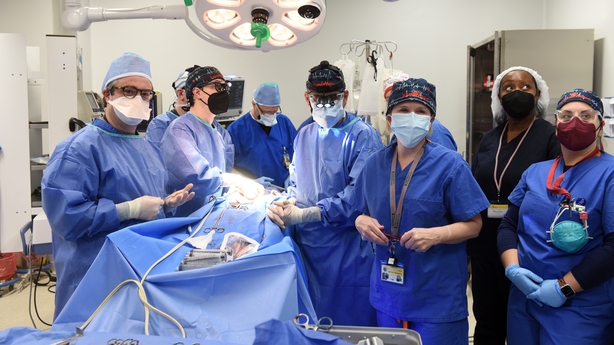
"We are proceeding cautiously, but we are also optimistic that this first-in-the-world surgery will provide an important new option for patients in the future," Dr Griffith added.
For 57-year-old David Bennett of Maryland, the heart transplant was his last option.
"It was either die or do this transplant. I want to live. I know it's a shot in the dark, but it's my last choice," Mr Bennett said a day before his surgery, according to a statement released by the university.
To move ahead with the experimental surgery, the university obtained an emergency authorisation from the US Food and Drug Administration on New Year's Eve through its compassionate use programme.
"The FDA used our data and data on the experimental pig to authorise the transplant in an end-stage heart disease patient who had no other treatment options," said Dr Muhammad Mohiuddin, who heads the University's programme on xenotransplantation - transplanting animal organs into humans.
About 110,000 Americans are currently waiting for an organ transplant, and more than 6,000 patients die each year before getting one, according to organdonor.gov.
Mr Bennett's genetically modified pig heart was provided by Revivicor, a regenerative medicine company based in Blacksburg, Virginia.
On the morning of the surgery, the transplant team removed the pig's heart and placed it into a special device to preserve its function until the surgery.
Pigs have long been a source of potential transplants because their organs are so similar to humans. A pig heart at the time of slaughter, for example, is about the size of an adult human heart.
Other organs from pigs being researched for transplantation into humans include kidneys, liver and lungs.
Prior efforts at pig-to-human transplants have failed because of genetic differences that caused organ rejection or viruses that posed an infection risk.
Scientists have tackled that problem by editing away potentially harmful genes.
In the heart implanted in Mr Bennett, three genes previously linked with organ rejection were "knocked out" of the donor pig, and six human genes linked with immune acceptance were inserted into the pig genome.
Researchers also deleted a pig gene to prevent excessive growth of the pig heart tissue.
The work was funded in part with a $15.7 million research grant to evaluate Revivicor's genetically-modified pig hearts in baboon studies.
In addition to the genetic changes to the pig heart, Mr Bennett received an experimental anti-rejection drug made by Kiniksa Pharmaceuticals based in Lexington, Mass.
Irish cardiologist describes transplant as 'a watershed moment'
A consultant cardiologist specialising in heart transplant and heart failure at the Mater Hospital in Dublin, has described the transplant as "a watershed moment".
Speaking on RTÉ's Morning Ireland, Professor Emer Joyce said it is still "early days" for this transplant patient.
"It's day four into this patient's phenomenal journey with this genetically modified pig heart," she said.
"These genetic techniques had to come online alongside the surgical techniques and alongside special organ support systems for the pig heart... and it sounds like they used quite novel anti-rejection strategies.
"So a lot of factors had to come together, but it is still very early days."
Prof Joyce said there are many hurdles to overcome before this becomes something that is routinely adopted in all transplant centres, and is probably more realistic for a medium-term solution.
She said this type of transplant could happen here in Ireland, but it is something that will need to have "many, many iterations" of trials, regulatory approval and clinical expertise and practice before it is ready.
"It is some time away, but it is certainly true that it is a major advance in terms of the ability to increase that donor pool.
"But again, it's day four in this particular person's journey and I think we'll have to watch what happens next, both in the short-term and in the more medium-term, very closely."
