


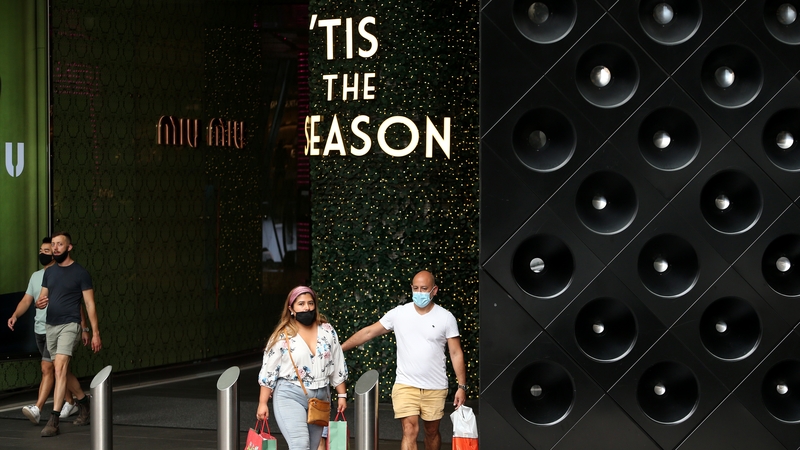
Omicron's rise has led to another pandemic-tinged Christmas for billions, with Santa's arrival and longed-for family reunions overshadowed by the prospect of yet more Covid-19 restrictions.
For a second straight year, surging infections have complicated yuletide plans from Sydney to Seville.
In Bethlehem - the city Christians believe was Jesus' birthplace - hoteliers expecting an influx of tourists have been disappointed. After a near-total pandemic lockdown last year, Israel's borders are again closed.
This year, like last, midnight mass in the city on Christmas Eve is reserved for a small circle of people by invitation only.
Around Europe, governments are reimposing safety measures in the wake of surging virus figures.
The Netherlands is back in lockdown while Spain and Italy have made wearing masks compulsory outdoors.
And with the United Kingdom recording a record high number of Covid-19 infections yesterday, British Prime Minister Boris Johnson suggested getting a vaccine booster shot as a Christmas gift for relatives.
Still, Christmas gatherings will be easier than a year ago in many other places around the world.
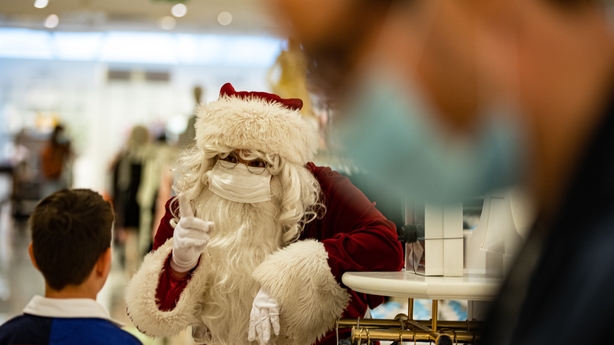
Most Australians are allowed to travel interstate over the festive break for the first time in two years, even as case numbers hit record highs.
"We've all witnessed the moving scenes of people at airports after months of separation," Sydney's Catholic Archbishop Anthony Fisher said in his Christmas message.
"In such dark times, Christmas is a ray of light, a sliver of hope."
And Pope Francis is still scheduled to deliver the traditional Christmas Eve midnight mass from St Peter's Basilica.
Millions of Americans are also on the move during the busy travel days before Christmas, even as Covid infections with Omicron surpass the peak of the Delta wave and hospitals run out of space for patients.
However, thousands of them are set to face a grim holiday weekend, with major carrier United cancelling 120 flights because infection numbers had impacted flight crews and other operations.
South Africa scraps isolation for those without Covid symptoms
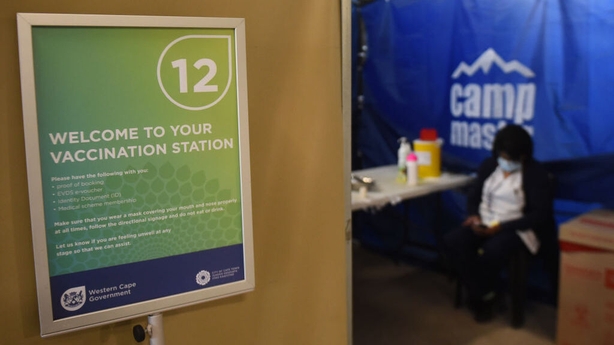
South Africans without symptoms of Covid-19 will no longer need to isolate or test if they have been in contact with a positive case, the government announced today, saying developments around the virus justified a shift from containment measures towards mitigation.
The country has led the continent in terms of Covid-19 cases and deaths, as well as vaccinations, and its experience has been closely watched around the world after it was among the first countries to identify the more transmissible Omicron variant.
The health ministry said that asymptomatic individuals who had been in contact with a case of Covid-19 no longer had to isolate but should monitor for symptoms for five to seven days and avoid attending large gatherings.
Only those people who developed symptoms needed to get tested, the statement continued, adding that those with mild symptoms should isolate for eight days and severe cases for 10 days.
All quarantine in facilities outside the home would be stopped, it continued, while contact tracing efforts would also be scrapped aside from in specific scenarios such as cluster outbreaks.
The move was "based on advice from our scientists that it is not really having an impact anymore", deputy health minister Sibongiseni Dhlomo told local broadcaster SABC, adding it did not replace existing guidance on things like social distancing and mask wearing.
It comes as the country will start offering booster shots of Johnson & Johnson's Covid-19 vaccine from today.
It follows its approval for use as a booster by the health regulator a day earlier.
Both J&J and Pfizer Covid-19 shots have been authorised as boosters by the South African Health Products Regulatory Authority (SAHPRA), but the move opens up boosters to the general public for the first time.
So far, only J&J booster shots have been available for health workers. However the emergence of the Omicron variant of Covid-19 has heightened the need for people to shore up their protections.
"From 24 December 2021 the National Vaccination Programme will provide J&J booster vaccinations to anyone who received their last dose at least two months prior," the statement said, adding ideally it would also be within six months of their original shot.
Pfizer booster shots were set to become available in early January. However the health ministry said these would now be offered from 28 December for people who had received their second dose at least six months ago.
