


The US Federal Reserve has announced a more aggressive stance to quell the threat of inflation as the United States economy rides a wave of price increases that have affected cars, housing and food.
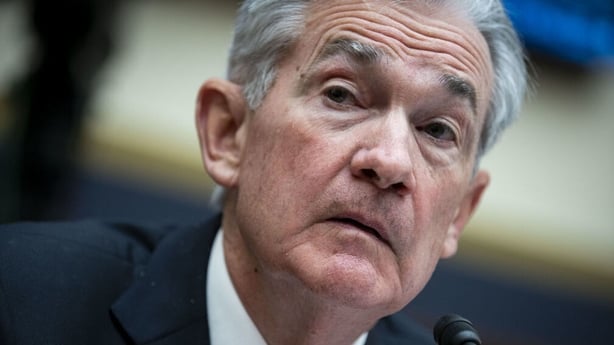
The central bank, led by Chair Jerome Powell, is the government body best equipped to address the inflation threat that has become a political liability for President Joe Biden, who has made fighting the trend a top priority.
The Fed's policy-setting Federal Open Market Committee (FOMC) announced it will phase out its stimulus measures more quickly by ending them in March, which would then allow it to raise lending rates as soon as May.
"Supply and demand imbalances related to the pandemic and the reopening of the economy have continued to contribute to elevated levels of inflation," the FOMC said in a statement, adding that the economy faces ongoing risks "including from new variants of the virus."
After admitting recently that he and his colleagues miscalculated how far prices would rebound in the wake of the pandemic crisis, Powell has pledged to fight back.
The committee said it will keep interest rates low until labor market conditions improve further, but in forecasts published alongside the FOMC statement, central bankers signaled they expect as many as three rate hikes next year.
While raising borrowing rates is an effective inflation-fighting weapon, it is also a blunt tool that could short-circuit the US economy's recovery, which remains beset by supply chain snags and new variants of the virus.
The committee in early November made the first step to taper its bond purchases, lowering the total by $15 billion a month, which would have ended the program around June.
Now, it will cut by $30 billion a month, ending the program two months earlier and putting the Fed in a position to raise the benchmark interest rate off zero, where it has been since the start of the pandemic in March 2020.
Hoping to avoid negative political fallout, Mr Biden's team and Fed officials - who are independent from the White House - have for months tried to reassure nervous consumers that the price jumps were mostly due to temporary knock-on effects of the pandemic, such as semiconductor shortages and shipping snafus.
But the increases have yet to subside. Annual consumer prices saw their biggest jump in nearly four decades in November, producer prices rose sharply last month and retail sales data released today showed price hikes are starting to tamp down spending.
In its quarterly economic projections, the FOMC's closely-watched "dot plot" indicated all committee members expect at least one rate hike next year, and 12 of the 18 members see three or more.
In September, the chart, which is not an official Fed forecast, showed a single rate increase likely next year.
The latest release shows Fed members expect inflation to rise to 5.3% this year -- well above the central bank's two percent goal -- and fall to 2.6% by the end of 2022.
"Progress on vaccinations and an easing of supply constraints are expected to support continued gains in economic activity and employment as well as a reduction in inflation," the FOMC said.
