


US politicians are set to vote today on a recommendation to press criminal contempt charges against Donald Trump's former chief aide Mark Meadows for refusing to testify before the congressional panel investigating the 6 January assault on the Capitol.
There is no doubt the citation will be adopted, taking the former congressman a step closer to becoming the first White House chief of staff to face prosecution after leaving the post since HR Haldeman in the Watergate scandal nearly 50 years ago.
"It gives us no pleasure to be here... dealing with the recommended referral of criminal contempt of a former colleague of ours," the committee's deputy chair Liz Cheney told politicians.
"We understand it's a serious matter and it's a step we wouldn't be taking if it weren't necessary."
Mr Meadows, who was a US representative for seven years before decamping to Mr Trump's team in 2020, is defying a subpoena to appear before the House select committee conducting the probe, pointing to an "executive privilege" claim by former president Trump.
That defense, which is theoretically only available to sitting presidents seeking to keep sensitive conversations with aides private, has already been shot down by a federal appeals court.
And the 6 January committee, which voted last night to advance the contempt case, says it is seeking answers about text messages and other communications that Mr Meadows has already acknowledged are not privileged.
Investigators say Mr Meadows has given up any right to refuse testimony as the ultra-conservative is promoting a new memoir that includes detailed accounts of 6 January and his conversations with Mr Trump.
He has also spoken numerous times about the attack in primetime appearances on right-wing cable network Fox News.
The panel is investigating Mr Trump's efforts to overturn his defeat in the 2020 presidential election through an anti-democratic campaign that led to the deadly Capitol riot - and the help he got from Mr Meadows.
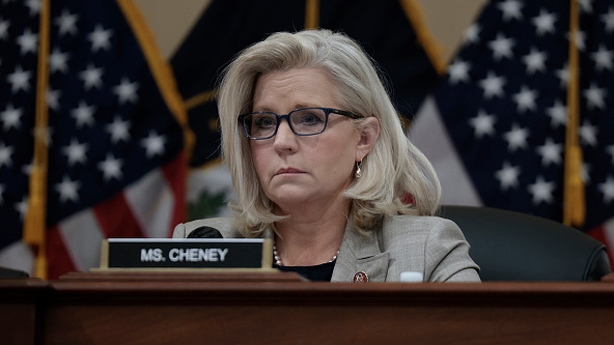
During yesterday's hearing, Ms Cheney read frantic messages sent to Mr Meadows during the assault from a troika of Fox News hosts as well as administration officials, politicians and the president's son Donald Trump Jr.
Each begged Mr Meadows - unsuccessfully - to get Mr Trump to call off his supporters and stop the violence.
"We need an Oval Office address. He has to lead now. It has gone too far and gotten out of hand," Trump Jr told Mr Meadows.
The messages made it clear that, contrary to their claims since 6 January, members of the former president's inner circle were alarmed by the violence and knew it was a political disaster and a catastrophe for the country.
Ms Cheney described the texts as evidence of Mr Trump's "supreme dereliction of duty" during his 187 minutes of inaction during the assault, when thousands of his supporters stormed the Capitol to stop the certification of President Joe Biden's election victory.
"And Mr Meadows' testimony will bear on another key question before this committee: Did Donald Trump, through action or inaction, corruptly seek to obstruct or impede Congress's official proceeding to count electoral votes?" Ms Cheney said.
After the House refers Mr Meadows, the Justice Department will decide whether to indict him.
Prosecutors charged former ex-White House strategist Steve Bannon with criminal contempt of Congress less than a month after the House voted to refer him.
The Meadows decision may prove less straightforward, however, than the case of Mr Bannon, who was not working for the Trump administration at the time of the insurrection.
An appeals court last week rejected Mr Trump's effort to stop the committee accessing documents and testimony from former White House aides, agreeing with a lower court that the defeated ex-president had provided no reason for secrecy. He was given two weeks to appeal.
The probe released a 51-page document Sunday describing some of Mr Meadows' communications, including a 5 January email in which he told an unidentified person the National Guard was on standby to "protect pro-Trump people."
