

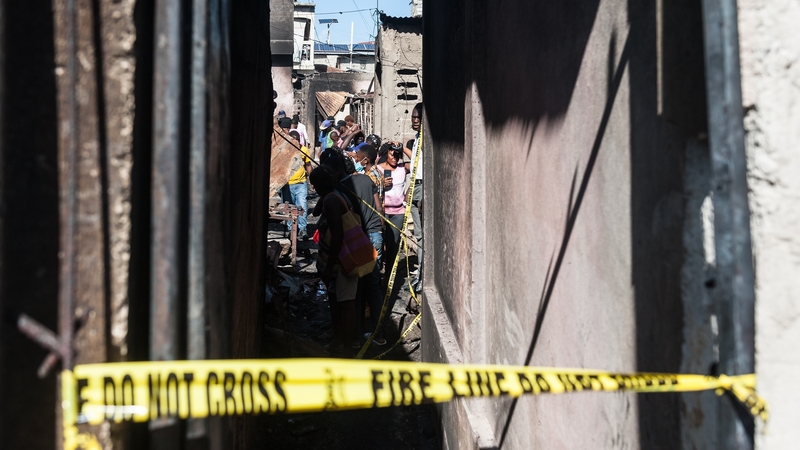
At least 62 people were killed when a fuel truck exploded in a street in Haiti's second-largest city Cap-Haitien during the night.
"We have now counted 62 deaths," Deputy Mayor Patrick Almonor said, adding that authorities were still searching for victims in nearby buildings.
The local hospital was stretched trying to treat the many injured, Mayor Pierre Yvrose said.
"So far the situation is critical because there are already about 50 dead bodies," he said. "We need human resources, and also material resources, namely, serum, gauze, and anything that can be used in case of serious burns."
Prime Minister Ariel Henry visited the scene of the tragedy, saying his heart was "broken" after meeting some of the dozens of injured in a local hospital.

The truck carrying petrol overturned around midnight in the area of Samari on the eastern end of Cap-Haitien, according to local media.
"I saw on the scene between 50 and 54 people burned alive," Mr Almonor said. "It is impossible to identify them."
Mr Almonor also said "about 20" houses in the area were set ablaze by the explosion.
"We can't yet give details on the number of people inside the houses," he said.
According to Mr Almonor, it appeared the truck driver lost control as it swerved to avoid a motorcycle taxi and the tanker flipped over.
Fuel deliveries across Haiti only resumed last month after a blockade by gangs who prevented trucks from loading at the main fuel ports for nearly a month. Many businesses were forced to shut down.
Mr Almonor said fuel spilled on to the road and pedestrians rushed to collect the tanker's petrol, which is currently in short supply as Haiti grapples with a severe fuel shortage caused by the tightening grip of criminal gangs on the capital Port-au-Prince.
The Caribbean nation has never produced enough electricity to meet the needs of the whole population. Even in well-off parts of the capital, the state-run Haiti electric utility only provides, at most, a few hours of power a day.
Those who can afford it rely on pricey generators, which are no help in the face of the severe fuel shortage caused by gangs blocking access to the country's oil terminals in the capital and its outskirts.
As rescue workers cleaned up in the aftermath of the explosion, bodies covered in white sheets lay on the ground before they were loaded on to trucks to be taken away.
The blast also damaged the fronts of houses and shops in the street and charred motorbikes and cars.
"I learned, with desolation and emotion, the sad news of the explosion, last night, in Cap-Haitien, of a tanker truck which transported gasoline," Prime Minister Ariel Henry wrote on Twitter.
The government declared three days of mourning for the dead.
The United Nations office in Haiti said it stood ready to help the national authorities in its response, and offered its condolences to the families of the victims.
Gangs have grown more powerful since the July assassination of President Jovenel Moise, which created a political vacuum and allowed criminal groups to expand their territory.
