


A UK government plan to ban paid consultancy work has been approved by MPs after the House of Commons voted through what has been called "watered-down" proposals to improve standards in politics.
MPs rejected plans by the Labour Party to introduce new rules to curb their outside business interests, something which has increased tensions between Boris Johnson and Conservative Party backbenchers.
Labour’s proposals called for a ban on "any paid work to provide services as a parliamentary strategist, adviser or consultant".
Crucially, it also included provisions requiring the Commons Standards Committee to come forward with proposals to implement the ban and guaranteeing time on the floor of the house for MPs to debate and vote on them.
In contrast, the more vaguely worded government amendment simply described the consultancy ban as "the basis of a viable approach" and supports the work of the Standards Committee to update the MPs’ code of conduct.
Labour’s motion was rejected by 282 votes to 231 while the government’s amendment on standards was approved by 297 votes to zero.
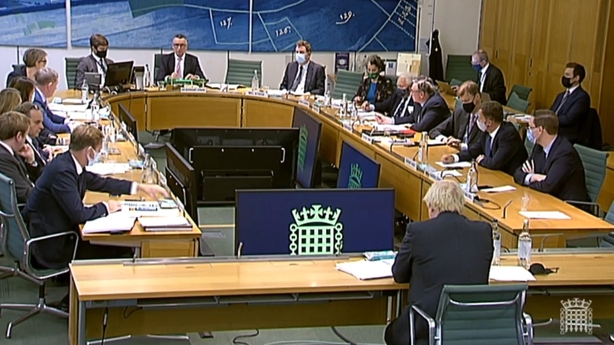
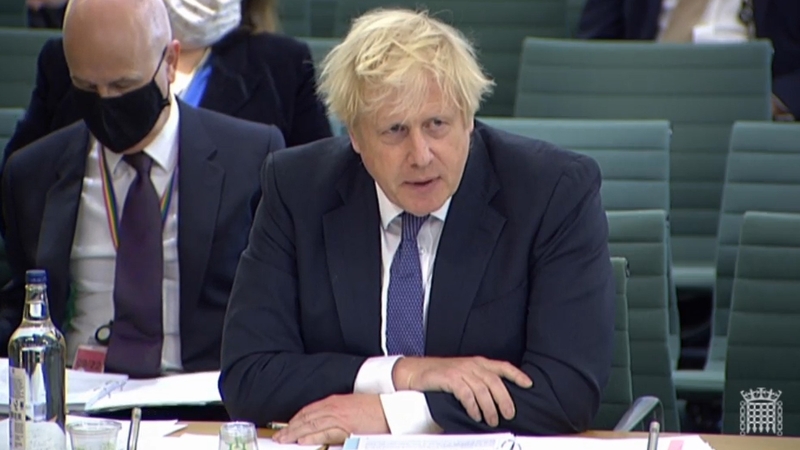
Prime Minister Boris Johnson defended his botched bid to overhaul the standards system as he faced questioning from senior colleagues at a parliamentary committee meeting.
He admitted he had made a "mistake" over his failed attempt to overhaul the internal system policing MPs, just as his party colleague Owen Paterson faced suspension over lobbying ministers for two companies that had him on the payroll.
"It was a total mistake not to see that Owen's breach of the rules ... made any discussion about anything else impossible," Mr Johnson told parliament's most senior cross-party watchdog committee.
"The intention genuinely was not to exonerate anybody. The intention was to see whether there was some way in which, on a cross-party basis, we could improve the system.
"In retrospect, it was obviously mistaken to think that we could conflate the two things," Mr Johnson said, adding that he regretted the move.
Hours earlier, Labour leader Keir Starmer described Mr Johnson as a "coward" for refusing to apologise for his role in the controversy - a remark that Mr Starmer later withdrew.
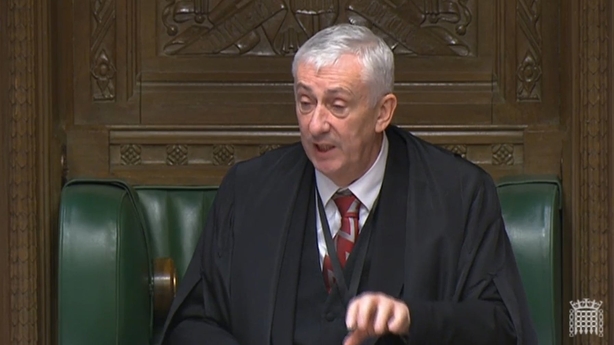
Mr Johnson also clashed with House of Commons Speaker Lindsay Hoyle over his behaviour during weekly Prime Minister's Questions, as he tried to turn the tables by demanding answers from Mr Starmer.
"You may be the prime minister of this country, but in this house, I'm in charge!" Mr Hoyle said, ordering the prime minister to "sit down".
The row about MPs supplementing their publicly funded salaries with lucrative second jobs, leading to accusations of conflicts of interest, has dominated Westminster since late last month.
Mr Paterson's conduct became overshadowed by revelations that numerous other MPs had high-paying second jobs, in particular lawyer and former attorney general Geoffrey Cox.
He has been accused of using his parliamentary office for outside legal work, which has netted him more than £6 million (€7m) since becoming an MP in 2005, on top of his annual MP's salary - currently around £82,000 (€98,000).
Mr Paterson has since resigned from parliament, while Mr Cox denies breaking the rules.
MPs are permitted to hold outside roles, as long as they declare them, but are not allowed to use their parliamentary offices or resources for such work.
Paid lobbying is also forbidden, with accusations of wrongdoing investigated by parliamentary standards watchdogs.
At a meeting of his backbenchers this evening, Mr Johnson reportedly faced discontent.
Laura Kuenssberg, the BBC's political editor, said one attendee had texted her afterwards to say he "looked weak and sounded weak ... (his) authority is evaporating".
Additional reporting AFP
