


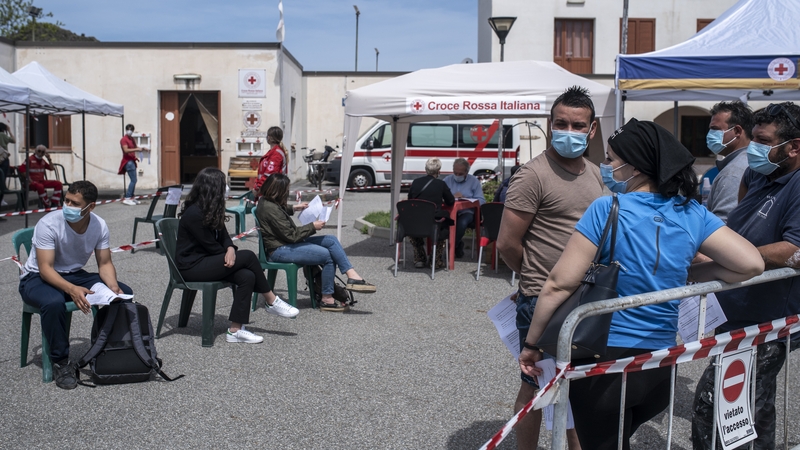
The Italian health minister signed an executive order imposing mandatory mask-wearing outdoors in the southern region of Sicily as of Monday, in an effort to curb a surge in COVID-19 cases and hospitalisations.
It was the first time the government has had to re-tighten rules in any region since late June.
"This is confirmation that the virus is not yet defeated and that the priority is to continue to invest in the vaccination campaign," Health Minister Roberto Speranza said in a statement.
Sicily reported almost 1,700 cases on Friday, the highest tally among Italy's 20 regions, with health experts blaming the rising infections on a relatively low number of vaccinations.
Some 62.8% of Sicilians have received a first jab, latest data show, and just 55.6% of them have completed the vaccination cycle, the lowest percentage in Italy.
By comparison, around 71.5% of people have got at least one dose in the Lazio region, around the capital Rome, and 67.3% are fully vaccinated.
Just over 129,000 Italians have died of coronavirus since the epidemic was discovered in February 2020.
After a sharp fall in the spring, daily infections have steadily been increasing in recent weeks as the more contagious Delta variant took hold.
Italy reported 45 coronavirus-related deaths on Friday, compared with 43 the day before, the health ministry said, while the daily tally of new infections rose to 7,826 from 7,221.
Italy has registered 129,002 deaths linked to COVID-19 since its outbreak emerged in February last year, the second-highest toll in Europe after Britain and the eighth-highest in the world.
The country has reported 4.51 million cases to date.
Denmark to lift all Covid restrictions by 10 September
Denmark will lift all of its Covid-19 restrictions by 10 September, health officials said today.
They said the virus no longer posed "a threat to society" due to the country's broad vaccination coverage.
More than 70% of Danes are fully vaccinated.
"The epidemic is under control, we have record vaccination levels," Health Minister Magnus Heunicke said in a statement.
"That is why, on 10 September, we can lift the special rules we had to introduce in the fight against Covid-19."
However, he stressed that "the epidemic is not over" and said the government "will not hesitate to act quickly if the pandemic once again threatens the essential functioning of society."
Denmark was one of the first countries to introduce a partial lockdown in March 2020, shutting down schools and non-essential businesses and services.
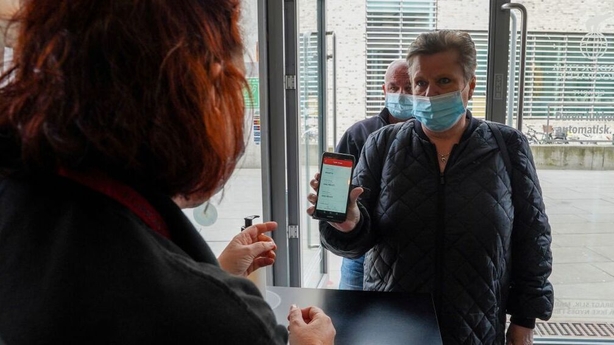
It has relaxed and reinforced its measures throughout the pandemic, and in April introduced a "corona pass" granting holders access to businesses like restaurants, cinemas, gyms and hair salons.
The pass showed if a person was vaccinated against Covid-19 or had received a negative test result within the past 72 hours.
That requirement, already lifted in some places such as museums on 1 August, will end in more places on 1 September, though it will still be required to enter nightclubs and other large events until 10 September.
Masks have not been mandatory on public transport since 14 August.
Record coronavirus rates in parts of UK
Growing numbers of local areas across the UK are recording their highest rates of new cases of Covid-19 since comparable records began, new figures show.
Parts of Scotland, Wales and south-west England are all experiencing case rates higher than at any point since mass testing was first introduced in summer 2020, while areas of Northern Ireland hit a new peak in recent days.
The figures come amid warnings of a further increase in the spread of the virus in coming weeks, with pupils either back at school or soon to return and a busy calendar of sport and music events likely to attract large crowds.
Around one in 70 people in private households in England had Covid-19 in the week to August 20, up from one in 80 in the previous week, according to the latest estimates from the Office for National Statistics.
One in 70 is the equivalent of about 756,900 people.
In Wales, around one in 120 people are estimated to have had Covid-19 in the week to August 20, up from one in 130 in the previous week and the highest level since the week to February 12.
In Northern Ireland the latest estimate is one in 40, up from one in 50 in the previous week and the highest level since estimates began in October 2020.
For Scotland, the ONS estimates that around one in 140 people had Covid-19 in the week to August 20, up from one in 200 in the previous week.
Scottish First Minister Nicola Sturgeon said she is "not currently considering a circuit-breaker lockdown" despite a record number of new Covid-19 cases and a steep rise in patients in hospital with the virus.
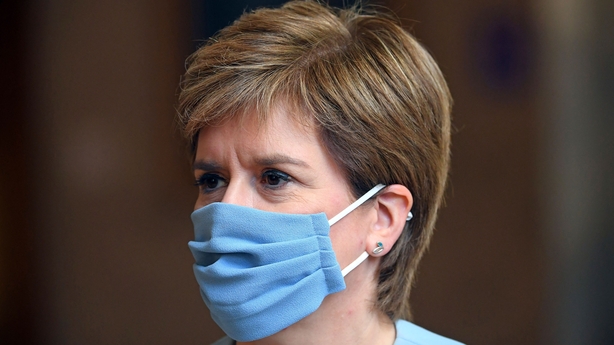
She told a coronavirus briefing that 6,835 new cases had been reported in the past 24 hours - the second time in a week that a record, new, daily figure has been reported.
The number of coronavirus patients in Scotland also continues to rise, with 479 people in hospital yesterday with recently confirmed Covid-19, up 53 on the previous day and an increase from 312 one week ago.
A total of four deaths of coronavirus patients were recorded in the last 24 hours, bringing the death toll since the start of the pandemic to 8,103.
Ms Sturgeon said that "none of us want to go backwards to even limited restrictions".
"Some of the speculation you might be reading in the media is not accurate," she said. "We are not currently considering a circuit breaker lockdown."
She said the vaccination programme had "significantly weakened" but not "completely broken" the link between cases and serious illness.
