


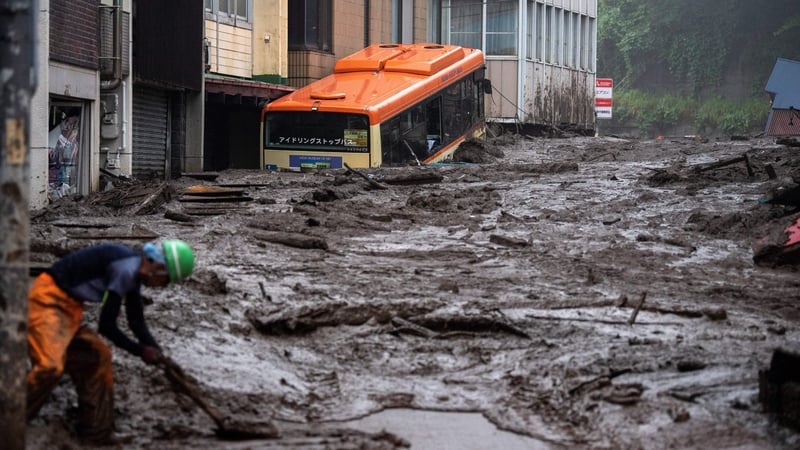
At least two people are feared dead after landslides triggered by heavy rains hit the central Japanese city of Atami.
Public broadcaster NHK reported that another 20 people are still missing.
Prime Minister Yoshihide Suga, who convened an emergency task force to tackle the crisis, asked people in the affected areas to remain on alert.
"There may be more heavy rainfall and we need to be taking the highest caution," Mr Suga said in televised remarks.
The floods are a reminder of the natural disasters, including earthquakes, volcanoes and tsunami, that plague Japan, where the capital Tokyo is to host the summer Olympics this month.
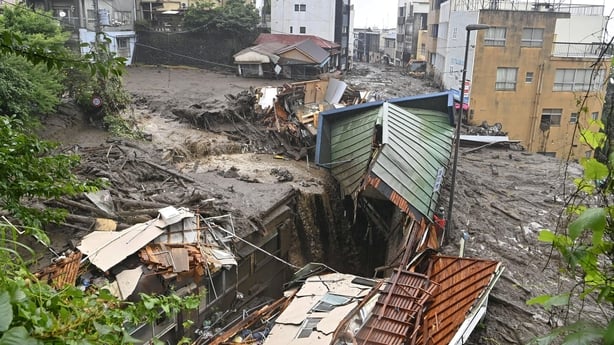
Two people were found in a state of cardiac arrest in Atami, 90km southwest of Tokyo, and taken to hospital, NHK said.
It aired footage of collapsed and half-submerged houses as water dashed the city with mud and debris.
Social media images showed partially submerged cars and rescue workers wading through waist-high water with a small life raft.
A video posted on TikTok from the scene showed a huge slurry of mud and debris sliding slowly down a steep road and nearly engulfing a white car, which drove away before a faster and more devastating torrent arrived.
Japan's military sent emergency rescuers to the city, where about 80 people are evacuated, NHK said.
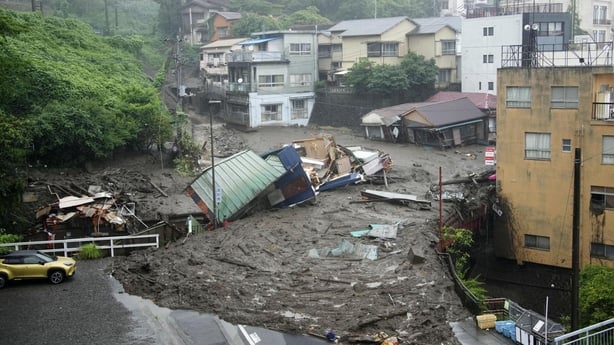
Some 2,830 households in the area face power outages, it said, citing the Tokyo Electric Power.
Much of Japan is currently in its annual rainy season, which lasts several weeks and often causes floods and landslides, prompting local authorities to issue evacuation orders.
Experts say climate change is intensifying the phenomenon because a warmer atmosphere holds more water, resulting in more intense rainfall.
More than 200 people died as devastating floods inundated western Japan in 2018, and last year dozens more were killed as the coronavirus pandemic complicated relief efforts.
Atami saw rainfall of 313 millimetres in just 48 hours up to today - higher than the usual monthly average of 242.5 millimetres in July, according to NHK.
The city is around 90km from Tokyo and is famous as a hot spring resort.
Shinkansen bullet trains between Tokyo and Osaka were temporarily stopped due to the heavy rain, while other local trains in rain-affected areas were also halted, rail company websites said.
