


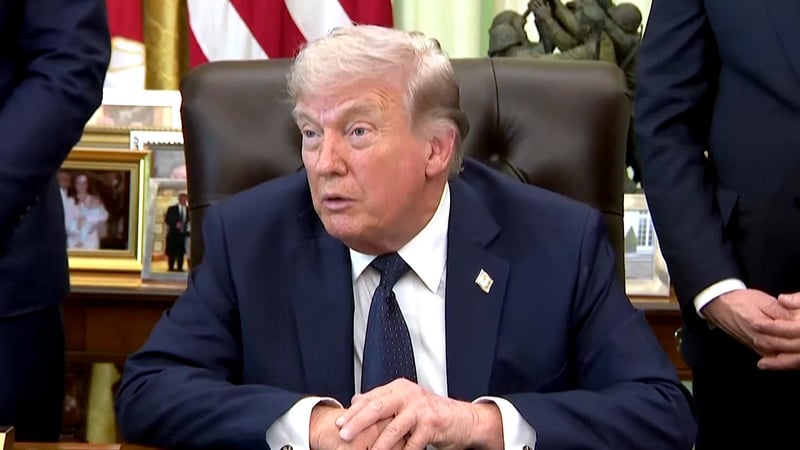
US President Donald Trump said Iran has said it was in a state of collapse and wants the United States to open the Strait of Hormuz as quickly as possible.
It was not clear from Mr Trump's social media post how Iran had communicated that message.
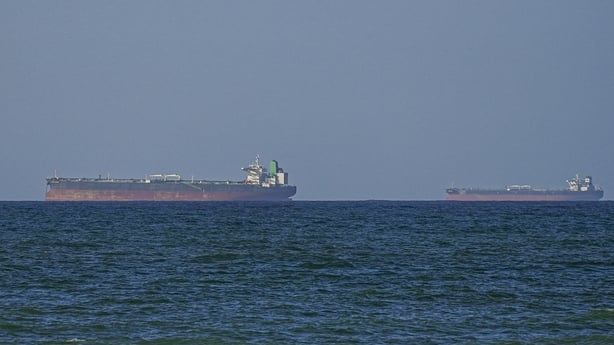
Iran has blockaded the waterway - a vital conduit for oil and gas shipments - since the start of the US-Israeli offensive two months ago, sending shockwaves through the global economy.
CNN, however, reported that Mr Trump was unlikely to accept Iran's proposal to restore traffic in the strait, as Qatar warned of the possibility of a "frozen conflict" if a definitive resolution is not found.
"We do not want to see a return to hostilities in the region anytime soon.
"We do not want to see a frozen conflict that ends up being thawed every time there is a political reason," Qatari foreign ministry spokesman Majed al-Ansari said, calling for a "sustainable" peace.
Mr Trump said earlier that he is unhappy with the latest Iranian proposal on resolving the two-month war, a US official has said.
Iran's latest proposal would set aside discussion of Iran's nuclear programme until the war, on hold following a ceasefire announced earlier this month, is ended and disputes over shipping from the Gulf are resolved.
Mr Trump is unhappy with Iran's proposal as he wants nuclear issues dealt with from the outset, a US official told Reuters. The official was briefed on the president's meeting with his advisers yesterday.
White House spokeswoman Olivia Wales said the US has "been clear about our red lines" as it seeks to end the war it began in February alongside Israel.
A previous agreement in 2015 between Iran and multiple other countries including the US sharply curtailed Iran's nuclear programme, which it has long maintained is for peaceful, civilian purposes.
However that deal fell apart when Mr Trump unilaterally withdrew from it in his first term in office.
Hopes of reviving peace efforts have receded since the US president scrapped a visit planned for last weekend by his special envoy Steve Witkoff and son-in-law Jared Kushner to mediator Pakistan.
Iranian Foreign Minister Abbas Araghchi shuttled in and out of Islamabad twice during the weekend.
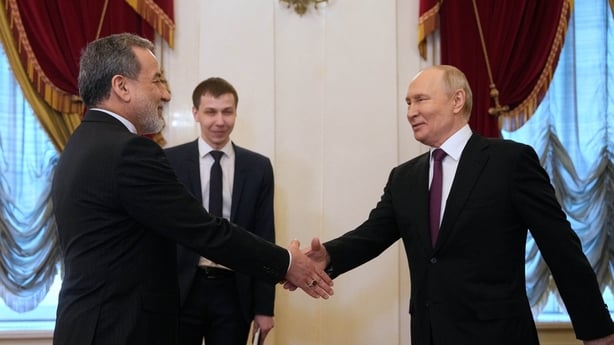
He also visited Oman and went to Russia yesterday, where he met President Vladimir Putin and received words of support from a longstanding ally.
Iran's Deputy Defence Minister Reza Talaei-Nik said that Tehran was ready to share defensive weapons capabilities and experiences gained from "America's defeat" with "independent" nations including those of the Shanghai Cooperation Organisation.
That bloc includes Iran, Russia, China, India, Pakistan and Central Asian states.
Mr Talaei-Nik also said that Washington "must abandon its illegal and irrational demands".
"The United States is no longer in a position to dictate its policy to independent nations," he said, according to state TV.
No trust in the US, Tehran says
Tehran would need guarantees that Washington and Israel would not attack again if it was to offer security assurances for the Gulf, Iran's envoy to the UN said.
Saudi Arabia, meanwhile, welcomed Gulf leaders and officials to discuss the ongoing crisis in the region.
An Iranian army spokesman told state TV that "we do not consider the war to be over," saying Tehran had "no trust in America."
"We have many cards that we have not yet used ... new tools and methods of fighting based on the experiences of the past two wars, which will definitely allow us to respond to the enemy more decisively" should the fighting resume, Amir Akraminia said in an interview.
On a visit to Russia, Mr Araghchi said the war had shown "Iran's true power" and stability, but back home in Tehran, the mood was sober.
"Everything in the country is up in the air right now. I have not worked for a long time," small business owner Farshad said.
"The country is in complete economic collapse."
Oil prices rise again
With the warring sides still seemingly far apart, oil prices resumed their upward march, rising nearly 3% today and extending gains from the previous session.
"For oil traders, it's not the rhetoric that matters any more, but the actual physical flow of crude oil through the Strait of Hormuz, and right now, that flow remains constrained," Fawad Razaqzada, market analyst at City Index and FOREX.com, said in a note.
At least six tankers loaded with Iranian oil have been forced back to Iran by the US blockade in recent days, ship-tracking data showed, underscoring the war's impact on traffic.
Iran's foreign ministry condemned US action against Iran-linked tankers as "outright legalisation of piracy and armed robbery on the high seas", in a social media post.
However, government spokesperson Fatemeh Mohajerani has told state media that Iran had prepared for maritime blockade scenarios as early as the US 2024 presidential election and made necessary arrangements so that "there is nothing to worry about".
She added Tehran was using northern, eastern and western trade corridors that do not rely on Gulf ports to neutralise the blockade's effects.
Between 125 and 140 ships usually crossed in and out of the strait daily before the war, but only seven have done so in the past day, according to Kpler ship-tracking data and satellite analysis from SynMax, and none of them were carrying oil bound for the global market.
With his approval ratings falling, Mr Trump faces domestic pressure to end a war for which he has given the US public shifting rationales.
Senior Iranian officials, speaking on condition of anonymity, told Reuters the proposal carried by Mr Araghchi to Islamabad over the weekend envisioned talks in stages, with the nuclear issue to be set aside at the start.
A first step would require ending the US-Israeli war on Iran and providing guarantees that the US cannot start it up again. Then negotiators would resolve the US Navy's blockade of Iran's trade by sea and the fate of the Strait of Hormuz, which Iran aims to reopen under its control.
Only then would talks look at other issues, including the longstanding dispute over Iran's nuclear programme, with Iran still seeking some kind of US acknowledgment of its right to enrich uranium.
We need your consent to load this rte-player contentWe use rte-player to manage extra content that can set cookies on your device and collect data about your activity. Please review their details and accept them to load the content.Manage Preferences
Israel says it has 'no territorial ambitions' in Lebanon, despite evacuations
Israel said it was not seeking to take territory in Lebanon, as its military issued a wave of new evacuation warnings for towns and villages in the battle-scarred south.
Israel has been fighting Hezbollah since early March, sending troops into south Lebanon to battle the Iran-backed militant group, with the violence ongoing despite a shaky 17 April ceasefire.
"Israel has no territorial ambitions in Lebanon. Our presence ... serves one purpose: protecting our citizens," Foreign Minister Gideon Saar told a news conference.
"No country would be willing to live in such a way with a gun pointed to its head," he said as the military pressed its operations in Lebanon against Iran-backed Hezbollah.
"In a reality where Hezbollah and other terror organisations - including Palestinian terror groups - are dismantled, Israel will have no need to maintain its presence in these areas."
Israeli Prime Minister Benjamin Netanyahu said yesterday that Hezbollah's rockets and drones remained a key threat requiring ongoing military action.
The Israeli military said today that it had found and destroyed a large Hezbollah tunnel network.
In Qantara, troops found "two Hezbollah terror tunnels, constructed over approximately a decade" that stretched two kilometres (1.2 miles), using "over 450 tonnes of explosives" to demolish them, an army statement said.
Lebanese state media said an Israeli detonation had left a "large crater" in Qantara, after earlier reporting a "major demolition operation" in the town.
Shortly after the ceasefire came into effect, Israel declared a so-called "Yellow Line" - a strip of Lebanese territory around 10 kilometres deep along the border within which Israeli troops are operating.
Lebanon's civil defence said an Israeli strike today killed three of its members taking part in a rescue operation in the south of the country.
It said the rescuers were killed in the town of Majdal Zoun after getting "trapped under rubble" following a strike on a building. Lebanon's health ministry added that two other people also died.
Hezbollah drew Lebanon into the Middle East war on 2 March by firing rockets towards Israel to avenge the killing of Iranian supreme leader Ali Khamenei.
