


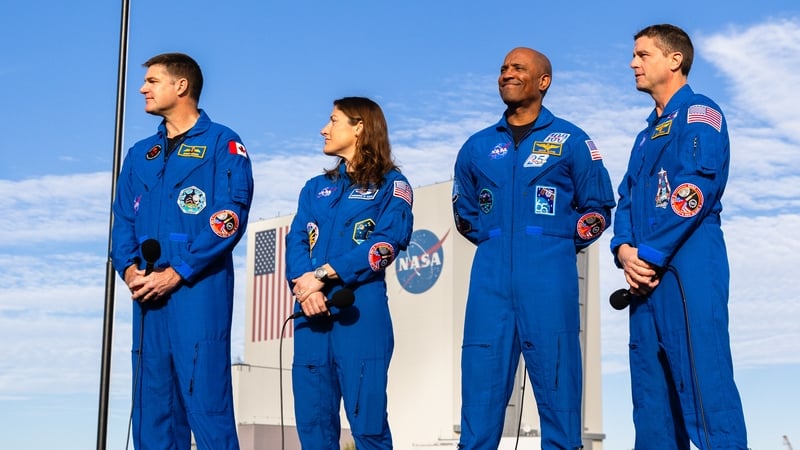
The four astronauts selected for NASA's Artemis II mission were due to arrive in Florida, entering the final phase of preparations for the first crewed journey toward the Moon in more than five decades.
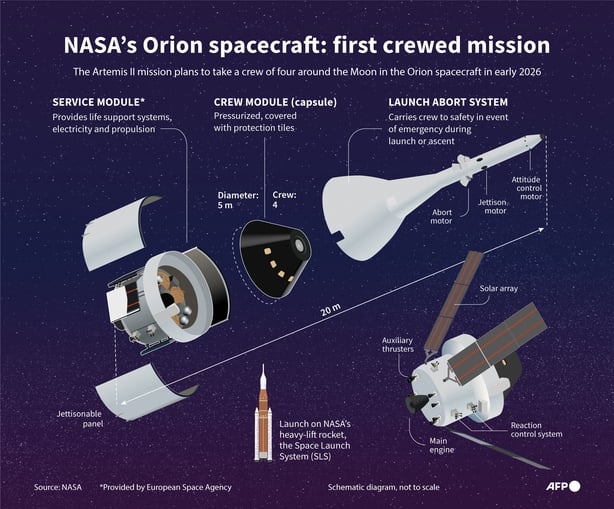
NASA astronauts Commander Reid Wiseman, Mission Pilot Victor Glover and Christina Koch, along with Canadian astronaut Colonel Jeremy Hansen, are set to launch from Kennedy Space Center as soon as 1 April on board NASA's towering Space Launch System (SLS) rocket, riding inside an Orion crew capsule built to carry humans into deep space.
The roughly ten-day mission will send the crew on a high-speed loop around the Moon and back.
Boeing is the prime contractor for the SLS core stage, Northrop Grumman builds the rocket's solid-fuel boosters, and Lockheed Martin produces the Orion spacecraft.
Artemis II will be the first crewed mission of NASA's multi-billion-dollar Artemis programme.
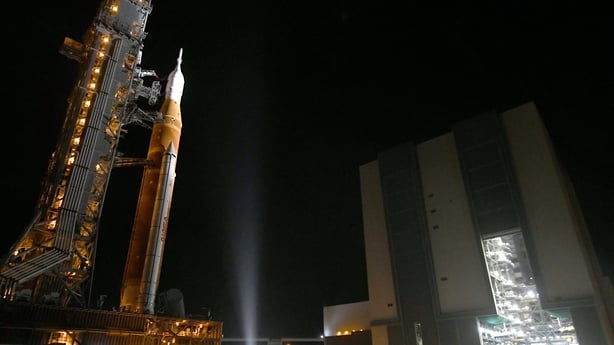
While it will not attempt a moon landing, it will send astronauts farther from Earth than any previous human spaceflight, testing the Orion spacecraft's life-support systems, navigation, communications and heat shield performance.
The crew has spent more than two years training for the mission since being named in 2023. They have been in standard pre-flight quarantine at NASA's Johnson Space Center in Houston since 18 March and are scheduled to move into NASA's Astronaut Crew Quarters in Florida ahead of launch.
Mission Pilot Glover will become the first black astronaut to travel into the Moon's vicinity. Mission Specialist Koch will be the first woman to do so, while Colonel Hansen will be the first non-American astronaut to go beyond low Earth orbit toward the Moon.
All of the crew members except Col Hansen have previously been in space. Commander Wiseman told reporters last year that the crew were prepared for all eventualities.
"When we get off the planet, we might come right back home, we might spend three or four days around Earth, we might go to the Moon - that's where we want to go," he said. "But it isa test mission, and we're ready for every scenario."
Cmdr Wiseman logged 165 days aboard the International Space Station during a 2014 mission launched aboard a Russian Soyuz spacecraft.
A former US Navy test pilot, he later served as NASA's chief astronaut before being selected to command Artemis II.
Mission Pilot Glover spent 168 days in space beginning in 2020 as pilot of NASA's Crew-1 mission, the first operational ISS mission using SpaceX's Crew Dragon capsule. Before joining NASA, he flew more than 40 aircraft during a US Navy career that included combat deployments and test-pilot duties.
Mission Specialist Koch set a record in 2019 for the longest continuous spaceflight by a woman, spending 328 days aboard the ISS. Trained as an electrical engineer and physicist, she previously worked as a NASA engineer and carried out extended research expeditions in Antarctica.
The mission will mark the first spaceflight for Col Hansen who was selected as a Canadian astronaut in 2009. His seat reflects a long-standing US-Canadian partnership in human spaceflight, including Canada's contributions to robotics used on board the ISS.
NASA plans additional Artemis missions in the years ahead as it works toward a sustained human presence on the Moon and future crewed missions to Mars.
