


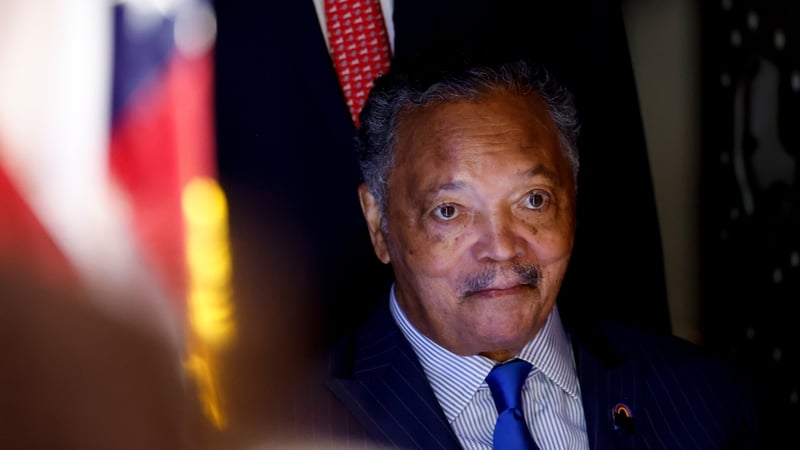
Civil rights activist Reverend Jesse Jackson, one of the US's most influential black voices, died peacefully this morning aged 84, his family said in a statement.
Rev Jackson, a Baptist minister, had been a civil rights leader since the 1960s, when he marched with Dr Martin Luther King Jr. and helped fundraise for the cause.
"Our father was a servant leader - not only to our family, but to the oppressed, the voiceless, and the overlooked around the world," his family said.
"His unwavering belief in justice, equality, and love uplifted millions, and we ask you to honor his memory by continuing the fight for the values he lived by."
The family did not release a cause of death, but Rev Jackson revealed in 2017 that he had the degenerative neurological disease Parkinson's.
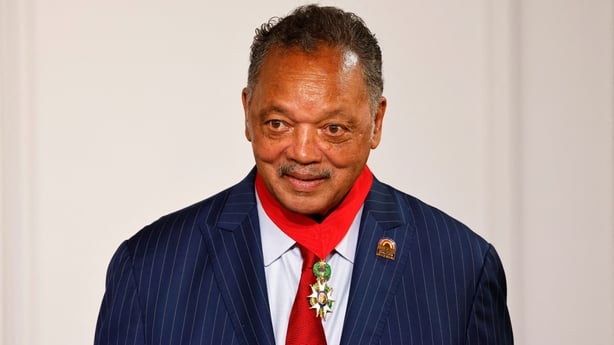
He was hospitalised for observation in November in connection to another neurodegenerative condition, according to media reports.
A dynamic orator and a successful mediator in international disputes, the long-time Baptist minister expanded the space for African Americans on the national stage for more than six decades.
He was the most prominent black person to run for the US presidency - with two unsuccessful attempts to capture the Democratic Party nomination in the 1980s - until Barack Obama took the office in 2009.
Watch: Jesse Jackson recites iconic poem, 'I am somebody'
He was present for many consequential moments in the long battle for racial justice in the United States, including with Dr King in Memphis in 1968 when the civil rights leader was assassinated.
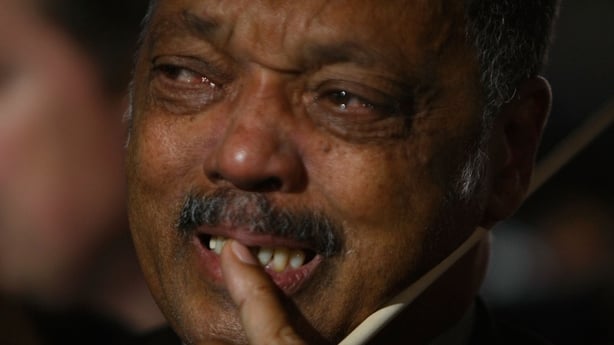
He openly wept in the crowd as Mr Obama celebrated his 2008 presidential election, and he stood with George Floyd's family in 2021 after a court convicted an ex-police officer of the unarmed black man's murder.
Rev Jackson was born Jesse Louis Burns on 8 October 1941, in Greenville, South Carolina, and later adopted the last name of his stepfather, Charles Jackson.
"I was not born with a silver spoon in my mouth. I had a shovel programmed for my hands," he once said.
He excelled in his segregated high school and earned a football scholarship to the University of Illinois, but later transferred to the predominantly Black Agricultural and Technical College of North Carolina, where he received a degree in sociology.
In 1960, he participated in his first sit-in, in Greenville, and then joined the Selma-to-Montgomery civil rights marches in 1965, where he caught King's attention.
Rev Jackson later emerged as a mediator and envoy on several notable international fronts.
He became a prominent advocate for ending apartheid in South Africa, and in the 1990s served as presidential special envoy for Africa for Bill Clinton.
Missions to free US prisoners took him to Syria, Iraq and Serbia.
He founded the Rainbow PUSH Coalition, a Chicago-based non-profit organisation focused on social justice and political activisim, in 1996
He is survived by his wife and six children.
We need your consent to load this rte-player contentWe use rte-player to manage extra content that can set cookies on your device and collect data about your activity. Please review their details and accept them to load the content.Manage Preferences
