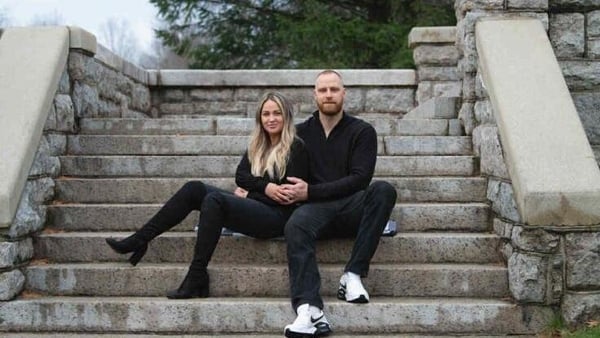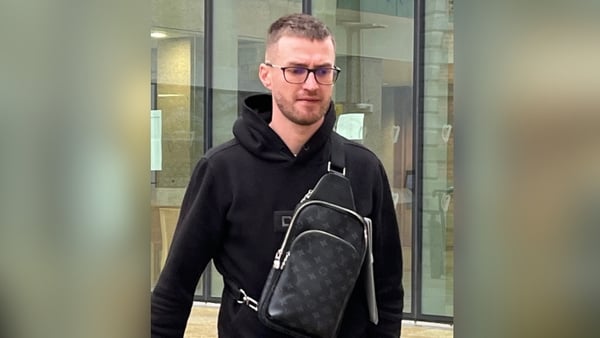

The case of Kilkenny man Seamus Culleton has raised worries and several questions this week about what a changing United States means for not only the 'undocumented Irish' but also for their loved ones on both sides of the Atlantic.
US President Donald Trump has led a crackdown on immigration since returning to office in January 2025.
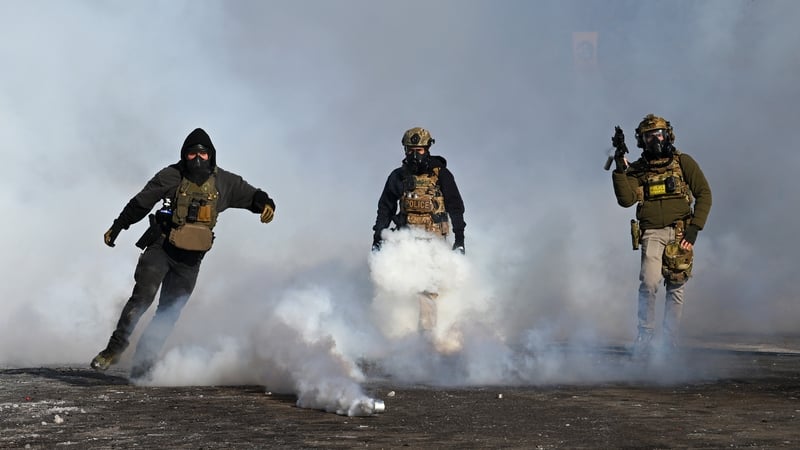
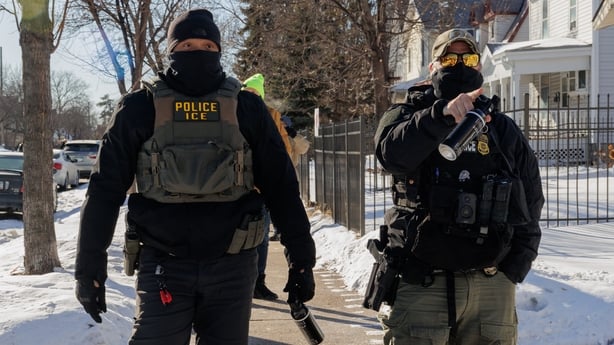
Thousands of federal agents including Immigration and Customs Enforcement (ICE) officers have conducted sweeping raids and arrests across the US in recent weeks in what the administration claims are targeted missions against criminals.
Mr Trump has argued that the militarised operations are necessary to remove criminals from the US, but many of those arrested have been picked up solely for possible civil immigration violations - the legal equivalent to a traffic violation.
John Foley, who is an immigration lawyer based in Boston, said "ICE is on a war-time recruitment footing".
"As far as the Irish are concerned, ICE is not specifically going after them, to the best of my knowledge. However, the Irish are going to get caught up in the system," said Mr Foley.
Another immigration lawyer, Jim O'Malley, said visa law in the US is "quite unforgiving on paper" but it is now "even more unforgiving in practice".
So what does this mean for the thousands of undocumented Irish in the US?
One such case is that of Seamus Culleton. Mr Culleton was an apprentice plasterer before leaving Ireland for the US in 2009.
Then aged 22, he had failed to appear in court in Ireland on drugs-related charges and a bench warrant for his arrest was issued in April 2009, one month after his arrival stateside.

At that time in Ireland, many in the construction industry had fallen on hard times following the post-Celtic Tiger crash and had left the country in search of a new livelihood and fresh career prospects.
Mr Culleton entered the US in March 2009 as a tourist under the country's Visa Waiver Programme but remained there after the permitted 90 days.
The programme allows for faster, more convenient, and cheaper travel to the US but comes with the condition that you have no right of appeal if you are found to have violated any of the terms of your admission.
Mr Culleton eventually settled in Boston, Massachusetts, where he set up a plastering business. He got married in April 2025 to US citizen Tiffany Smith.
All was going well in life in the US for the Glenmore native.
That was, of course, until he made the trip to The Home Depot to return some tools after work last September.
While he had no criminal convictions, a valid work permit, and was in the final stage of the process of obtaining a green card (becoming a legal permanent resident), Mr Culleton said none of this mattered when he was followed and then pulled over after leaving the hardware shop.
ICE agents arrested him after running the licence plates on his car.
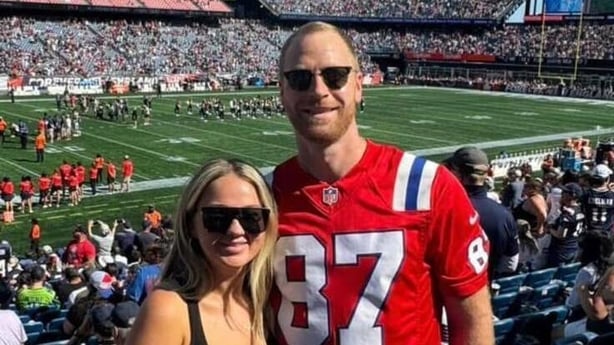
For five days, he was held in a small cell with other detainees before being flown to an ICE facility in Buffalo, New York.
There, Mr Culleton said he was interviewed by an ICE agent who asked if he would sign a form agreeing to his deportation.
He refused, and instead said he ticked a box where detainees can state they wish to contest their arrest.
He wrote down that his grounds for contesting his deportation were that he was married to a US citizen and had a valid work permit.
Culleton taken to ICE facility in Texas - 4,000km away from Boston
The 38-year-old was then taken to another ICE facility in El Paso, Texas, some 4,000km away from his home in Boston.
It is there where Mr Culleton remains detained and it is from there where Mr Culleton told RTÉ’s Liveline programme earlier in the week about the conditions he has had to endure for almost the past four-and-a-half months.
He described overcrowding, the spread of disease, a lack of food and hygiene, as well as being locked in the same room with little to no outside time or interaction, saying that he was in fear for his life.
The news of Mr Culleton’s detention, which was first reported by The Irish Times on Monday, sparked calls for his immediate release and for the politicians in Ireland to step in and intervene.
However, a senior figure with the Department of Homeland Security in the US took to X two days later to state that Mr Culleton had been in the country illegally for 16 years, and that he was free to leave the detention centre at any time and return to Ireland.
The department’s Assistant Secretary for Public Affairs Tricia McLaughlin said that the south Kilkenny man had received "due process" since his detention, and that he was issued a final order of removal by an immigration judge in September 2025.
In her post on X, she also said that Mr Culleton was offered the chance to be removed to Ireland but "chose to stay in ICE custody, in fact he took affirmative steps to remain in detention".
Then, later in the week, it emerged that Mr Culleton had been charged with the unlawful possession of drugs, possession for sale and supply, as well as obstruction in relation to an incident on 17 May 2008 in Glenmore.
After he failed to appear at a sitting of New Ross District Court to face the charges in April 2009, a judge issued a bench warrant for his arrest.
A revelation which will have put a significant dent in his chances of remaining in the US and one which his legal representative said she had only become aware of through the media.
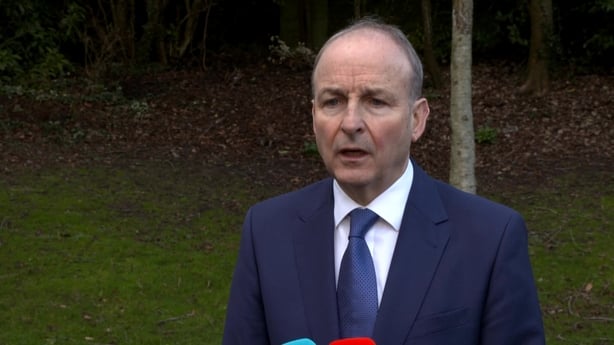
However, Attorney Ogor Okoye of BOS Legal Group stressed that her client had been away from Ireland since March 2009 and "will not be aware of any warrant that happened after he came to the United States".
She also added: "A warrant is not a conviction, a warrant is not a criminal entry, so I will leave it at that until I understand the specific facts of the case."
Listen: Seamus Culleton spoke to RTÉ Radio 1 Livelive from ICE detention centre
We need your consent to load this rte-player contentWe use rte-player to manage extra content that can set cookies on your device and collect data about your activity. Please review their details and accept them to load the content.Manage Preferences
'I just want him home,' says Culleton's wife
This week, Ms Smyth has spoken about how her husband’s health has deteriorated since September and described his detention as "overwhelming".
"I just want him home, I want him safe. Seamus is a good man and he doesn’t deserve what is going on," she said.
Meanwhile, Mr Culleton’s sister Caroline called on anyone with a "pulling card" to help get her brother back to his normal life.
She spoke about the family’s shock at how Mr Culleton’s life had been upended in the space of just a few hours.
No doubt a similar sentiment has been growing this week amongst the 'undocumented Irish' in the US.
Their families are left wondering if their loved one - albeit who may be in the country illegally - could be the next person to find themselves in an ICE detention centre.
Taoiseach Micheál Martin told the Dáil this week that there are "five to six" cases of Irish citizens currently being detained by ICE.
However, there are estimated to be thousands of Irish people who entered the US using visa waiver programmes and overstayed.
But just what exactly has changed to cause these heightened concerns about deportation?
Well, the truth is that from a legislative perspective nothing has changed and the law remains the same. However, it is the enforcement of these laws that has become stricter.
Mr O’Malley is a senior partner at Hemrick O’Malley law firm in Manhattan and specialises in immigration law.
Mr O’Malley, who is originally from Limerick, said visa law in the US is "quite unforgiving on paper" but it is now "even more unforgiving in practice".
He said: "ICE are under orders to apprehend people who are deportable, that includes anyone undocumented or who has overstayed, who has violated their visa status or their entry status.
"It also includes people who may have lived legally for many years but then got into a situation that some behaviour of theirs, like a serious crime, a drug crime, a serious criminal offence, would cancel out that legal status that they had."
Mr O’Malley went on to say: "The law hasn’t changed, but the applicability has changed."
"Traditionally, and even in the first Trump regime, and going back to Obama and going back to the Clinton regime, even way back to the Bush regimes and Ronald Reagan - enforcement was prioritised.
"So that if people had what we call equities in their US immigration profile, even though they had become undocumented or overstayed, there was still a process and they were not prioritised under the enforcement.
"Somebody who had family in the US even though they had overstayed, or especially if they had a spouse and children who were American citizens, they would be sort of granted leniency in order to process themselves into status," Mr O'Malley said.
Enforcement of law has changed, says lawyer
Lawyer Mr Foley, who is based in Mr Culleton’s home city of Boston, agrees that enforcement has changed.
"ICE is on a war-time recruitment footing. They had a workforce of 10,000 last year - 10,000 employees in 2025. Right now, they have 22,000," he said.
Mr Foley said: "As far as the Irish are concerned, ICE is not specifically going after them, to the best of my knowledge. However, the Irish are going to get caught up in the system.
"And in that gentleman’s [Mr Culleton’s] case, I’m sure that ICE unit had a quota that it had to hit for the week, and they must have been looking for anybody and everybody."
Mr Foley also said there is a growing cause for concern for those who entered the US through visa waiver programmes similar to Mr Culleton, and then who overstayed in the country.
He said: "At some point, I believe ICE is going to be going after the ESTA [Electronic System for Travel Authorisation] overstays, and because there is no avenue to legalisation, that is going to mean more and more Irish get caught up in it.
"So, I think you can expect more Irish deportations in the days and weeks ahead," he added.
Speaking in Waterford yesterday, Tánaiste Simon Harris described as a "real possibility" the prospect of Mr Culleton being deported home to Ireland in the coming days.
However, Mr Harris also said the situation was "somewhat fluid," and he said consular services at the Irish embassy in Washington were continuing to do everything they can to "actively support" an Irish citizen.
Whether Mr Culleton will get to continue his life in the 'land of opportunity' or if his American dream is to turn into a nightmare remains to be seen.
Whatever the outcome, his family and friends remain sick with worry today about his well-being and what his future holds.
While all the time, that same sense of worry is growing amongst the 'undocumented Irish', many of whom carved out a life for themselves while staying in the US illegally but are now wondering if, given the current regime, they will be forced to start all over again somewhere new.