US President Donald Trump's decision to repeal a scientific finding that greenhouse gas emissions endanger human health has been described as "catastrophic".
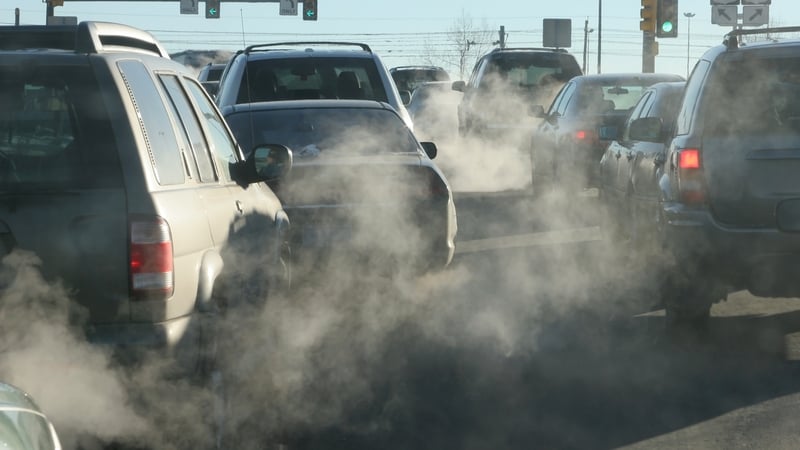
The repeal of the Environmental Protection Agency's 2009 "endangerment finding" was paired with the immediate elimination of greenhouse gas standards on automobiles.
But it also places a host of other climate rules in jeopardy, including carbon dioxide emissions from power plants and methane leaks for oil and gas producers.
It is the most sweeping climate change policy rollback by the administration to date, after a string of regulatory cuts and other moves intended to unfetter fossil fuel development and stymie the rollout of clean energy.
Former US presidential candidate and environmental activist Jill Stein said it is a "catastrophic ruling", which "completely defies common sense as well as the rule of law and responsibility".
Speaking on RTÉ's Morning Ireland, she said: "The notion that we can just go ahead and release climate gases and allow whatever climate impacts to take place, it's clearly nuts."
Announcing the decision yesterday, Mr Trump said it was the biggest deregulatory action in US history.
"Under the process just completed by the EPA, we are officially terminating the so-called endangerment finding, a disastrous Obama-era policy that severely damaged the American auto industry and drove up prices for American consumers," he said.
The EPA said the endangerment finding had relied on an incorrect interpretation of federal clean air laws meant to protect Americans from pollutants that do harm through local or regional exposure, not through warming the global climate.
"This flawed legal theory took the agency outside the scope of its statutory authority in multiple respects," it said.
Mr Trump announced the repeal beside EPA Administrator Lee Zeldin and White House budget director Russ Vought, who has long sought to revoke the finding and was a key architect of conservative policy blueprint Project 2025.
Watch: Donald Trump announces repeal of scientific finding that greenhouse gas emissions endanger human health
Mr Trump has said he believes climate change is a "con job", and has withdrawn the United States from the Paris Agreement, leaving the world's largest historic contributor to global warming out of international efforts to combat it.
He has also signed legislation killing Biden-era tax credits aimed at accelerating deployment of electric cars and renewable energy.
Former president Barack Obama said that without the endangerment finding, "we’ll be less safe, less healthy and less able to fight climate change - all so the fossil fuel industry can make even more money."
The endangerment finding was first adopted by the United States in 2009, and led the EPA to take action under the Clean Air Act of 1963 to curb emissions of carbon dioxide, methane, and four other heat-trapping air pollutants from vehicles, powerplants and other industries.
It came about after the Supreme Court ruled in 2007 in the Massachusetts vs. EPA case that the agency has authority to regulate carbon dioxide and other greenhouse gas emissions under the Clean Air Act.
Its repeal would remove the regulatory requirements to measure, report, certify, and comply with federal greenhouse gas emission standards for cars, but may not initially apply to stationary sources such as power plants.
The transportation and power sectors are each responsible for around a quarter of US greenhouse gas output, according to EPA figures.
The EPA said the repeal and end of vehicle emission standards will save US taxpayers $1.3 trillion, while the prior administration said the rules would have net benefits to consumers through lower fuel costs and other savings.
The Environmental Defense Fund said that the repeal will end up costing Americans more, despite EPA's statement that climate regulations have driven up costs for consumers.
The coal industry celebrated the announcement saying it would help stave off retirements of aging coal-fired power plants.
Environmental groups have criticised the proposed repeal as a danger to the climate. Future US administrations seeking to regulate greenhouse gas emissions likely would need to reinstate the endangerment finding, a task that could be politically and legally complex.
But environmental groups are confident that the courts will continue their track record of backing the EPA's authority to use the Clean Air Act to regulate greenhouse gases.
Several environmental groups, including the Natural Resources Defense Council (NRDC) and Earthjustice, have said they will challenge the reversal in court, setting off what could be ay ears-long legal battle up to the Supreme Court.
"There'll be a lawsuit brought almost immediately, and we'll see in them in court. And we will win," said David Doniger, senior attorney at the NRDC.(