
Groundhog Day is fast approaching here in the US, when the focus of the entire nation shifts to Gobblers Knob in Punxsutawney, Pennsylvania to observe the prognostications of a large rodent.
Of course, in reality, few outside of the local TV services and affiliated networks will give a hoot about what has become America's version of the first salmon of the new year - a tradition that is venerable, but pointless.
Still, at a time when half the country is snowbound, the notion that a creature emerging from hibernation and seeing its own shadow portends another six weeks of winter weather may be of more interest than usual.
The National Guard has been put to work here in the nation's capital, helping to clear away snow - a week after it fell.
City workers drive large snowploughs down the streets, creating near-metre high embankments hapless citizens have to clamber over at pedestrian crossings. The Dublin City teams do a much better job than their counterparts in this DC.
From supporting ICE to now clearing ice from the streets, the National Guard is a military solution to essentially civilian problems: immigration control and de-icing the streets.
Up in the icy north, in Minneapolis, getting ICE off the streets has preoccupied politicians and become a national political issue.
In a part of the world that is better adapted to dealing with snow and ice - because they get a lot of practice - clearing out the other ICE, the Immigration and Customs Enforcement Agency, is proving to be as big a challenge as the H2O sort is to the government of the District of Columbia.
Both DC and Minneapolis are examples of how State, District and City governments interact with the Federal government - with rather different outcomes.
Minneapolis, and its State of Minnesota, have declared themselves 'sanctuaries' for undocumented or illegal immigrants. That is to say, the State and City authorities will not co-operate with Federal agencies like ICE when they come calling to remove people who are not in the country legally.
The declaration of sanctuary status was initially an act of defiance against the first Trump administration's ‘build a wall’ rhetoric.
During Joe Biden’s presidency, when the southern border really was virtually open, the sanctuary city status was turned against places that had declared it, with Republican Governors from border states like Arizona, Texas and Florida chartering planes to send migrants north to these ‘sanctuaries’ to see how they liked paying for thousands of extra, welfare-dependent, residents.
Now, back in power, President Trump is targeting Democrat-run sanctuary cities like Los Angeles, Portland, Minneapolis and Chicago for surges of ICE officers, conducting large scale sweeps. Philadelphia is rumoured to be next for the treatment.
But that may change after the happenings of the past few weeks in Minneapolis.
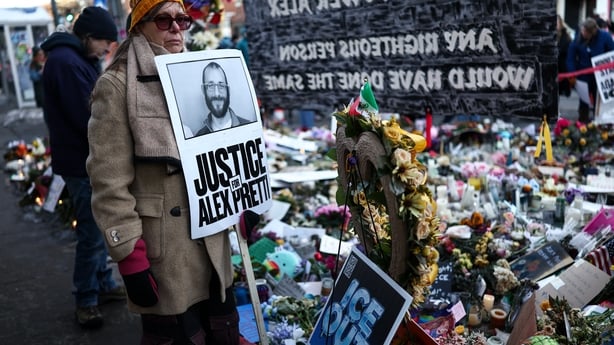
The shootings of Renee Good and Alex Pretti were shocking events that seemed to spring from nowhere, at very small scale protests, both just after 9am.
The lying by officials seemed worse than usual, the attempted cover up failing spectacularly due to multiple videos that destroyed the official version within hours.
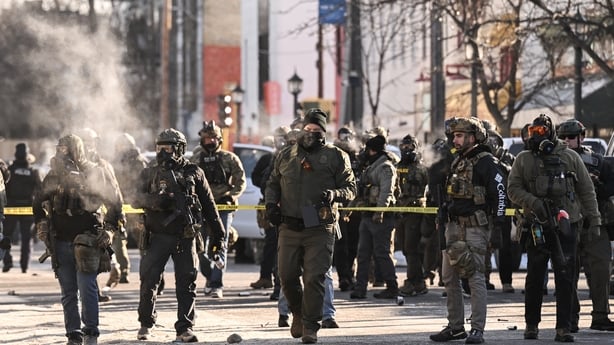
Street memorials grew into protests and clashes with law enforcement - which included the Customs and Border Patrol, a Gendarmerie that normally patrols the most dangerous parts of the southern border, where gunbattles with Mexican drug and people trafficking cartels are common.
They are neither trained for nor suited to urban civil policing.
They should not be on the streets of Minneapolis. But because it's a sanctuary city, the local police have been ordered not to co-operate with ICE officers, so CBP were drafted in to provide extra security, and take part in the expansive sweeps of neighbourhoods the new policy called for.
Not that the new policy was a surprise. At every campaign rally I heard Mr Trump speak at in the 2024 election campaign (and that was a large number), he stated clearly and directly he intended to carry out the biggest deportation campaign ever seen in America.
Maybe people didn't think he would actually carry it out? Maybe they thought it wouldn’t be like it turned out - violent, paramilitary style raids and running battles with protestors?
Maybe they wanted rid of illegal immigrants but not the nice lady in the diner, or the guy who fixes air conditioning units in summer, heating units in winter. All of the above were being caught in the dragnet.
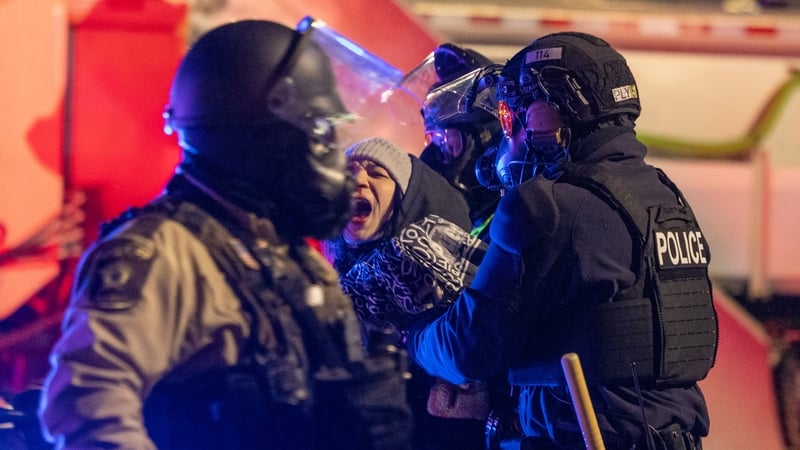
By last Sunday night there was a real sense that the White House had lost control of the situation. So too had the city of Minneapolis, its police force exhausted (just 600 officers, compared to 2,000 ICE and 1,000 CBP agents), and the constant protests, energised by the killings, televised by all and sundry, the administration seemingly unsure about whether to double down or walk it back.
Politics, driven by common sense, asserted itself and the president phoned Tim Walz, the Governor of Minnesota, and the mayor of Minneapolis. Both sides stepped back from the brink - not quite walking back their policies, but certainly de-escalating a very dangerous situation.
The cold weather may have played a part as well - TV colleagues on the ground reported cameras and mobile phones freezing up, microphone cables snapping in the temperatures that plunged down to minus 30 Celsius with wind chill. Still, the people protested.
President Trump proffered a deal - get the local police involved, and we will be able to get the Border Patrol out of Minneapolis.
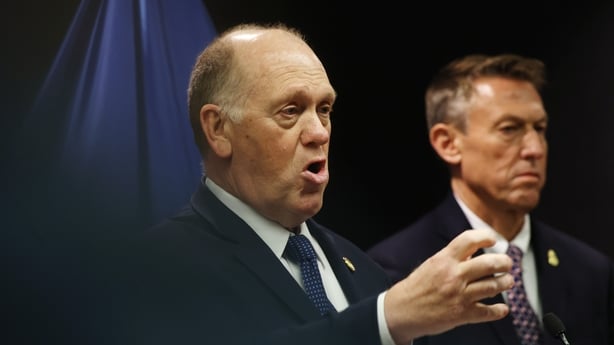
To lubricate the deal he sent his Border Czar, Tom Homan up to Minneapolis, and pulled out Greg Bovino, the controversial commander at large of the Border Patrol officers, who had become a lightning rod for discontent, especially after incendiary media appearances.
Mr Bovino is now back running CBP in El Centro, California - a mostly desert stretch of 112km of the border with Mexico, where summer temperatures can reach 48 degrees Celsius.
Mr Homan, a 40-year veteran of both CBP and ICE, the first head of the agency to rise up from the ranks, took a much more politically savvy approach to the situation - without backing away from his mission to deport aliens.
That mission earned him a medal from former President Barack Obama, whose administration deported almost 3 million, but without the dramas seen in some cities over the past several months.
It took until Thursday for Mr Homan to surface in public and brief on what was happening. He lived up to the president's description of tough but fair, and promised to move away from large scale sweeps and revert to the targeted arrests that he was most familiar with.
"In the past few days, I've met with Governor Walz, Attorney General Ellison, Mayor Frey, numerous police chiefs and sheriffs and I have more to meet. I'll also be continuing the dialog with business and religious leaders in partnership with your communities. I'll be meeting with them too, because I want to hear what they have to say.
"In my meetings with folks so far - most importantly, the Governor and the AG, mayor Frey, we didn't agree on everything. I didn't expect to agree on anything. The bottom line is, you can't fix problems if you don't have discussions. I didn't come to Minnesota for photo ops or headlines. I came here to seek solutions, and that's what we're going to do," he added.
"One thing we did agree on, was that community safety is paramount. One thing we all agreed on was ICE - Immigration Customs Enforcement - is a legitimate law enforcement agency that has a duty to enforce the laws enacted by Congress and keep this community safe.
"Like I've said many times for the last several years - even before this administration - jurisdictions that refuse to cooperate with Federal immigration authorities are sanctuaries for criminals. Sanctuary cities are sanctuaries for criminals and endangers the residents of the community," he said.
Mr Homan said he and the local authorities had agreed that prisoners who were in Minnesota's jail and prisons - criminals who were in the country illegally - would be handed over to ICE
"When we have these agreements, it takes less law enforcement agents to do the job," he said.

But despite Mr Homan’s more emollient tone, the State and City persevered with legal cases seeking rulings that the ICE and CBP deployments were illegal, and compelling the agents to leave the city.
Yesterday, a Federal district Judge declined to order the administration to immediately scale back its surge operation in Minnesota, rejecting the claims of local officials that the ICE campaign encroached on their sovereignty and endangered the public.
Judge Kate Menendez said Minnesota had not definitively shown that the Trump administration's decision to flood Minneapolis with Federal agents was unlawful or was designed to force local officials to co-operate with the administration's objectives.
She also said the Federal government has presented plausible arguments for the need for such a large-scale operation, which it has called Operation Metro Surge.
Minnesota Attorney General Keith Ellison, a Democrat, said he would take the case to higher courts and continue to fight the presence of ICE by legal means.
While all this was going on, a new front in political action had broken out here in Washington, with opposition Democrats threatening to torpedo six government spending bills that authorise funds to major departments of state for the rest of this year.
Without such authorisation, there would be another government shutdown by this weekend, less than three months after the last one.
An agreement brokered between the White House and the Republicans and Democrats in the Senate saw five bills approved, and the sixth - which funds the Department of Homeland Security, the parent department of ICE and CBP - was given a two-week stopgap funding bill. The vote was 71-29, with five Republicans voting against the arrangement.
But the arrangement changes the legislation already voted through by the House of Representatives (before the second Minnesota shooting), requiring the House of Representatives to vote again.
They are due to do this in the coming days, but technically a government shutdown has already happened as there is a break in the funding continuity.
Which brings us back to Groundhog Day - DC edition.
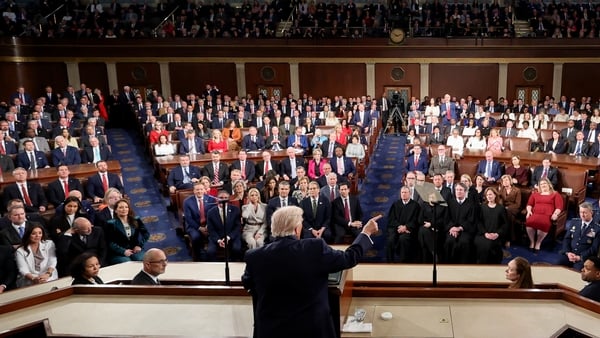
Here we are again, a bitterly divided Congress using the weapon of a government shutdown, or even its threat, to try and force change on the administration. The fact that it has been used, and successfully, by the Democrats so soon after the last shutdown shows how explosive this issue has become for President Trump.
It has gone from a signature policy to an electoral liability (in an election year) in less than a month.
If the House of Representatives, with its very small Republican majority, passes the compromise arrangement, it will set off two weeks of intense negotiations on changes to the way ICE and Border Patrol are operating in American cities under this administration.
The next deadline is likely to be 13 February, just in time for Valentine's Day - which could become the new Groundhog Day for Capitol Hill inmates.
Just like the movie of the same name, in which a TV weather reporter gets stuck in a time loop of repeating 2 February over and over again. He eventually breaks the time loop when he becomes a more compassionate, altruistic person.
I know: Groundhog Day the movie is fantasy, and it's hard-edged politics as usual here in Washington DC. But you never know....